
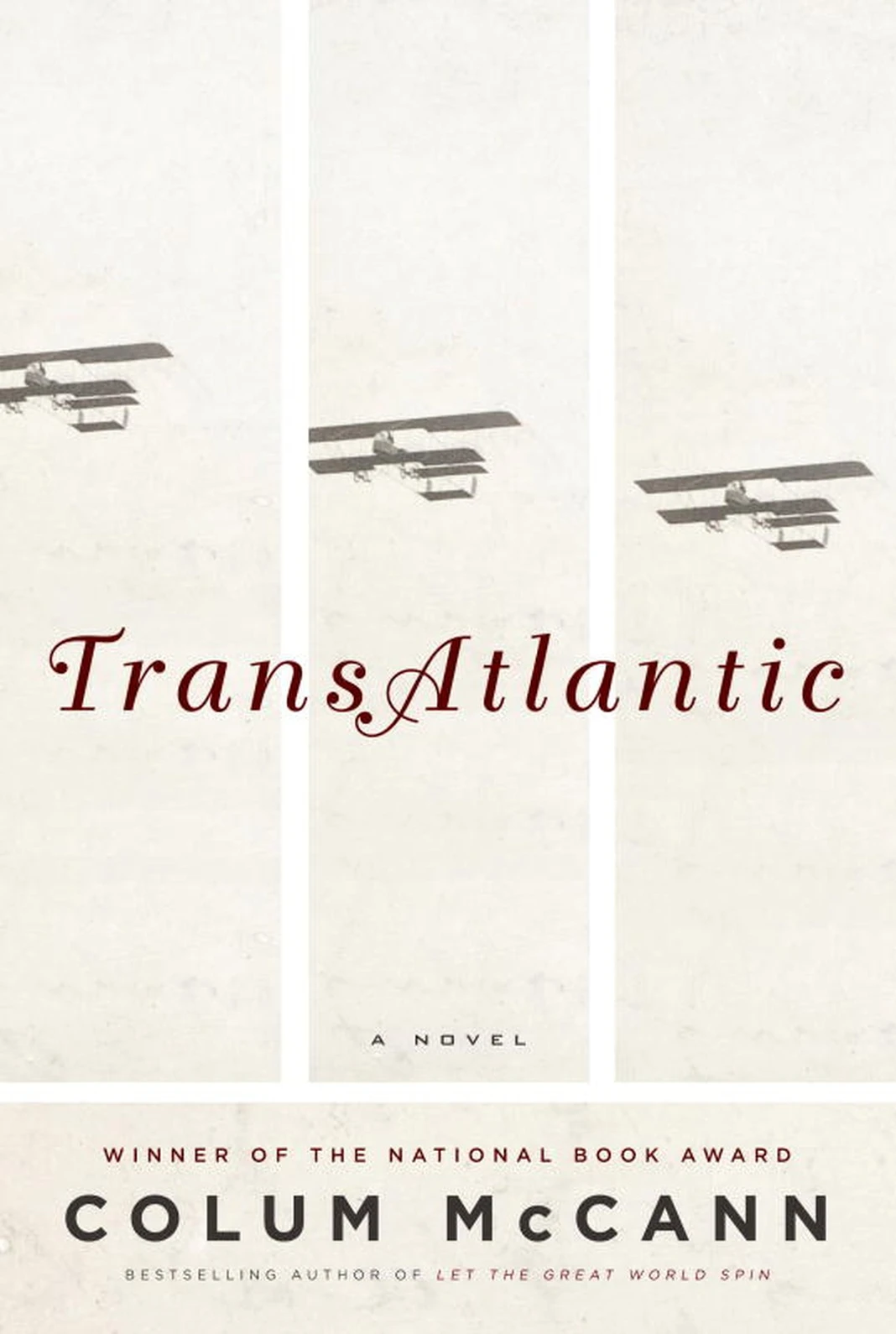
Transatlantic, by Colum McCann, is a contemporary literary masterpiece. In a year where most fiction has been ordinary, his
accomplishment seems that much greater.
McCann, l like other living Irish writers (Coim Toibin and Edna O’Brien come immediately to mind) has that true Irish gift for language, and for storytelling. I think that he knows both of these things, and enjoys showcasing them in his novels. His earlier novel, Let the Great World Spin, was also replete with phenomenal language; O’Brien may be said to have revived the beauty of Irish narrative and the splendid visual sense often pronounced in writing by Irish men and women. Toibin, who is one of the greatest living writers in the world, wrote about Henry James in his first great novel, The Master, as if the narrator is James himself, giving the author a double opportunity to play with language to masterful effect). Molly Keane, aka M.J. Farrell, although an Englishwoman living in Ireland, also shares this great ability to spin a tale.
McCann uses, as his plot device, the crossings over the Atlantic ocean of three different men, or groups of men, who are real historical figures: Brown and Alcock, two former RAF pilots, who make the first journey from Newfoundland to Ireland, carrying a load of mail (in a linen pouch, we note), creating what was once known as airmail. The description of their flight, and the amount of it done by a combination of primitive instruments and human intuition, is fascinating, and we do feel as if we are in that plane with these two men. A mother and daughter, writer/journalist and photographer, who watch the departure, after endless cancellations due to bad weather, will surface later in the novel as major characters. The ways by which McCann casually drops people into the novel, only to have their stories erupt later and parallel the stories of the men with their missions, is nothing short of brilliant. The novel posits a nearly endless belief in the possibilities of reinventing one’s life, perhaps over and over, which is critical to any understanding of how America came to be settled. But McCann also insists on keeping the old country, Ireland, entirely alive throughout the book; several of the characters actually end up going back there to live, which I find to be an enormously courageous idea for a contemporary novel; Toibin hints at the same in his astute novel Brooklyn, where a female character comes to Brooklyn from Ireland to seek a new life, but returns for a brief stay, and almost remains there. That these ties remain strong is often overlooked in American fiction.
The second American to go to Ireland is the not-yet-freed slave, Frederick Douglass, who is brought to Ireland on a speaking tour to raise money to help end slavery in America. The young Douglass is
brilliantly conceived by McCann: he is partly arrogant, but always slightly fearful, always watching his manners, but is a compelling speaker. The Irish famine all over the countryside is kept hidden from Douglass, until accidents of scheduling and taking the wrong road on the highway (remember what happens in The Bonfire of the Vanities by taking the wrong expressway exit?) thrust Douglass and his host into the heart of the famine. Doulgass meets the great orator O’Connell, who is attempting to garner basic rights for Catholics (we are in Belfast, and then Dublin, then Cork on this speaking tour). Douglass has to grapple with whether to speak out on behalf of
starving Irishpersons, or “not biting the hand that feeds him”, as he is advised by his host Webb. He only meets Irish with money, those who are most like English gentleman in their living habits. A seventeen year old maid in Webb’s house will end up a major character in this novel, as she decides to run away to America to get away from the horrors of Ireland, claiming that Douglass motivated her to do so: she begins a line of women who came to America with nothing, and she, Lily Duggan, survives years of poverty, the death of a son in the Civil War, but eventually flourishes financially.









Comments powered by Talkyard.