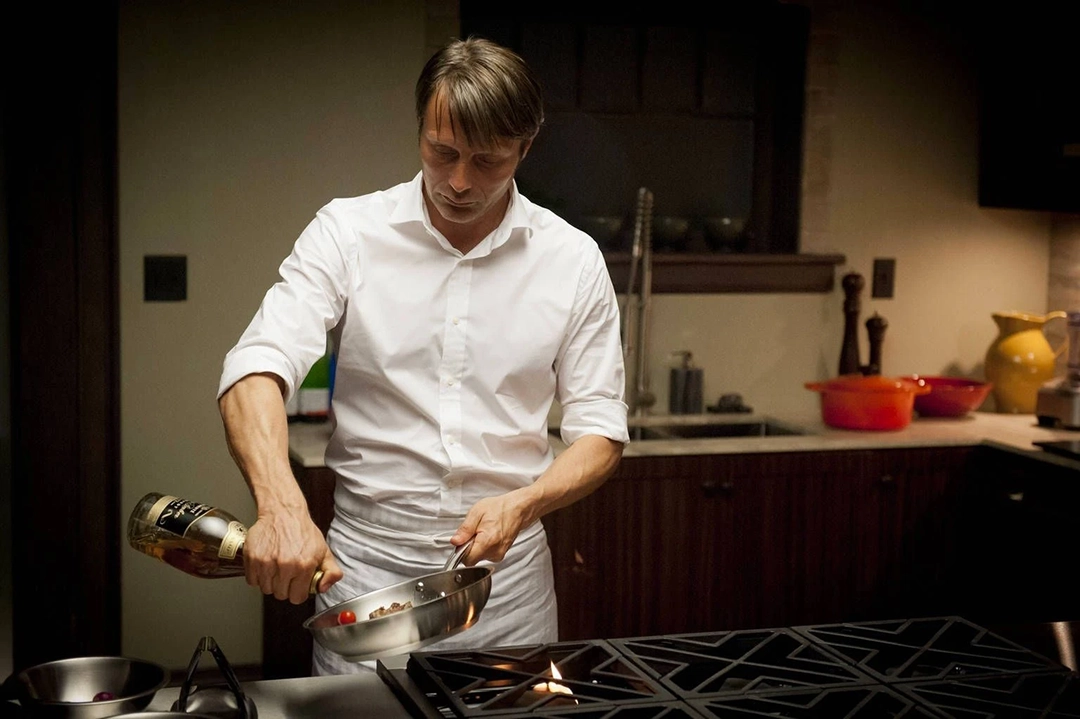
I suppose that, like me, hundreds and probably thousands of viewers developed a dark sympathy for the character of Hannibal Lecter. The two actors who, to date, have embodied him most memorably are Anthony Hopkins and Mads Mikkelsen. The character displays extraordinary intelligence and self-control. He conducts himself according to his own rules and ethical codes. As viewers, we witness, from a dimension as safe as it is unreachable, exceptional moments in the life of a man capable of reading other people’s behavior with precision and redirecting it toward whatever advantage or benefit it may yield him. Sometimes material, almost always spiritual, and invariably symbolic. This mixture of power, mystery, and danger produces fascination and empathy.
Yet what defines him most sharply lies elsewhere. Lecter is capable of disconcerting forms of affection. He resolves contradictions with bittersweet humor, but for me, at least, it is his condition as a gourmet that ultimately seals his dark appeal. He commands classical music, draws quite well, and possesses the entire repertoire of courtesy and the most bourgeois forms of etiquette. His sinister sensitivity contrasts with the violence he very rarely carries out before the camera. All of this makes the way we absorb and process him profoundly unsettling.
Mads Mikkelsen
His passion for fine dining adds one final layer of refinement. Even his cannibalism is absorbed into an aesthetic and culinary logic. What some might regard as horrific, others purify through the filter of high culture. Grilled human liver… what might that taste like? I have wondered more than once.
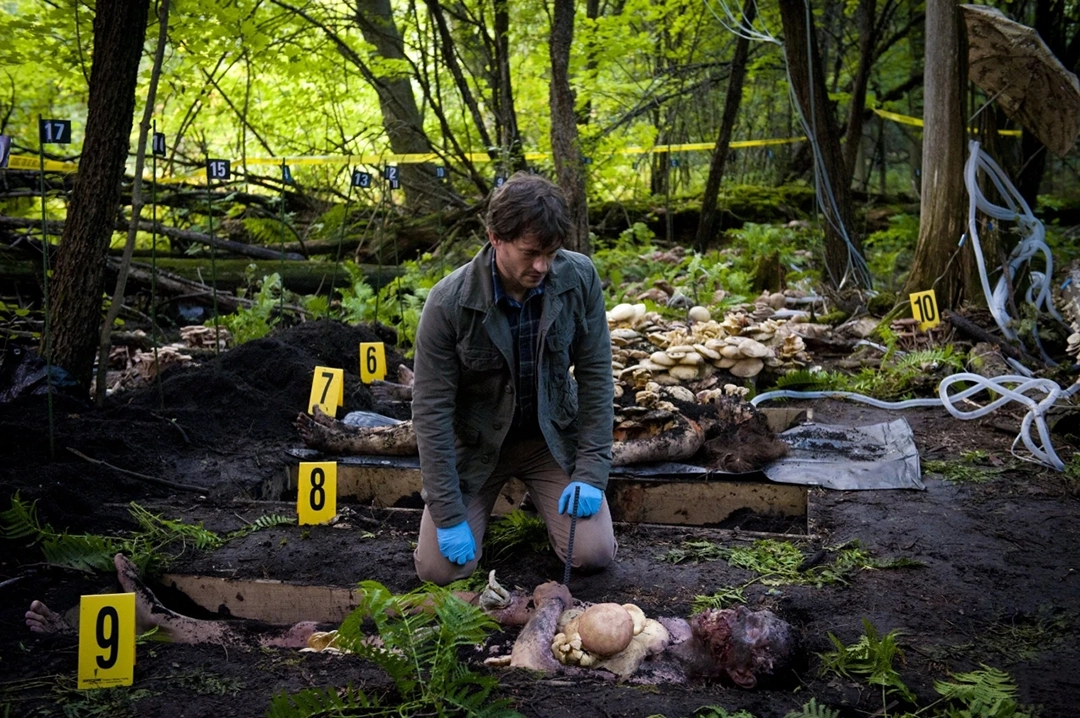
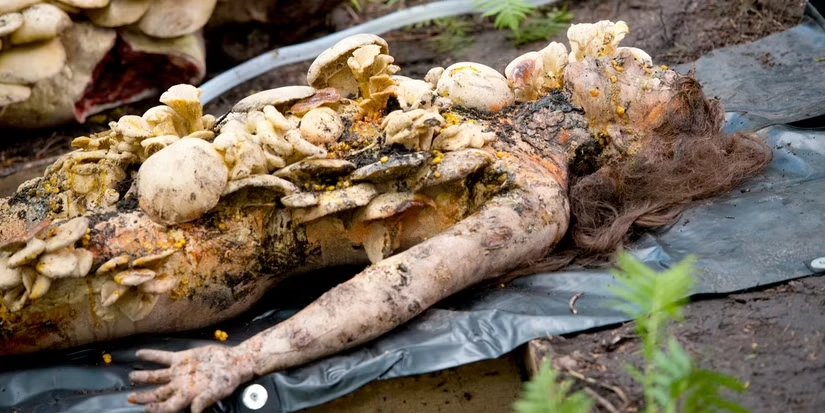
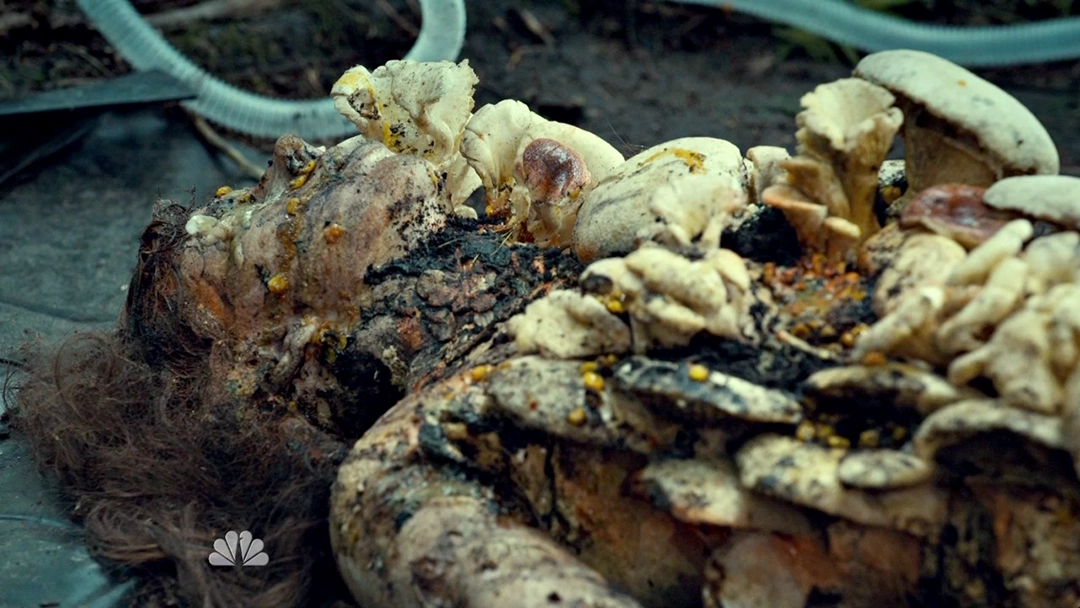
In the second episode of the series Hannibal, several human bodies appear, half-buried, suspended somewhere between life and death, upon which the deranged Eldon Stammets cultivates saprophytic fungi—some of them edible—that ordinarily thrive on decomposing organic matter.
Still from Hannibal, Season 1, Episode 2, “Amuse-Bouche” (2013).
Within Stammets’s logic, this would advance toward an improbable biological community in which human bodies would share a single system, quite alive indeed, with the fungi. A sublimated integration of deindividualized people, reduced to substrate and incorporated into nature through a process that, within the macabre, acquires an almost poetic dimension. The scene remained in the memory of many. Remarkably accomplished in the delicate way horror and the sublimation of experience find an extraordinary point of intersection.
Social networks are enormous containers into which we throw whatever we want to clear from our immediate attention and, at the same time, they gift us images—like fungi when they find the nutrients required to extend their mycelium—capable of spreading networks of signification.
No items found.
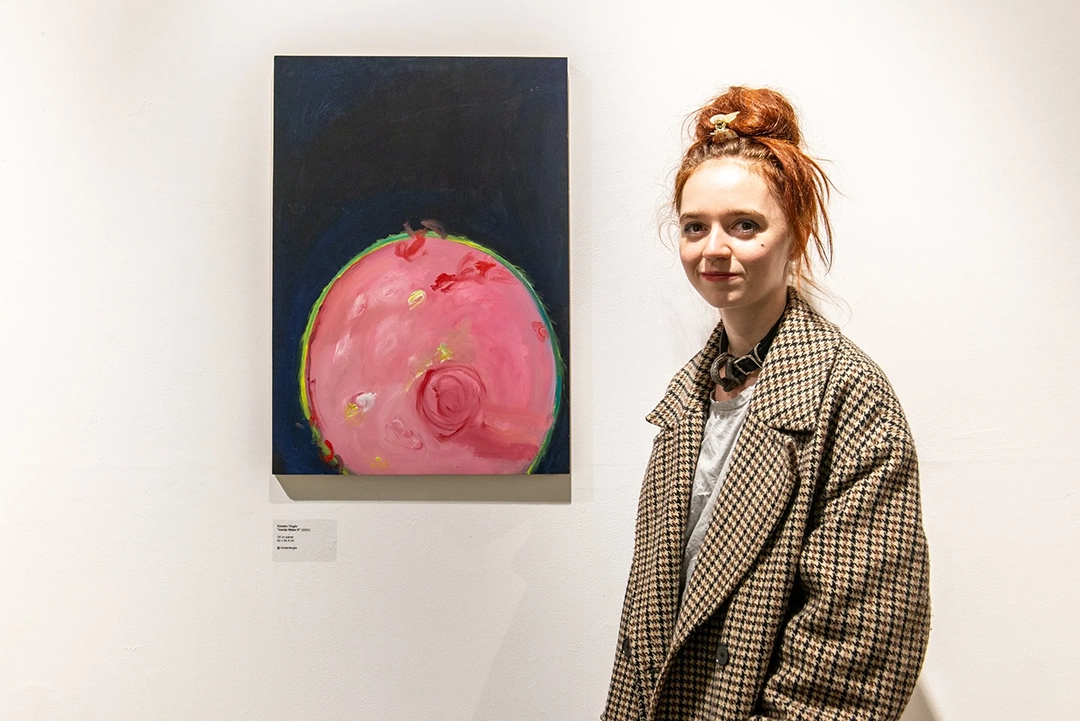
Kirsten Tingle
Kirsten Tingle is a Scottish artist and biodesigner working between London and New York. She studied Art and English Literature at Pomona College and painting and sculpture at The Art Students League of New York. With an MA in Biodesign from Central Saint Martins, she hardly belongs to the ranks of the ordinary influencer. She has received several residencies, including one at The Francis Crick Institute, where she has developed work with networks, fungal structures, and mycelial masses. Alongside her research, she leads workshops and seminars on biodesign, biomaterials, living systems, and regenerative design.
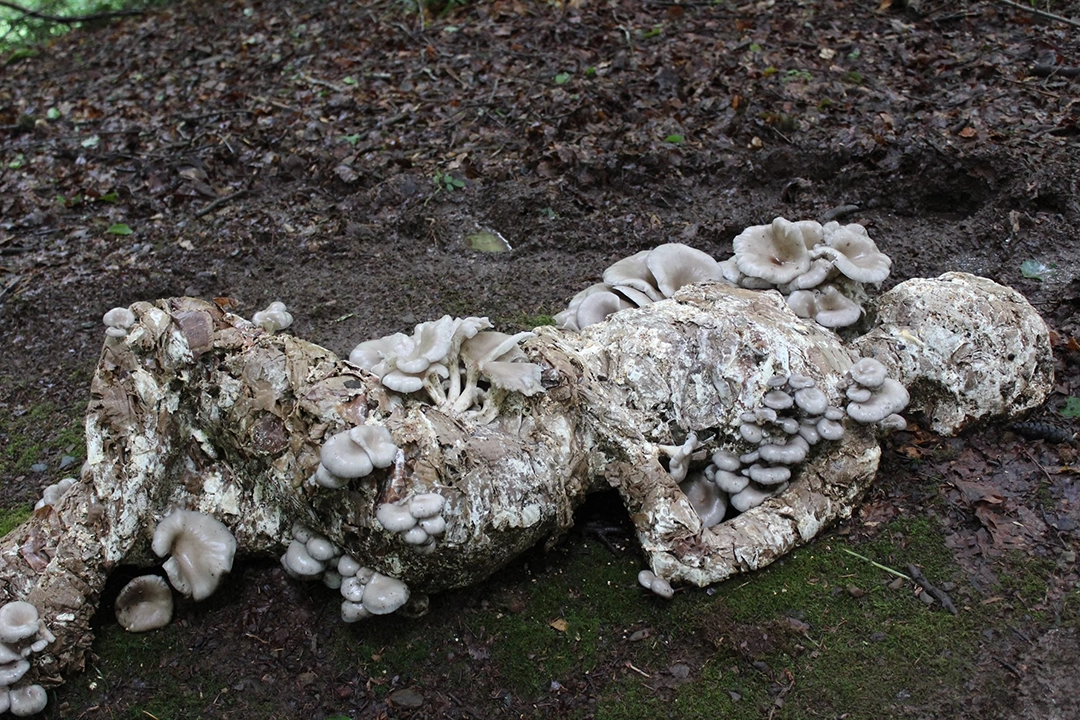
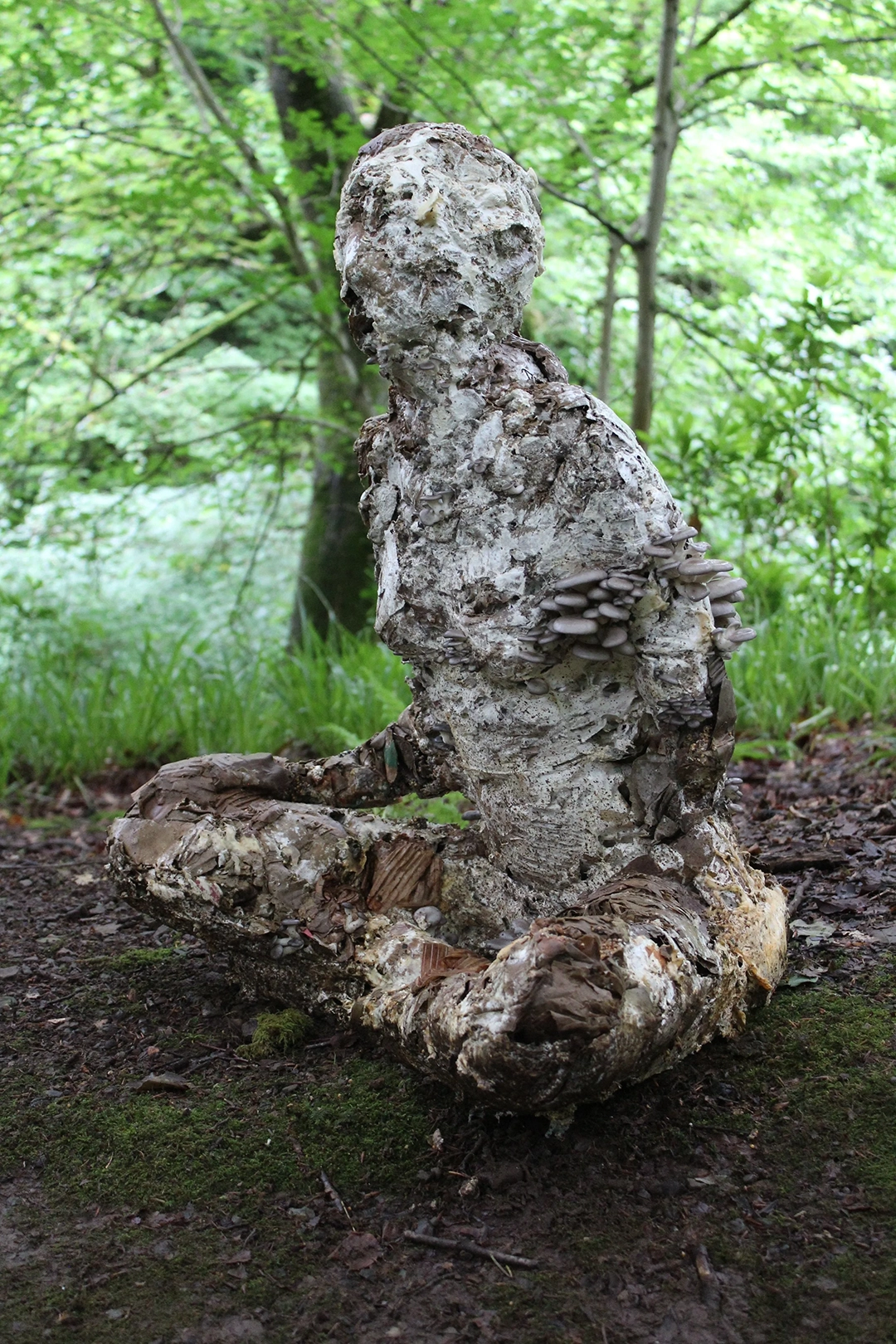
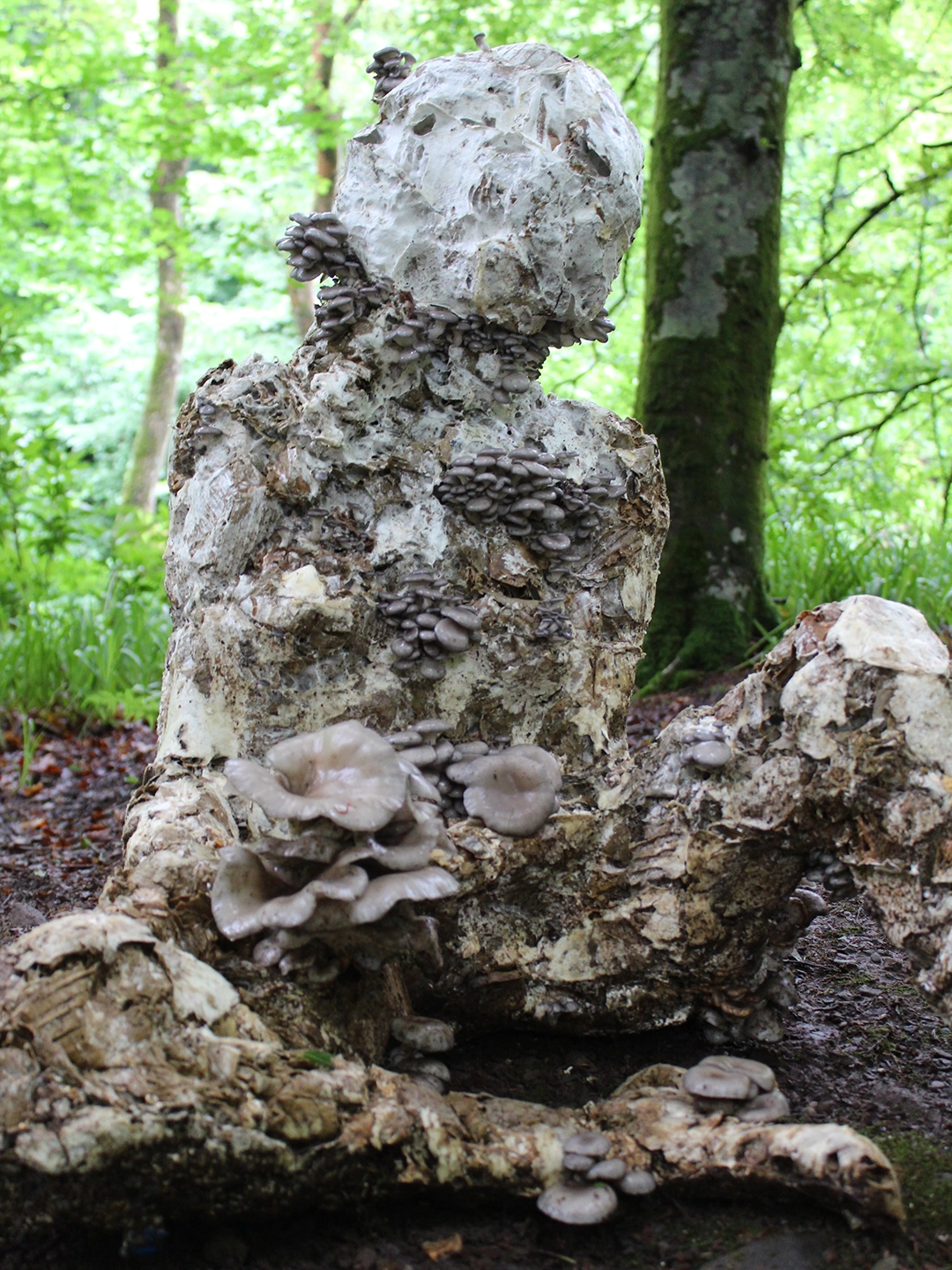
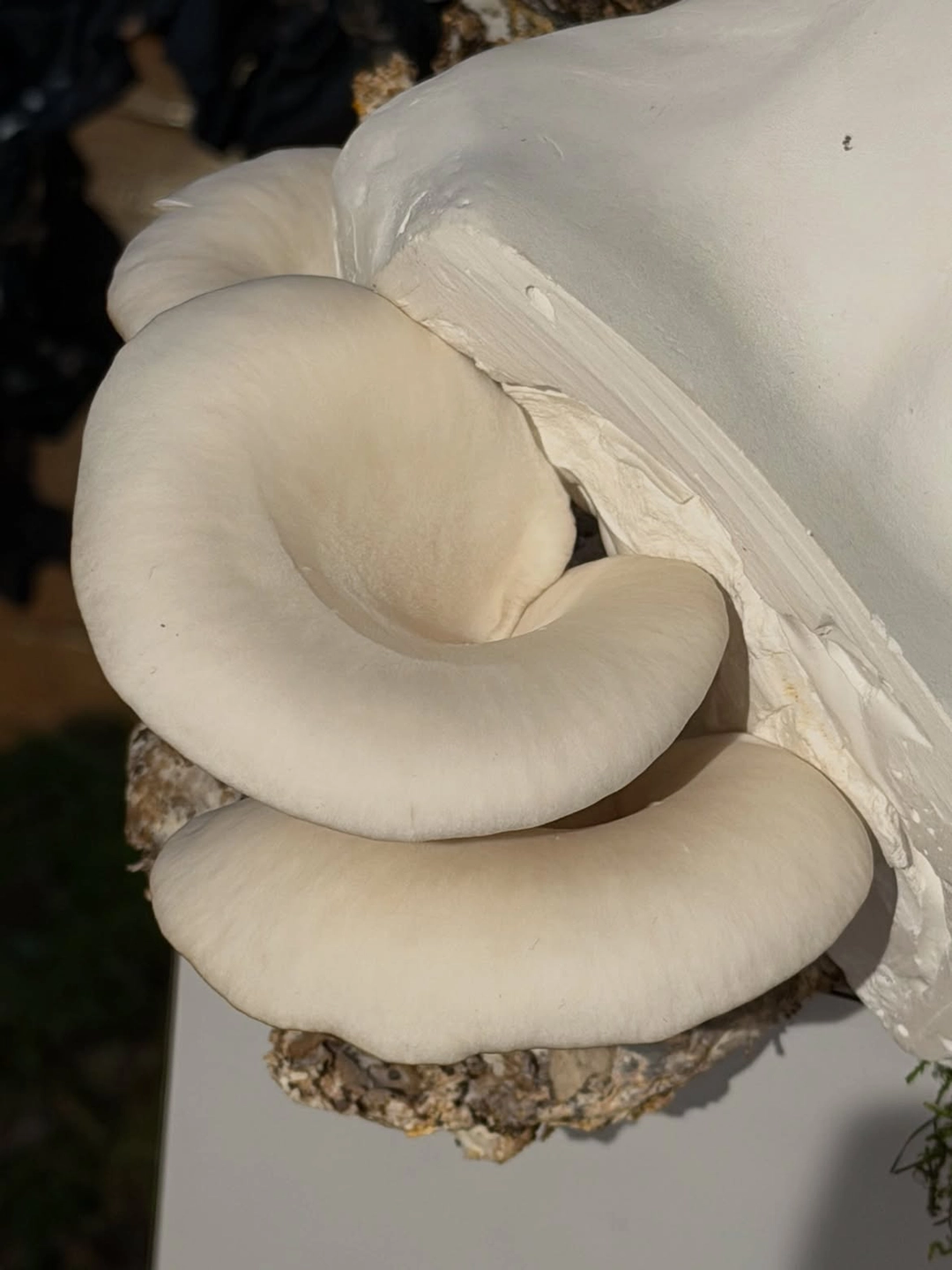
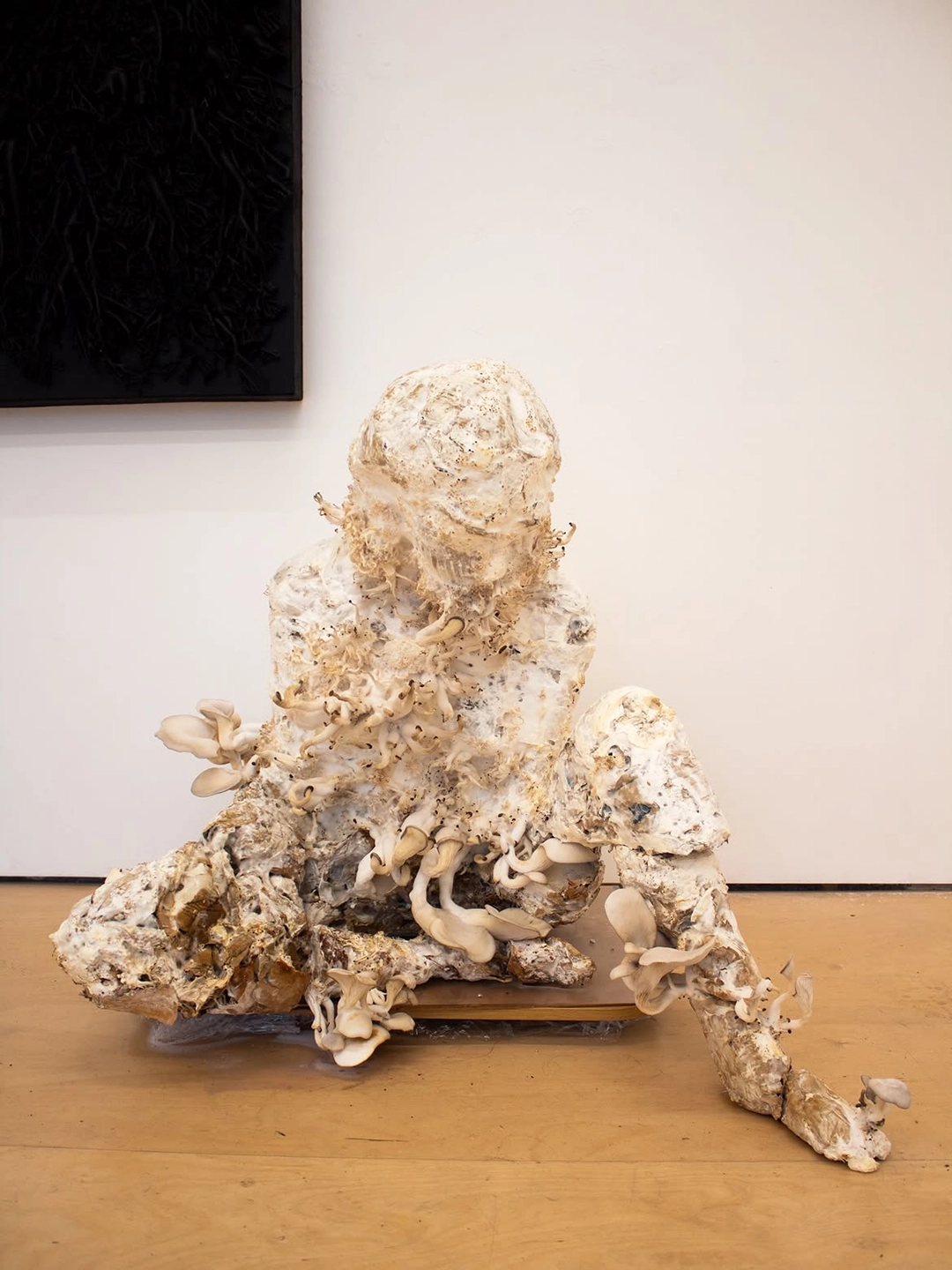
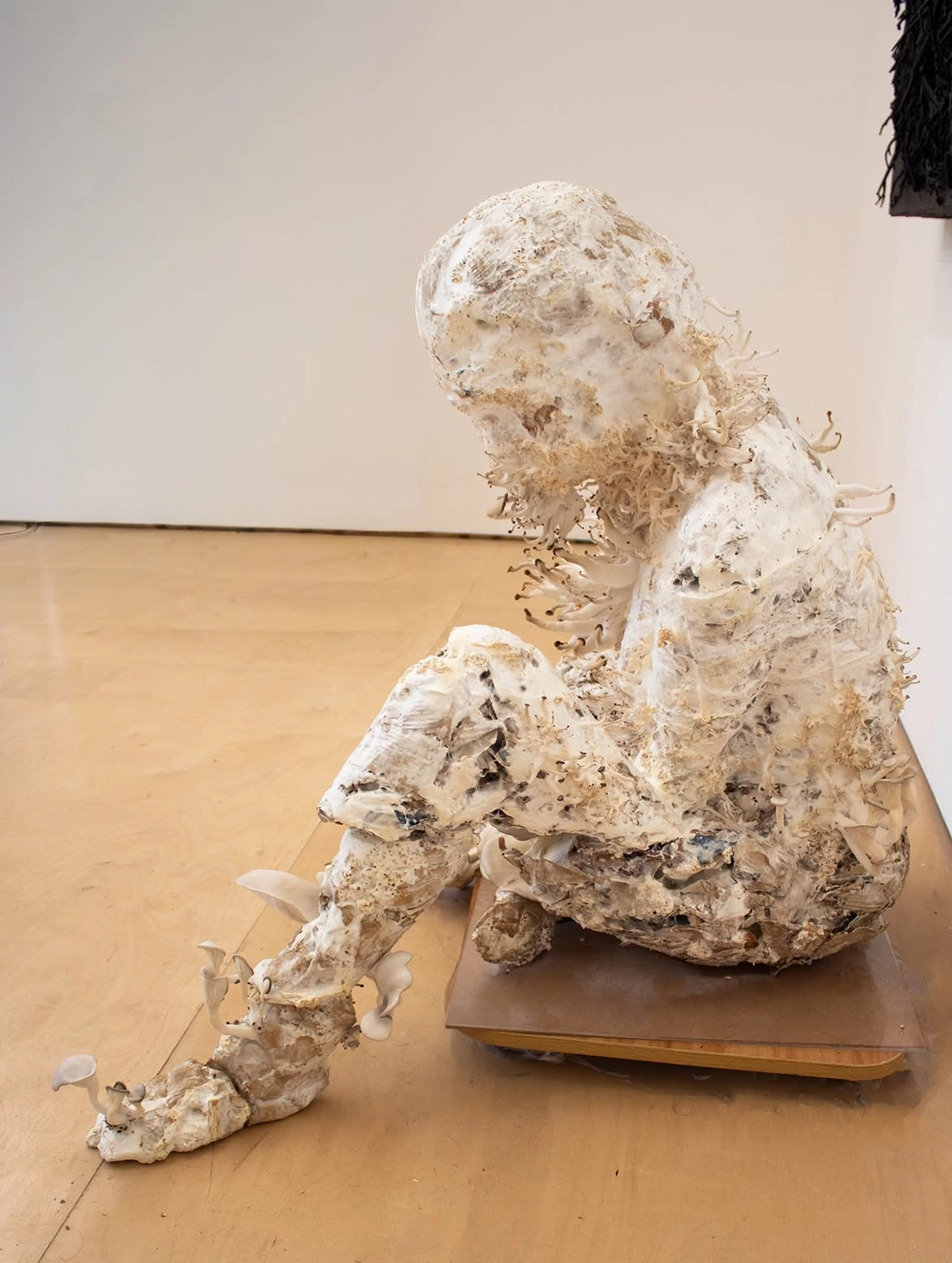
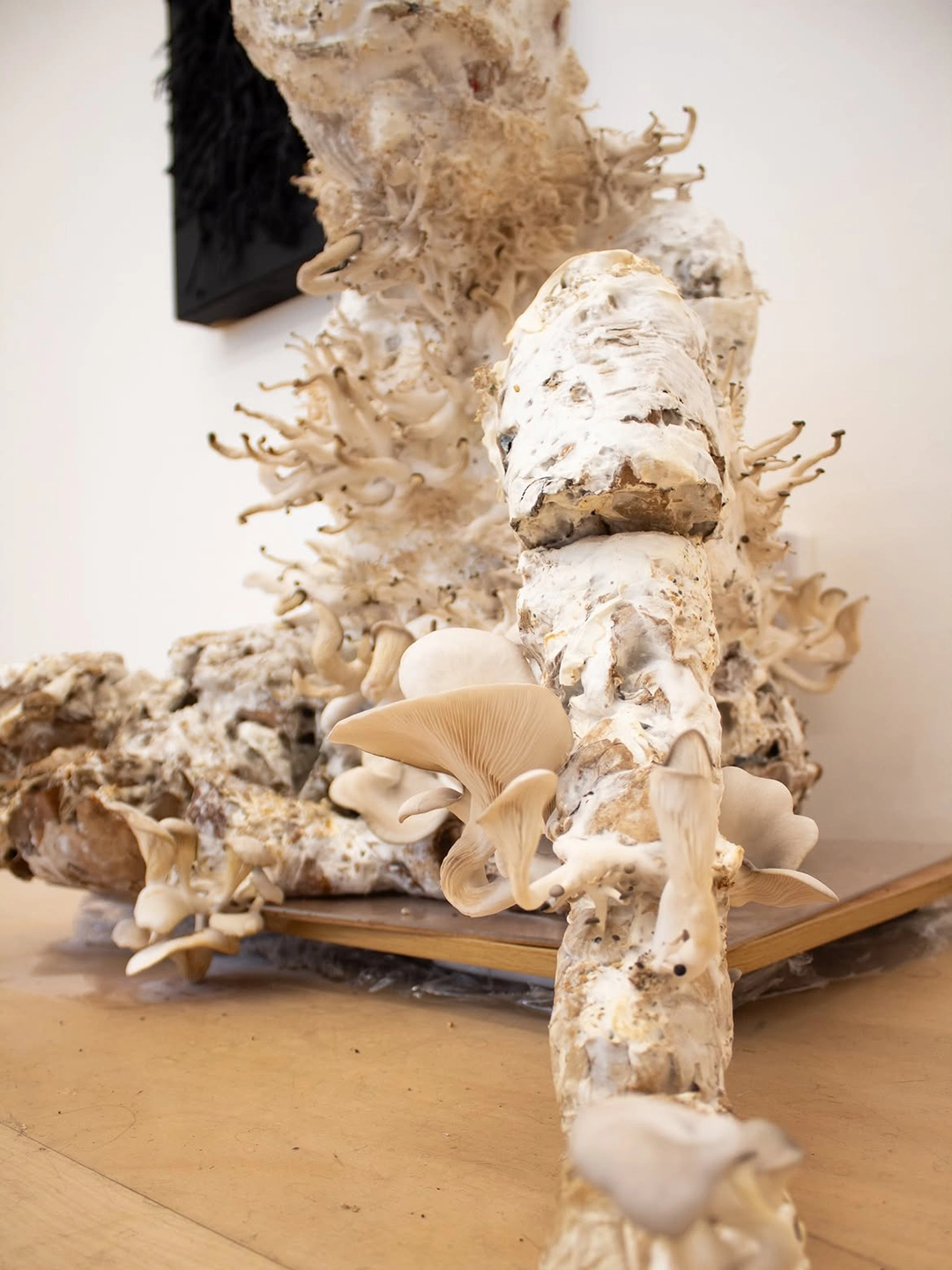
Whether or not she was inspired by our dear Dr. Lecter, Kirsten, instead of using unsuspecting citizens, constructs her figures at life size and “sows” a mycelial network over them. She preserves the ideal conditions for it to colonize the forms, transform them, and develop across their surfaces. Her pieces fruit, change, and degrade. Placed in a forest, beyond the immediate semantic protection of an exhibition room, they acquire a disturbing ambiguity. They look like corpses. The Neverending Glen—an outdoor art project situated in the woodlands of Kelburn Estate, on Scotland’s west coast, where Tingle develops part of her practice—is conceived as an artistic journey immersed in nature. This year it has been devoted to the invisible networks connecting fungi, trees, and human communities.
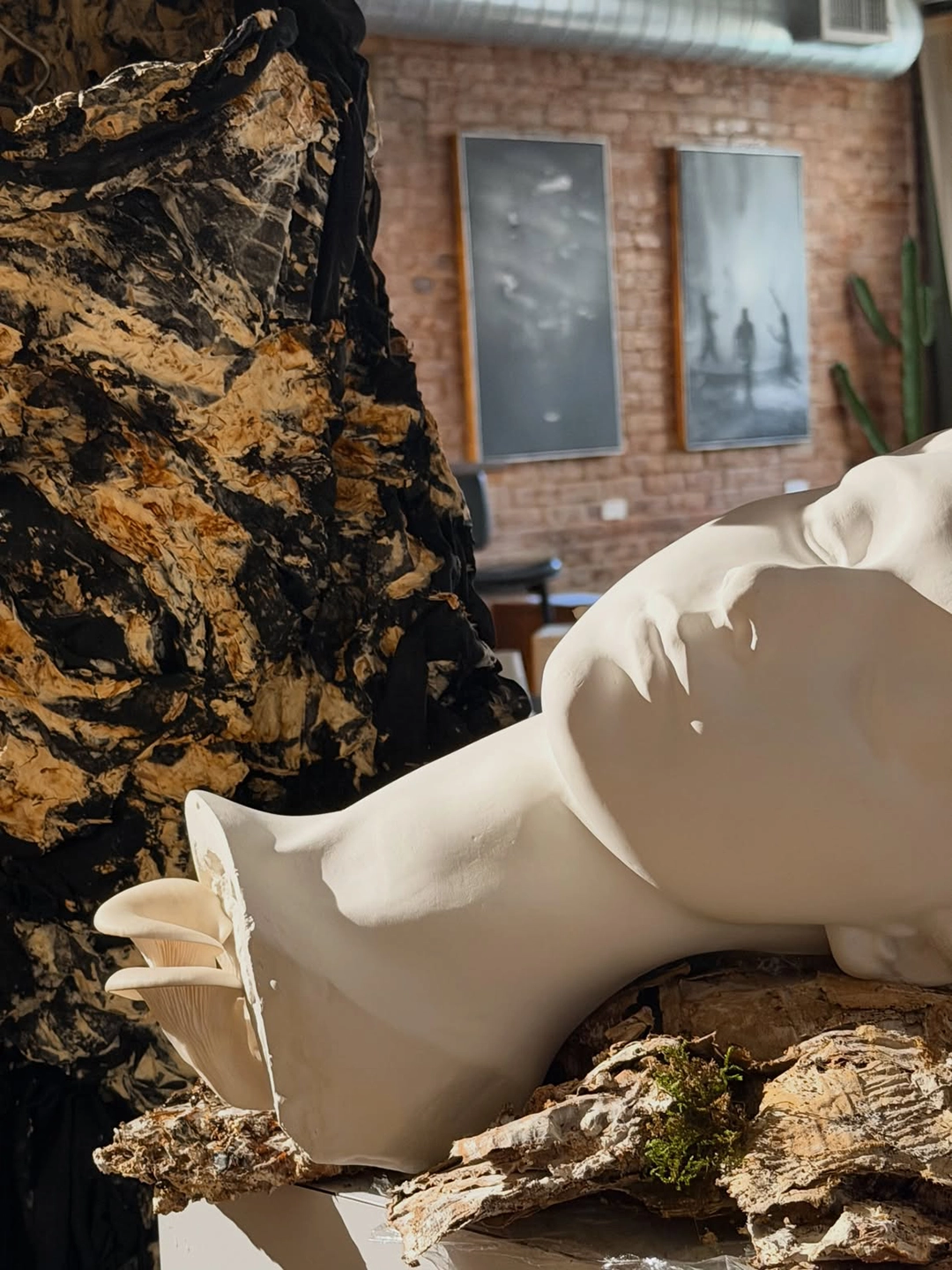
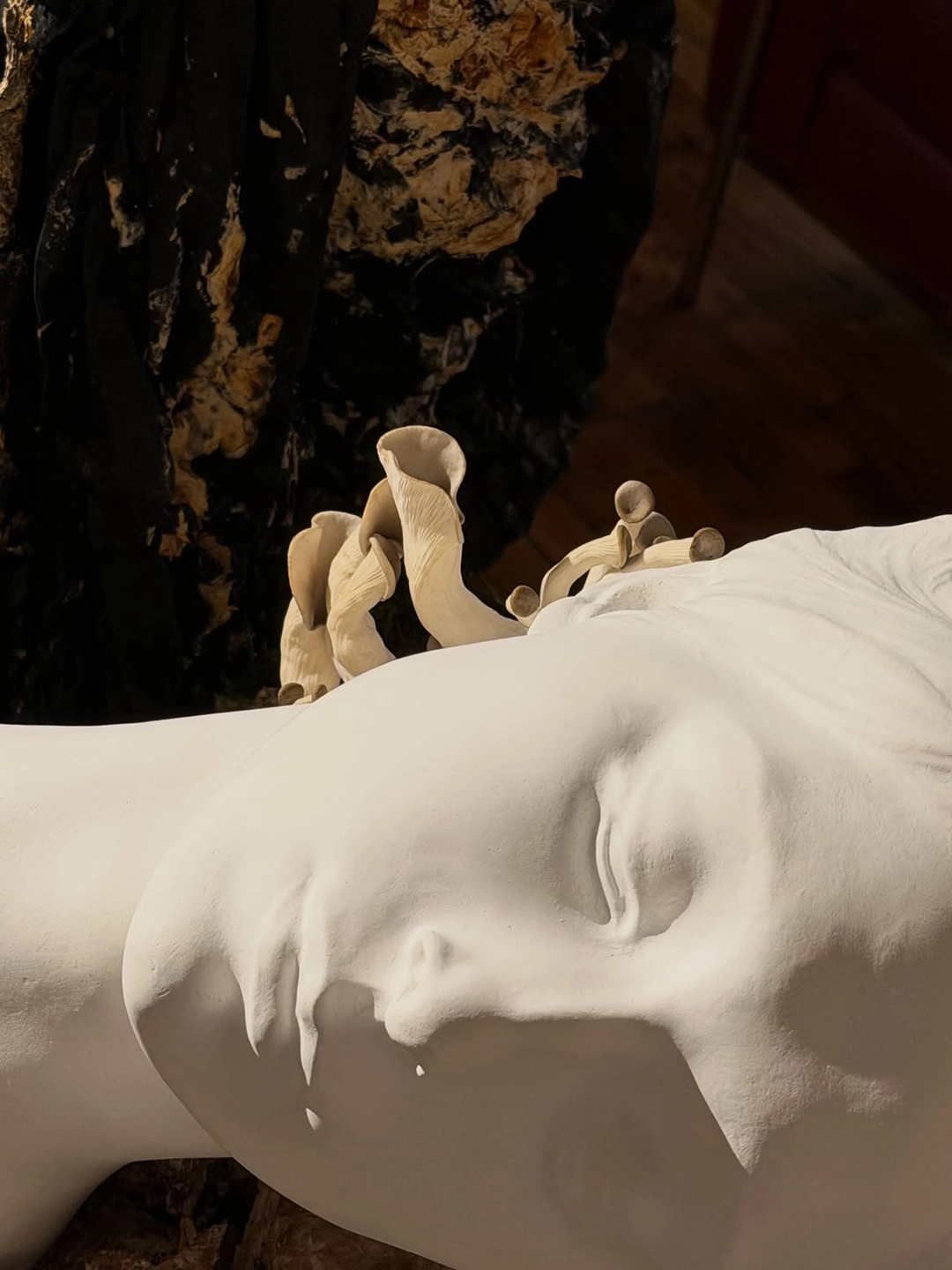
Kirsten Tingle, installation view at Fugue Gallery, New York, for Forbidden Fruit, September 10–22. In this series, the artist combines mycelium cultivation, phytoremediation processes, and traditional oil-painting techniques.
Anyone walking through the site without paying attention to the signs may stumble upon these bodies and pass through an inevitable instant of terror. The first reaction will be to call the police. Intellectual comprehension comes after the visual impact, once the gaze begins to reorganize what it has just seen.
The human body has developed an enormous resistance to becoming undifferentiated matter. A silhouette is enough, the suggestion of a head or a pair of arms, to activate immediately the category of “person.” When fungi begin to proliferate across its surface, in this case, the sign becomes unstable. We continue to recognize the body even as we witness its incorporation into an alien biological system. Several orders of signification coexist within the same image, brushing against one another and disputing its meaning.
The disintegration of what was once alive is a law of nature. As simple as yielding space, recycling. But when a body is absorbed into a larger system, an obsession as old as our own capacity for obsession is activated. Much of our relationship with death rests on preserving the singularity of the person who can no longer continue the attempt. That is why we erect gravestones and inscribe upon them a name, a date, and whether the dead were loved by their children, parents, or pets.
Tingle’s pieces compromise that vocation for permanence, even as they sublimate and endow with an aesthetic dimension the individual’s final drift toward the substrate that will nourish other living beings. For human beings this is an especially painful process, and our first impulse is to remove it from sight. From time immemorial, a covering has fallen over bodies still warm.
These figures brush—perhaps involuntarily—against the rituals that for centuries have shaped the administration of dissolution. Their ultimate purpose is to prevent material disappearance from carrying symbolic disappearance away with it.
At different degrees of perversity, Lecter and Kirsten Tingle finger the same cultural nerve. They recompose bodies, resignify them, and drag them into another visual regime. I know that Hannibal would eat them, but here our attention falls on how both procedures are expressed through images. Even the artwork—with the ultimate intention of producing an aesthetic experience—continues to register as a body, and we react to it accordingly. And even when its intention is to activate a process of biofabrication, we understand it as decomposition. That contradiction between registers, in turn, extends a new network of signification, one that spreads and adheres to our own system for producing meaning. I do not know whether positively or negatively.










Comments powered by Talkyard.