In 2007, Kristin Lucas began her ongoing “Refresh” series, in which she decides to legally change her name. But, it’s only a “refresh,” in the same way one would refresh a page on an internet browser: she was Kristin Sue Lucas, and she became Kristin Sue Lucas.
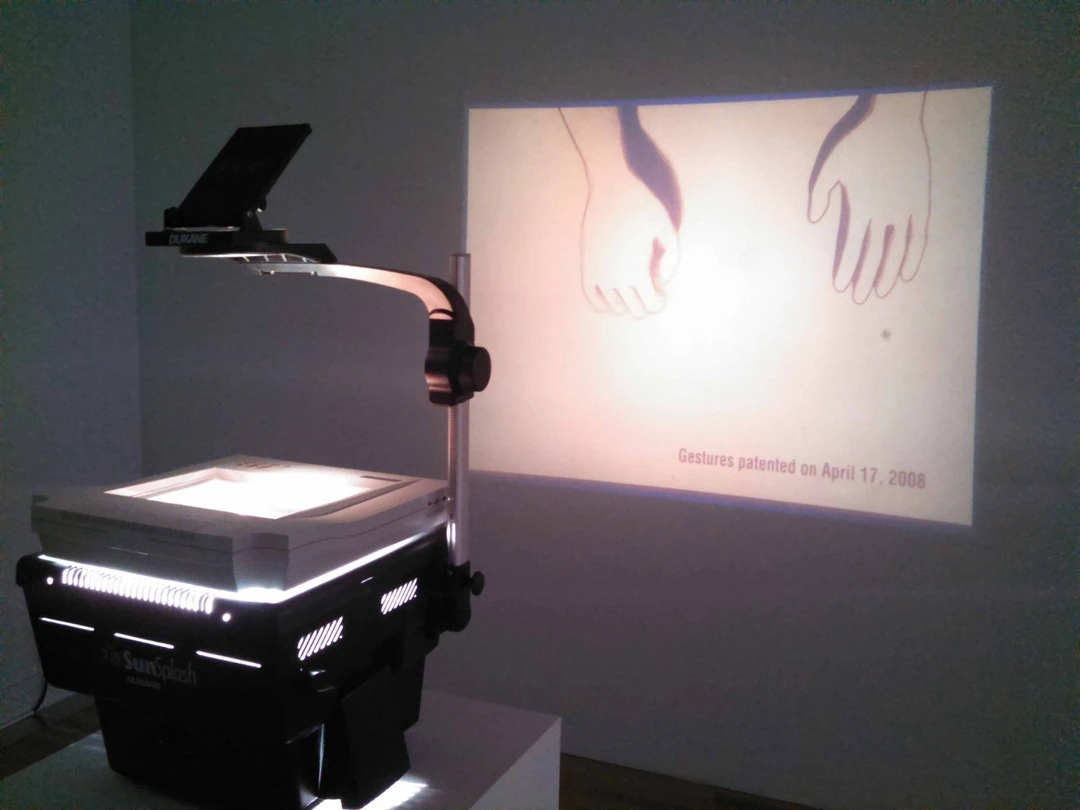
The court transcripts are part of the series, and can be found on her website. The documents have been read aloud at other venues, but I consumed selections as a deconstructed zine at DiverseWorks’ group exhibition, “What Shall We Do Next?”, up through March 19. There’s something deliciously bureaucratic about the multiple stacks of paper and stapler presented to gallery-goers, like the forms she no doubt had to fill out in order to accomplish the refresh—which she did, with only minor delays from the perplexed judge.
The packet not only includes the court transcripts and official forms, but emails warning her friends that she may not be the same: “In the event that I can no longer find myself after the refresh, please send a Search Party.” User-interface terms like “search,” “memory” and “content” litter these messages; her friends’ thoughtful, kind replies—emails, of course—treat the refresh as any other momentous life change.
Lucas’ piece places identity in the hands of two overarching cultures: our societal framework, and the home we have in technology. First, she frames her new beginning as a “refresh,” explicitly referring to refreshing an internet browser page. Then, instead of relying on metaphor, she turns to the objective, blind eyes of the law to legitimize her change. She must take a physical action, interact with real people—a different experience than hitting a button on the internet.
Despite preparing a statement for court, Lucas falters a bit on the stand while explaining her reasoning. As she tells the judge in the official court transcripts, “I should have brought a philosopher.”
Lucas worries the judge will dismiss the case as foolish narcissism, a ploy to waste everyone’s time. In short, she is not in the right place. I felt a similar sensation when I attended what I thought would be a curator talk about “Where Shall We Go From Here?” at the University of Houston (UH). The event was actually the first of a new series in a cozy classroom, bringing together art historians, philosophers and writers from and beyond campus (professors, researchers and students alike) to explore the intersections and meanings between media—a wonderful idea for which I was not prepared, despite working for the University and earning an MFA in poetry elsewhere. I swear that everyone had a pre-assigned handout I seemed to be missing. Was this an academic lock-in that was only publicized online to fill the gallery’s “outreach” quota?
It didn’t matter; I’m sure I would have been happily offered one of the banh-mi sandwiches at the front of the room if I’d had courage enough to approach. The whole discussion was a hot bath of intelligence and theory, and I was happy to let it pass over me, scribbling down arresting phrases. Plus, Danielle Dean, one of the artists from the exhibit, was present to offer her point of view pertaining to her work. DiverseWorks’ curator, Rachel Cook, organized this particular gathering, which is probably what confused me. Leading the discussion were Christoph Cox and Jenny Jaskey, two of the editors of “Realism Materialism Art,” a new anthology that includes “a diverse selection of new realist and materialist philosophies and examines their ramifications on the arts.” Here’s the part where I, like Lucas, needed a philosopher, which is evident from this sampling of notes:
The questionable figure in art is the figure of the human; when do we not belong in it?
Art is an effect of linguistic circumstance.
How does the world differ if we think of objects as not being for us? But, objects being “for us” is the history of the world.
“Art” is situational process to many artists. Viewer participation is meaningless. They think, I don’t want to author things. I want to set things in motion.
Our institutional frame is capitalism. Our voracious art market changes art’s intention.
Consider Kant’s objectivism: that everything must be generic for genuine discourse to take place. Our societal condition cannot be taken into account when considering art.
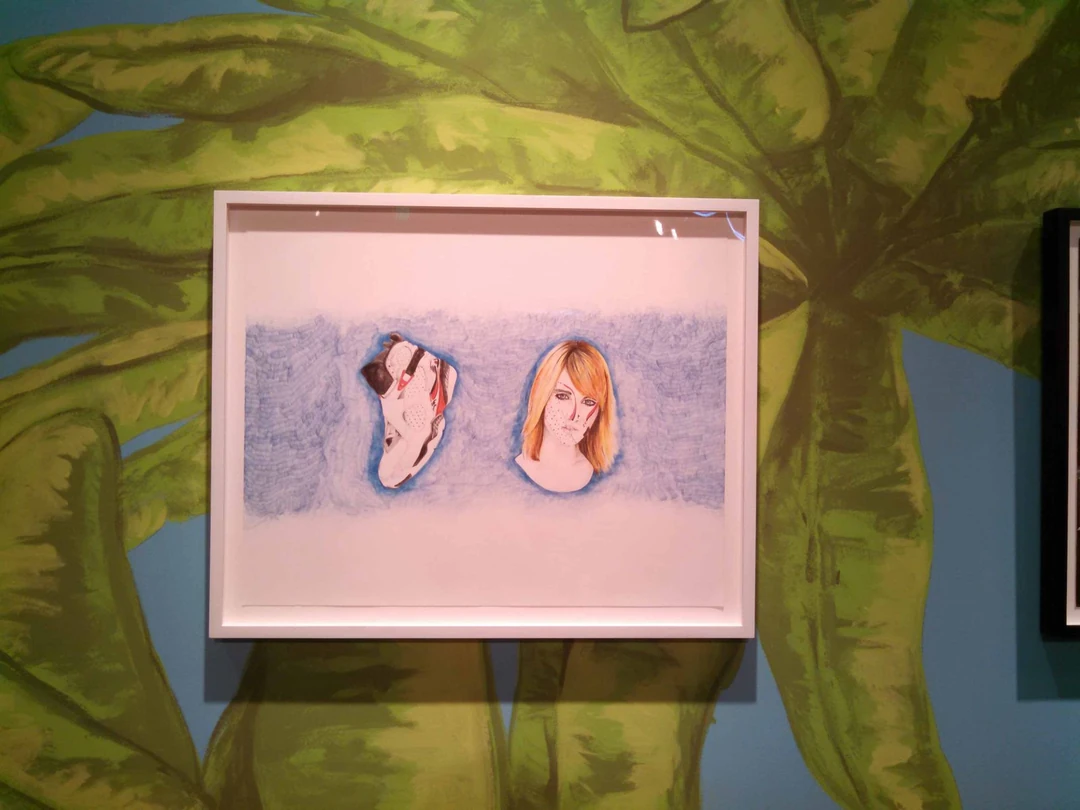
Although the participants in the discussion made clear that they did not necessarily endorse Kant’s view (fully, anyway), it makes sense that this is when Danielle Dean would speak up. “All that falls apart,” she said, “when you consider the constructs of race and gender.” Indeed, Dean’s work in the exhibition is rooted in the commercialization and inequality that pervades our world, and challenges socially constructed narratives like race, class and gender. It clearly has an intention—it’s not a “situational process” situation as noted above.