
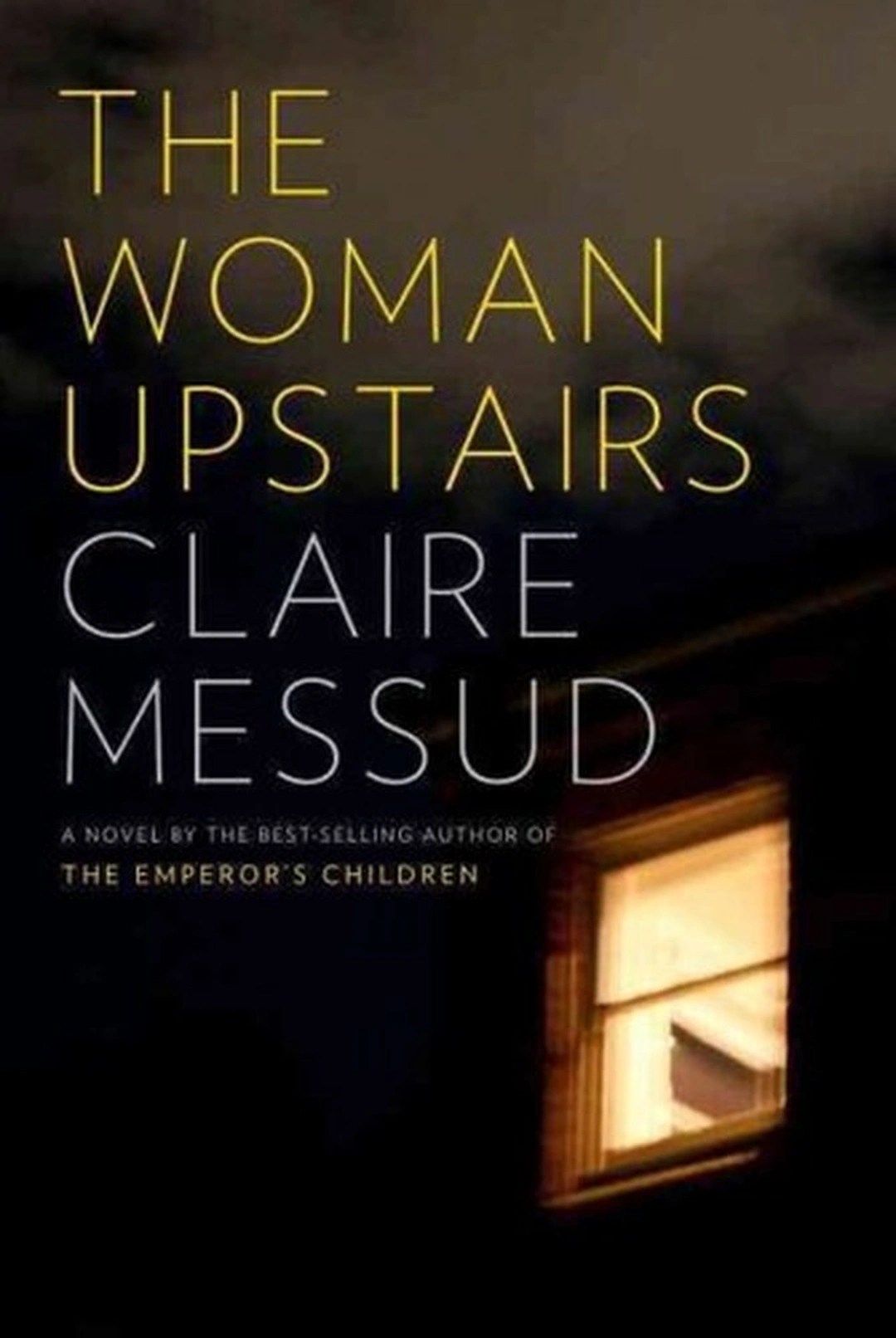
The Woman Upstairs, by Claire Messud, is important and refreshing on a number of levels. Messud, whose first novel The Emperor’s Children chronicles the lives of Milleniums and their very achieving parents, mainly in New York City, does such a good job at highlighting the lives of these Helicopter Parents and their wildly overindulged children, that I began to detest her characters and occasionally their overliberal, overindulgent West Side/Central Park West type parents: politically engaged, affluent, well connected, parents and children stop just short of being repulsive (not the author’s intention, I don’t think) and I remember beginning to hope, secretly, that some bad things might happen to this group of brats. Messud writes astutely, in that novel, about these Hothouse children, their expectations and their overachievments. But there’s something in her writing that makes me suspicious, makes me not quite trust her.
The Woman Upstairs is an almost forty year old single woman who has been teaching in an elementary school in the Boston area for over a decade; she dutifully , and occasionally, visits her aging father and his “spinster” sister, the well-named Aunt Baby, as infrequently as she can. She sees her life as empty and dull, predictable and without adventure, love, romance or glamour.
So when a family arrives in Boston for a one-year sabbatical, and the one child becomes her student, Nora, the narrator, rather falls in love with all three, the Lebanese father/husband teaching at Harvard, whose life revolves around the telling of anecdotes about loss, and around conferences where he guest lectures; the mother, a beautiful Italian woman who is a well-known practicing artist (Nora has tried her hand at art and living the life of an artist, all with no success), and the beautiful child, like the one she never had nor ever will.
Nora allows herself to become entwined and used by this family–used casually, and rather deliberatively: she volunteers to baby sit, often (elementary school teachers are known to hate doing sitting, and spending even more time with children ), and she takes a studio in a blighted part of Boston, which she shares with Sirena (a great name), whose ambitions are vast: she must prepare for a career-making installation/video in Paris for the following year, and she begins to rely heavily on Nora for assistance in making her art, as well as for company and those shared moments of intimacy: sweets brought and eaten together; confidences seemingly shared; art encouraged and the like: Nora sees in Sirena everything she wishes she were , while part of her is aware that she has created an elaborate fantasy about and around a family who seems exotic, sophisticated and worldly to her. She even tries to persuade herself and her best friend, who is a lesbian, that her feelings about Sirena are some long bottled up sexual awakening. The reader knows that the bubble will burst, but not how.
When the family departs, of course, Nora is thrown into mourning; contact is minimal, but she does get herself to go to Paris and visit them (you can’t go home again….) and where a monstrous betrayal awaits her.
Nora is likeable and generally self-aware, and her lonely existence , we understand, isn’t enough for her, though it looks admirable from the outside. Much of the conversations between and amongst these characters takes place in Nora’s head, a subtle and very effective mechanism for a woman used to being alone, and perhaps for an author not entirely comfortable with the give and take of dialogue.
My problem with this novel is that its plot seems virtually borrowed, if not lifted, from any number of novels by the great English novelist Anita Brookner. Brookner’s territory has long been that single woman with a decent, if unexciting job, who is extremely astute about other people, observant, intelligent, and painfully lonely. These women are slightly past their prime, as the saying once went, and they have settled into dignified if excrutiating lives. They often do one thing entirely, or seemingly out of character: have a fling (which will neither last nor work); go on a holiday wrong for them; interact with the contemporary worlds that her characters actually despise: their loneliness is mitigated, however, by their extraordinary dignity and just enough amour propre to get by after the fling, after the aberrant, after the love, has passed.
I have no idea if Claire Messud has read Brookner, but, oddly, the remarkable similarity to Brookner tempered my strong affection for Nora and for the novel itself. The Woman Upstairs (the title refers, of course, to that neighbor whose life seems settled, comfortable, “sensible”, to use a Brookner or Barbara Pym word. I am no more comfortable with Messud than I was before I read this excellent book, but I certainly recommend the novel. One of the titles to one of Brookner’s first novels was originally Look At Me!, which was later changed to The Debut. I still feel as if it’s Messud yelling Look at Me, rather than her characters.













Comments powered by Talkyard.