

The 1913 Flood
Dayton Art Institute, February 23-May 5, 2013
Associate Curator Jane A. Black has curated a trio of shows to commemorate the centennial of the flood of the Great Miami River. In March 1913, following a series of wet winter storms, the river rose as much as twenty feet in places, altering the look of downtowns, destroying some 20,000 homes, and leading to the establishment of the Miami Conservancy District to aid in future flood control. Though the three shows don’t mesh seamlessly, they represent three interesting and frequently powerful visions of how the modern urban museum responds when it feels called upon to enter into conversation with its community. “Storm” shows a small grouping of mostly very large canvases by April Gornik showing (mostly) big sky, land, and water, and is highly evocative of the experience of wet weather. “Watershed” brings together an extensive collection of reprints of historical photographs documenting the flood and the world that was flooded, many of them accompanied by color photographs from the same vantage point taken in the last couple of years by Andy Snow, which supply a before-and-after context to show the changes to Dayton and the other cities and towns along the Great Miami. “Riverbank” is a more interactive show that features Dayton’s plans for urban revival along its riverfront, informing visitors with sketches and blueprints about possible ideas and asking for their input. Together, the three shows suggest, among other things, three different views of how the arts connect to their audiences and (at least) three different possibilities about what constitutes an art object and an art experience.
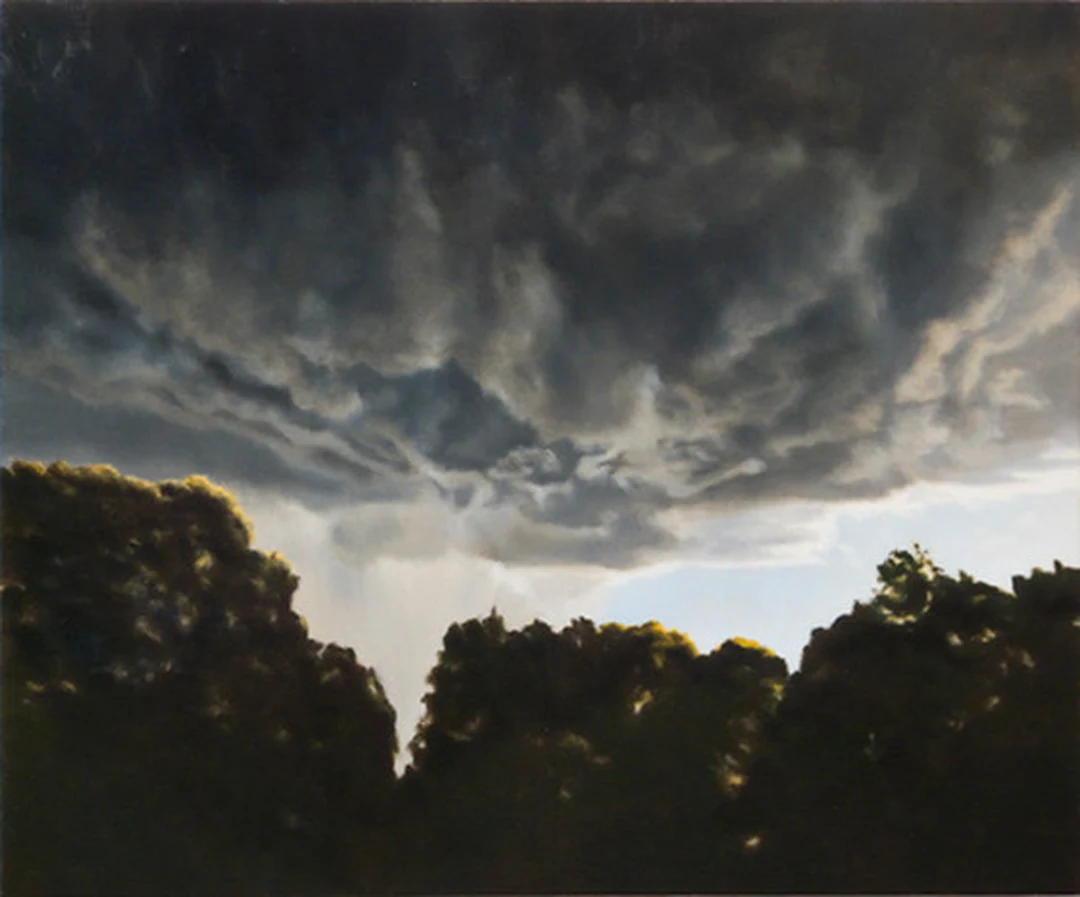
In one large room, Curator Black has arranged a half dozen or so monumental canvases by April Gornik, most of which situate the viewer in the close vicinity to some serious rain. We’re in for stormy weather. There are almost no paths, trails or roads to give us an idea of how we got to our vantage point or where we’d go next. Though from a meteorological perspective the paintings are very specific, our encounter with them is more visionary in nature than documentary. In conversation with the American interest in the sublime which goes back to its nineteenth century landscape traditions and blossoms again in abstract expressionism and color-field painting, Gornik’s paintings evoke a sense of enormity that no one can possess. “Horizon” (2008), for example, uses its extremely low horizon line to suggest how much of our world is weather: barely material at all, more to be understood as a series of shifting veils than as a stable shape. (Gornik’s layering of clouds is so delightful that we might as well be looking up at a Tiepolo ceiling.) It also serves to remind us how many colors—greys, blues, and pinks—go to making up a washed out rainy sky. In “Light Passing” (1987), it is similarly clear that the painting’s compositional interest comes from the sky, whose shapes are monumental without permanence.
From the painter’s perspective, the representation of weather is hard to separate from the tools that the medium places at her disposal. In “Back of the Storm” (1985)—which looks hauntingly like something I might have seen one time driving east on the Pennsylvania Turnpike—cascades of rain are falling along the left portion of the canvas, perfectly indicated by the visible strokes of the brush in dark green paint. Gornik loves to portray what land looks like when seen through veils of water, which is also perfectly captured by chalky glazes over the lushly green landscape.
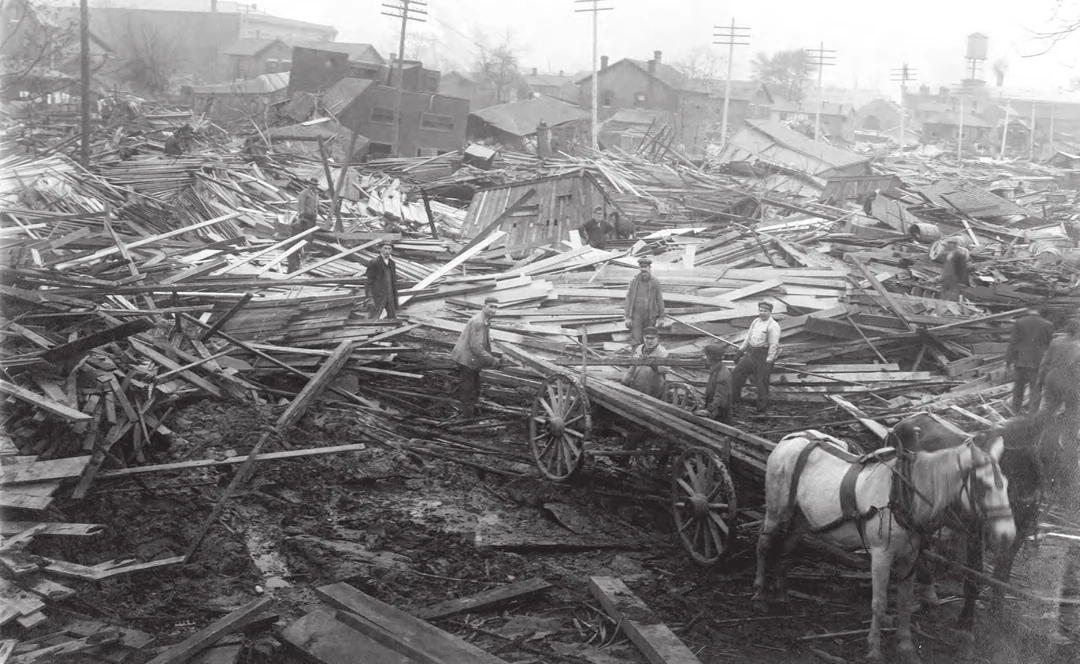
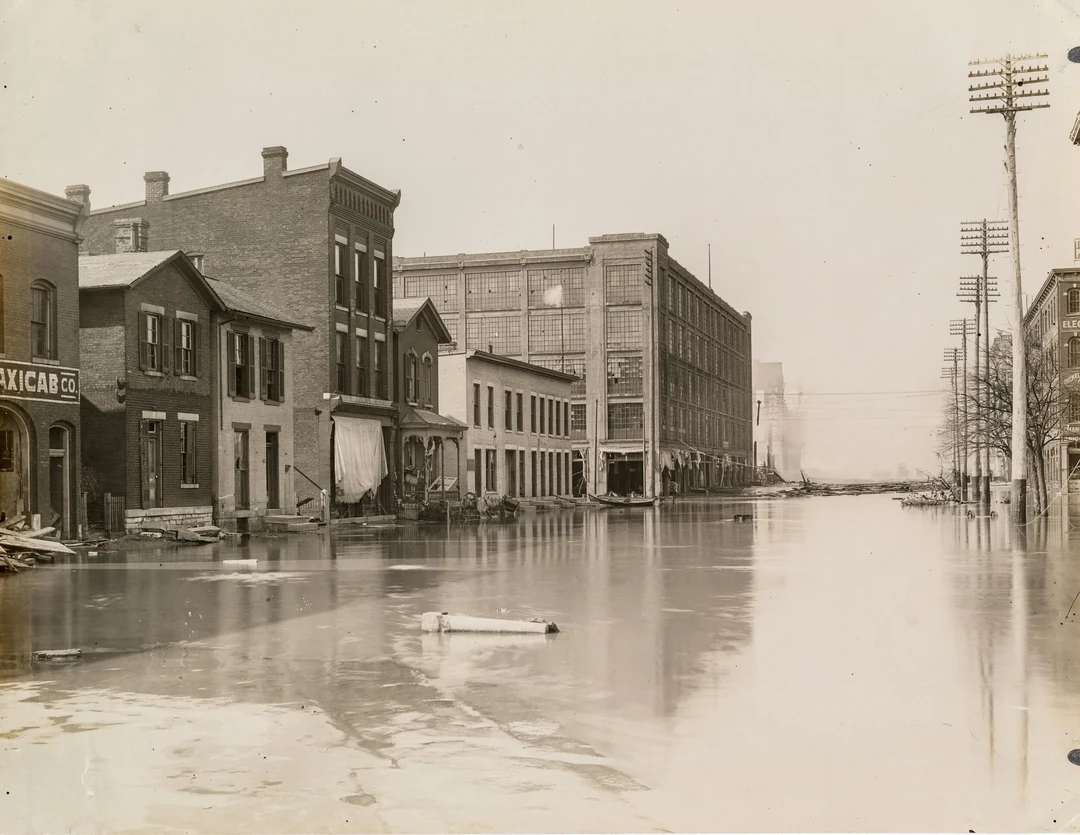
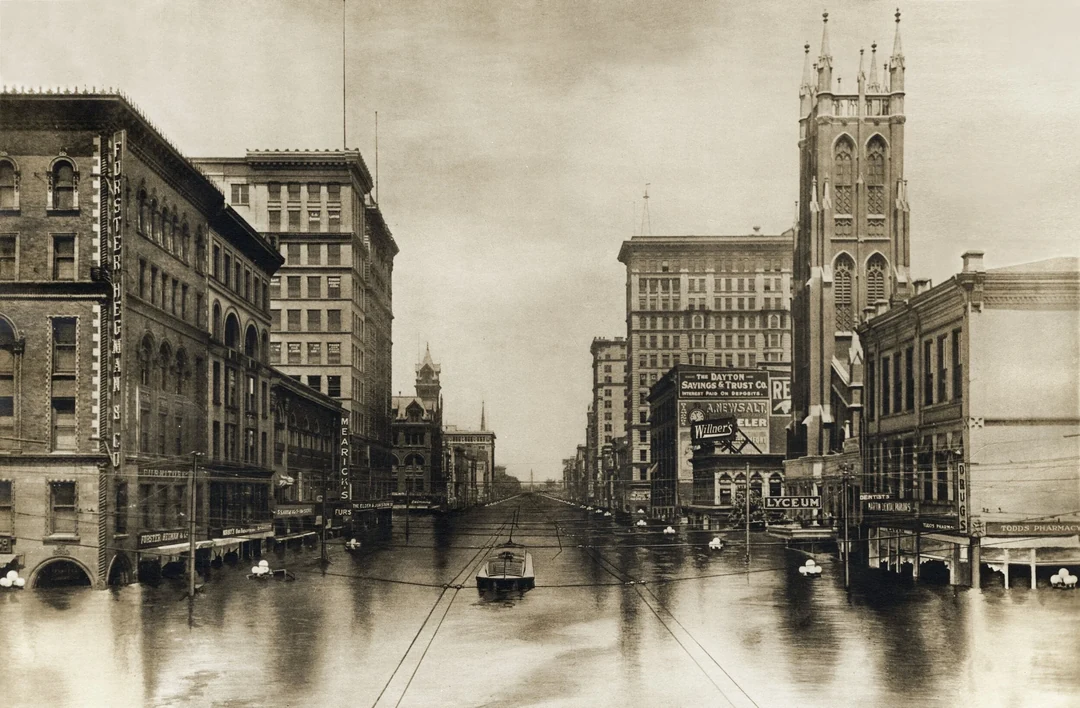
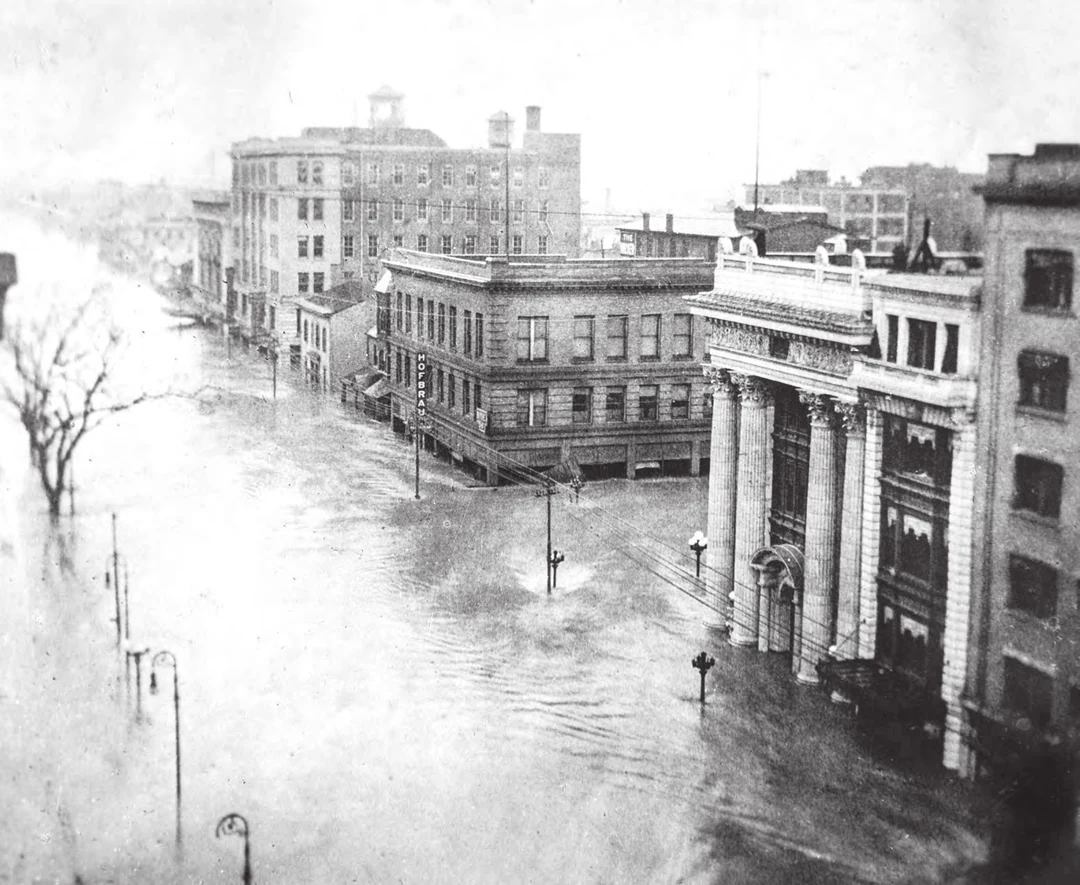
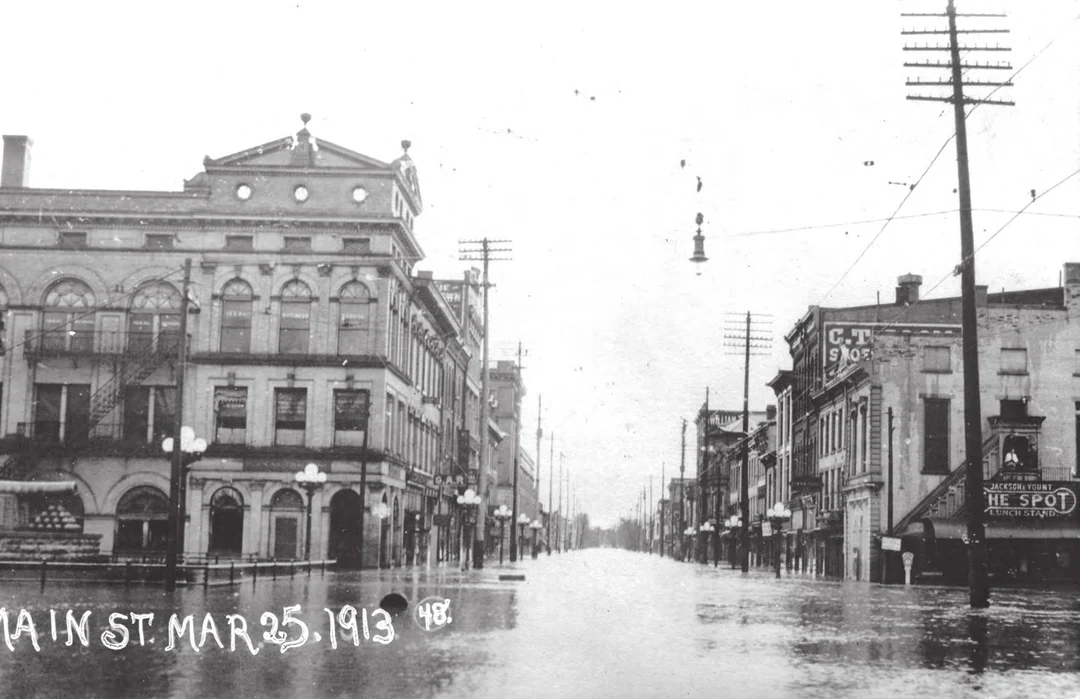
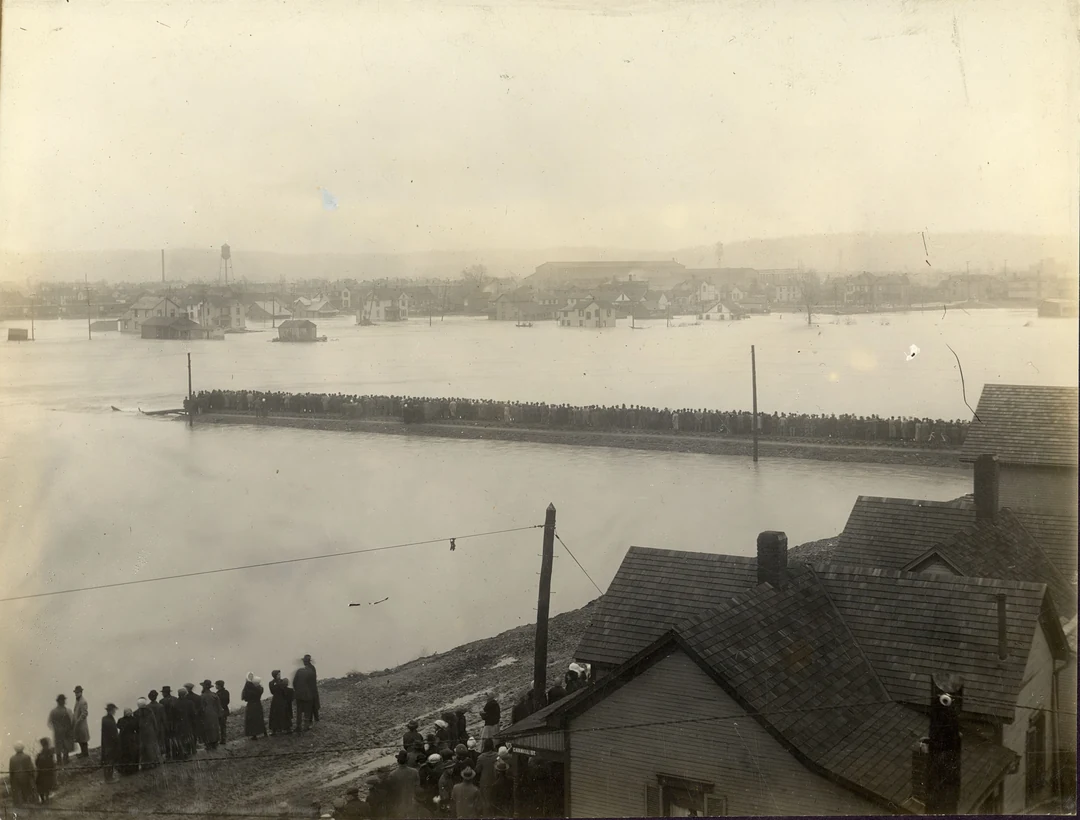
It is hard to avoid the word “dramatic” in describing the canvases, but also hard to explain in just what sense of the word “drama” seems appropriate. By contrast, the whole “Watershed” portion of the exhibition seems keenly interested in just what constitutes drama, generally arriving at a far more social answer. Everywhere, people are gathering together, in small or in large groups, to bear witness to a defamiliarized world and figure out their new relationships to their environment, now wildly out of kilter. Early twentieth century flood photography is not about the sublime; it is about a sense of urban estrangement. Floods are re-arrangers, as anyone who watched videos from Japan’s tsunami will remember. A lantern slide from the flood of 1866 shows a canal boat having settled on a front lawn. In 1913, trolley cars have been swept off their tracks and are crushed against front porches. Carpets and mattresses are draped across the steel pilings of a collapsed bridge. Wooden barrels are everywhere. An outhouse sits in the middle of a street. The show provides a crash course in urban building materials. The splintered wreckage of wooden houses sits next to intact, serene structures of brick and stone, as if it were designed to illustrate the story of the three little pigs. The stability of horizontals is proved illusory: wooden houses have been tipped over, resting at odd angles or even standing on edge. In one especially strong photograph, we are standing on the street looking in through the burst windows of a flooded furniture showroom. Desks, chairs, and tables are all jumbled together in a sliding heap some six or so pieces high. On thepicture’s right, the pile has started to burst out through the plane where the front display window used to be. The head of a dead horse slumps out onto the sidewalk next to them. It is interesting to remember that 1913 is also the year of New York’s notorious Armory Show, which would serve to introduce to the American audience to other rearrangers of space and disruptions of normalcy.
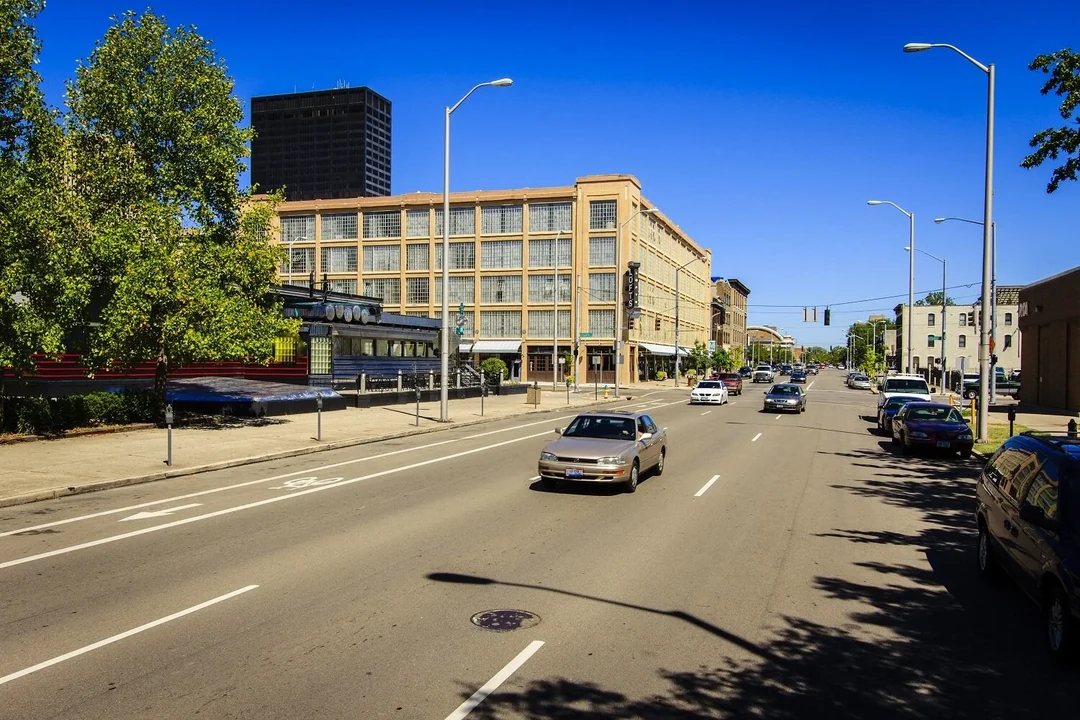
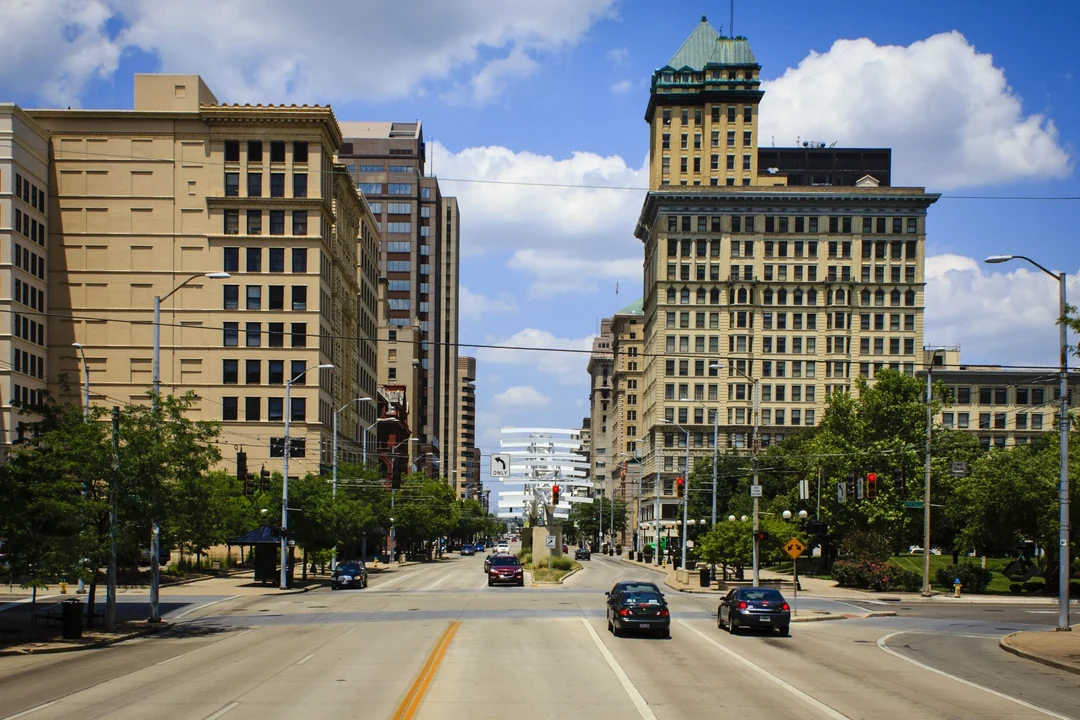
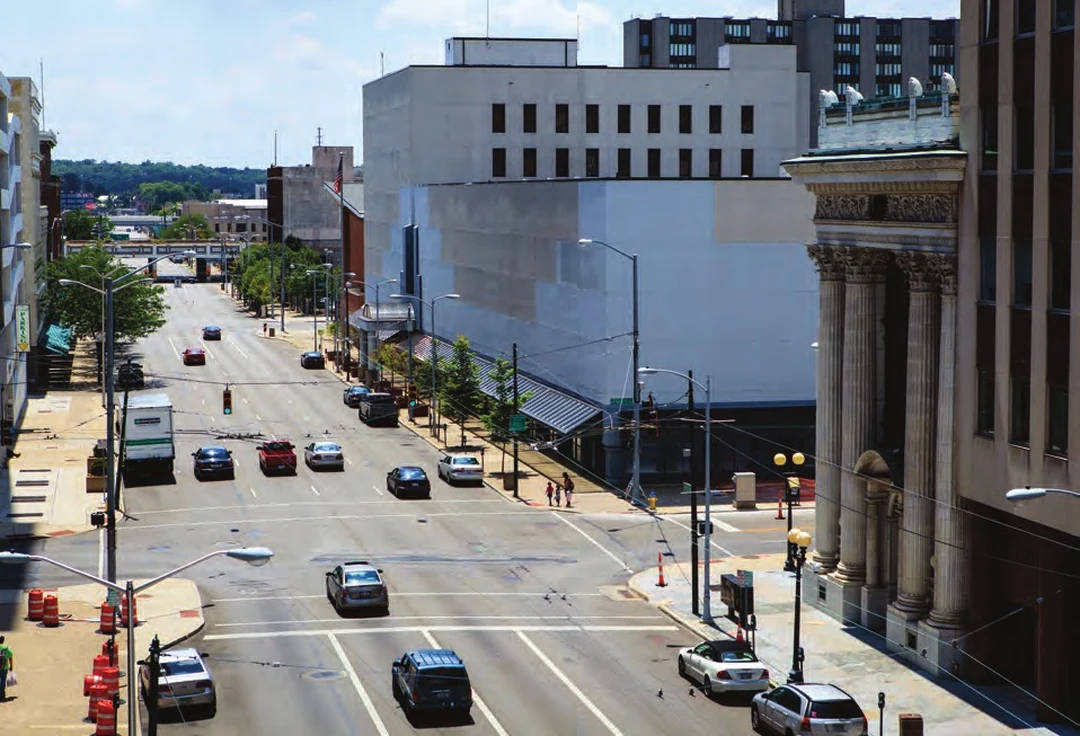
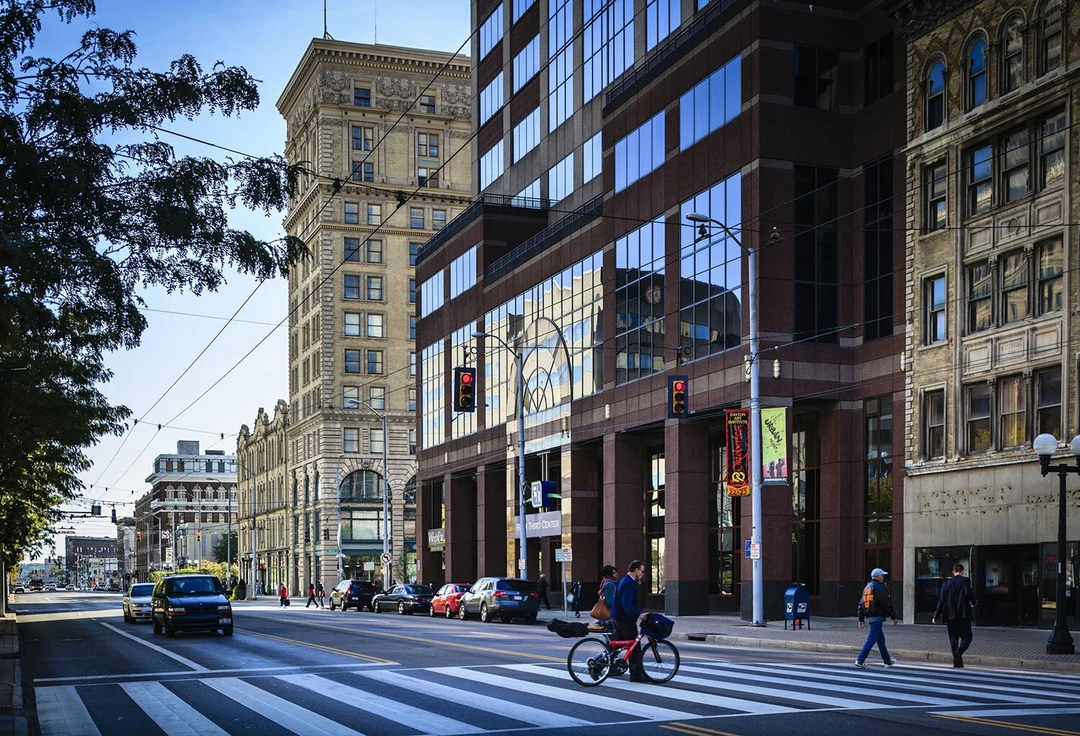
The city itself has changed in a hundred years. Downtowns apparently once had many small hotels. There are few if any factories left downtown, and the same with stables, of course. Andy Snow has contributed his own work to the show, painstakingly tracking down the exact vantage point of the century old photographs. He is a researcher of energy, tenacity, and imagination, and has been able to document urban changes both small and substantial, of substance and emphasis. In a 1913 picture of the “Fire Blocks,” where gas fires obliterated several blocks of downtown, we can see three steeples of churches that no longer exist in Snow’s picture a hundred years later. Everywhere we look, we see contemporary structures that are harsher and more angular than the city center buildings of a century ago. They have less inviting signage, minimal ornamentation, and sometimes are merely metal skins slipped over architectural infrastructure. But Snow has also been careful to document that the city is always morphing, and that change is a sign of urban vitality. In a remarkable 1913 photograph of “West Third,” women are out shopping after the flood, looking at tables on the sidewalk piled high with merchandise. The building nearest us has collapsed. The next one down is a site for “Repairing Automobiles,” and it is still boarded up. The furthest one carries the sign “Open for Business. Complete New Stock.” And a hundred years later? In Snow’s color picture of “Wright-Dunbar,” at the same intersection we see crowds gathered for a street fair as the sun sets, a population as African American as the first picture’s crowds were white, meeting casually and talking in the small groups which make urban life a pleasure. A sign on a nearby building reads “Live the Legacy.”
The “Watershed” documents not only the flood but the medium that recorded it as well. The technical limitations of early twentieth century photography virtually erase the weather, except for the occasional umbrella. One photograph has inscribed on it “Forest Ave—Note current too swift to be caught by camera.” There are very few action shots. A floating house is captured just at the moment when it crashes into the railroad bridge in Piqua. In another, three men are running, though it’s impossible to reconstruct just what they are running towards or from. The photographs have been freely retouched, if for no other reason than to make the signage more legible. Some photographs are tinted. A word to the wise: the floodwaters are represented in various shades of ochre, never blue. The pictures are refreshingly personalized. Many are signed by the photographer. One that shows the front of the Strauss Department Store underwater has written on it: “our store.” Many of the images began as postcards and were both portable treasures and ways of sharing the experiences of those wet, wet days with others. Curator Black has a wonderfully informative wall display about how, over the decades, “photography is presented to groups.” These are pictures for which there clearly was an audience, a public with an appetite for images.
The exhibit documents people’s appetite for visual spectacle. In picture after picture, we see people gathering where the footing is safe to view places where the footing is not. One quality of a flood is that it creates vantage points where none had been there before. People find the high ground of hills, but also gather in large numbers along the crests of levees and the elevated approach roads to washed-out bridges. Men explore the wreckage along the streets; an all-male group stands on the balcony of a downtown office building to watch the current. Mixed male and female groups stand staring on their porches. After the waters have receded, elegantly dressed women with muffs step out with their men to see buildings whose walls have collapsed.
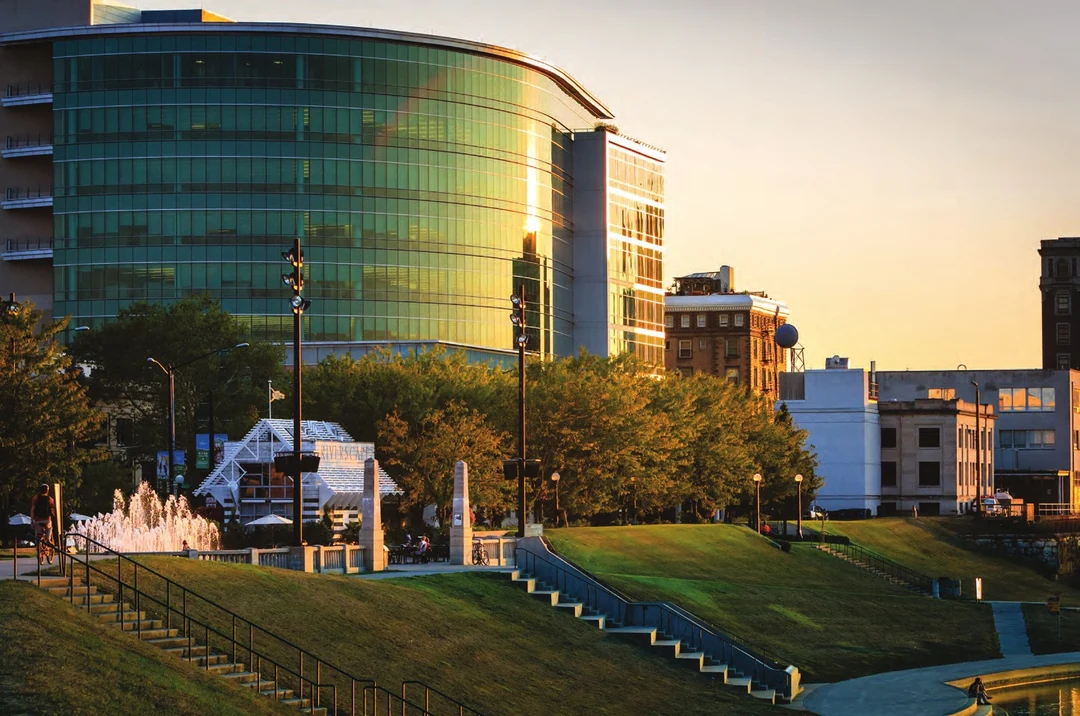
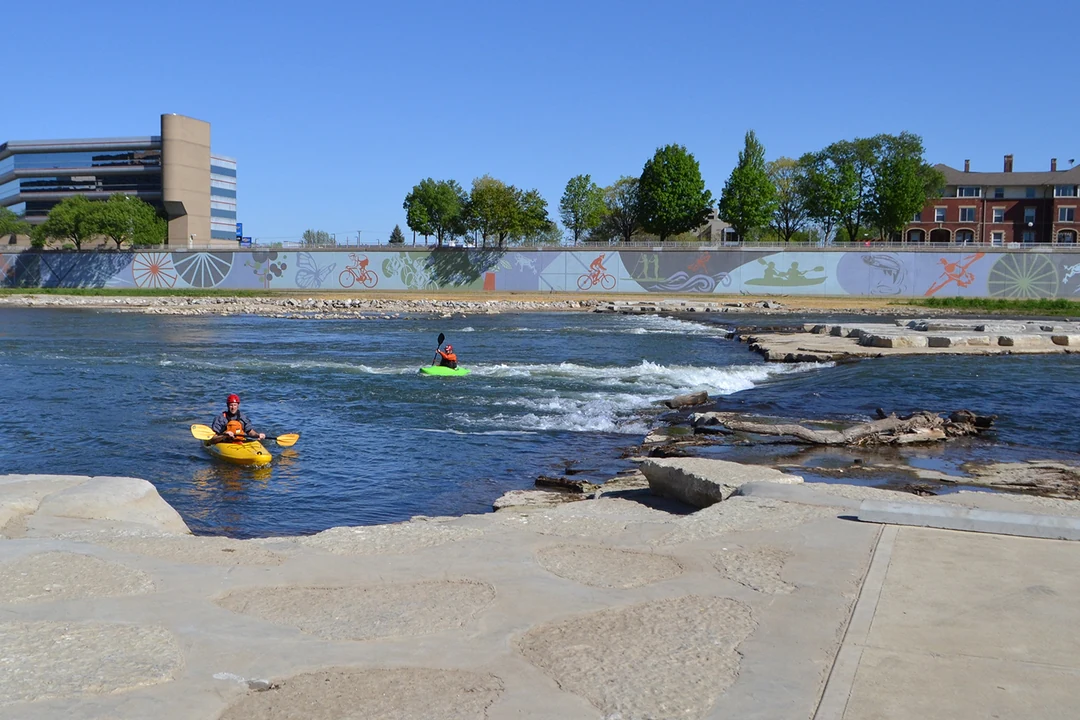
“Riverbank,” the final portion of the show, wonders from a civic standpoint what it would take to find people willing to bear witness to the river that runs through it today. The show’s final panel asks directly “What would entice you to spend the day on the river,” and people are posting their responses directly on the wall. Some of their answers are part of a wish list that would be familiar to many of today’s metropolitans, some achievable, some fantastic: “Lots of free parking”; “A good restaurant”; “Good lighting for evening events”; “Urban gardens”; “Ziplines”; “Sand, cabanas, and beer.” Some must be gratifying to the museum: “This exhibit of the flood to be exhibited permanently.” Others are cautionary: “Emergency care center (in case of another disaster.” My own contribution might have been “Exits off I-75 that are open.” But I was most struck by one proposal that reminded me what gets lost in taming the river, and what brings people out to see how nature winds its way through our civic life: “The river having a strong flow (current).” Just not too strong.














Comments powered by Talkyard.