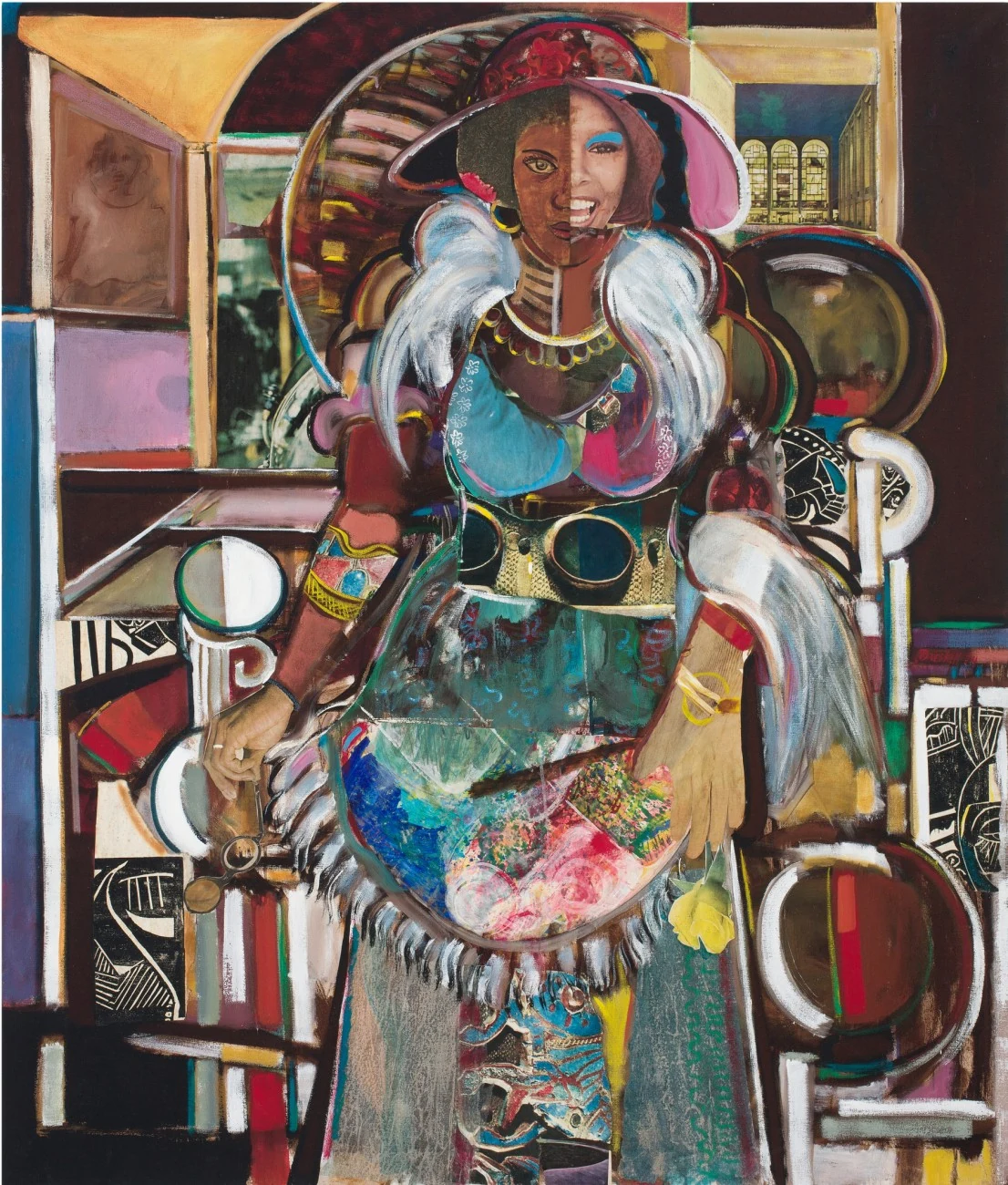
David C. Driskell, Jazz Singer (Lady of Leisure, Fox), 1974. Oil and collage on canvas. Collection of the Estate of David C. Driskell. Image from the Los Angeles County Museum of Art, courtesy of DC Moore Gallery, New York. © Estate of David C. Driskell.
The Taft Museum of Art’s “African American Art since 1950: Perspectives from the David C. Driskell Center,” running from February 15 through April 28, 2013, tries very hard to live up to its title, but the expansiveness inherent in this kind of compendium is just too all-encompassing to provide any kind of focus outside of the fact that the works in this exhibit are made by artists who happen to be African American. That’s okay. It’s a great little survey of all kinds of art, installed beautifully, with some particular moments that transcend the generalities and find humor and pathos in being an artist making art about being a human in a world often trying to dismiss you as not.
The exhibit is organized around lofty concepts and chapters, and the one that took me out of the abstract and into the blissfully contentious and succinct concrete was “Memory and History,” featuring a wide array of works that somehow find mystery and mischief in their responses to being relegated and defined in power structures they have nothing to do with. Kara Walker’s 1997 pop-up book, “Freedom: a Fable” meditates hilariously on the sexualized image of the female body inherent in colonization, using cut-paper silhouettes and pop-up flourishes to undermine “innocence” and “sentiment,” while letting us know there’s no real comfort even in a storybook. It’s not preachy though. An odd beauty emanates from Walker’s appropriation. The perfection she finds in cut-paper becomes her artistic voice: cutting, dangerously simple, adept at knowing the difference between what we are given to believe, and what we have to believe to stop believing.
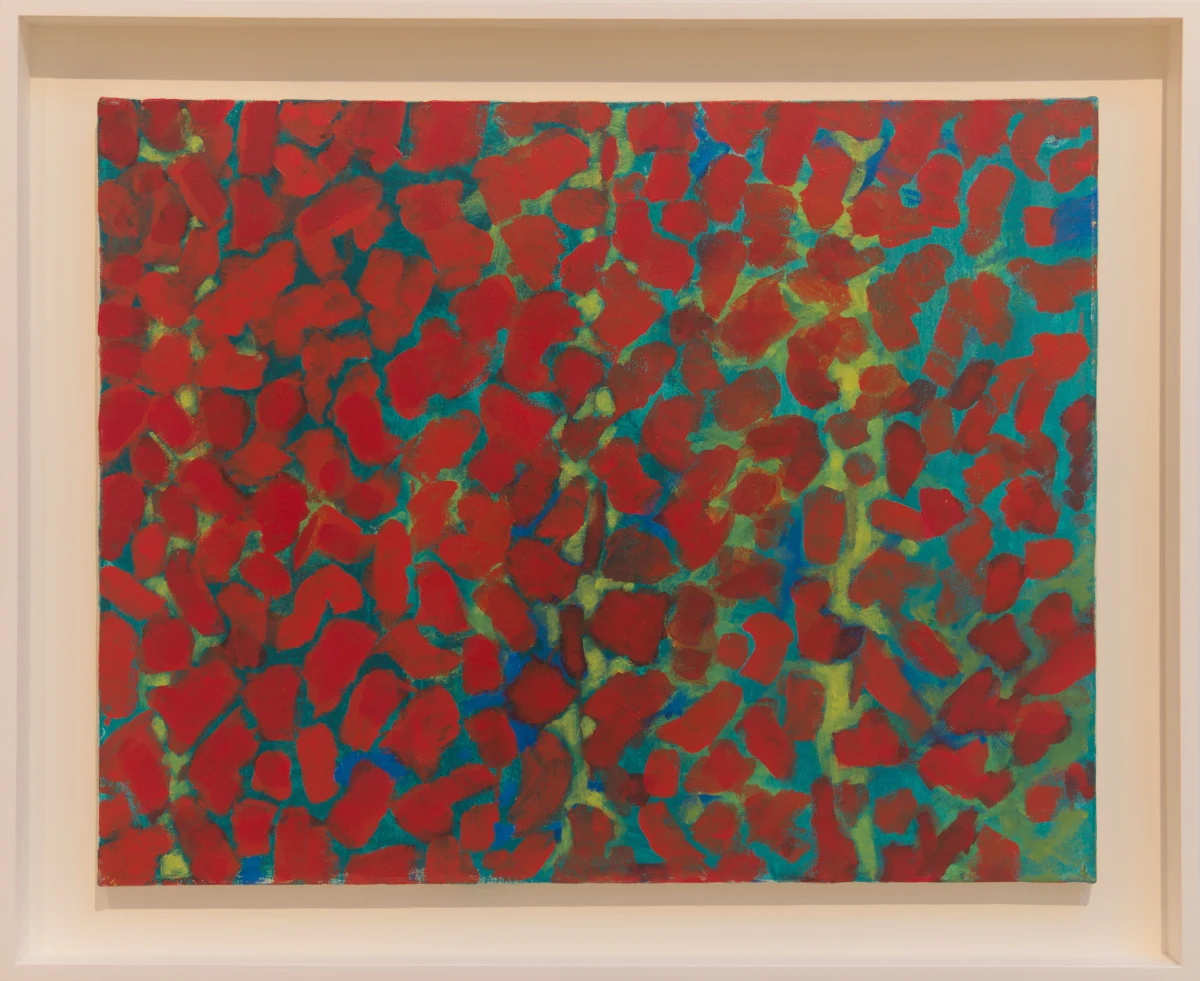
Alma Thomas, Falling Leaves, Love Wind Orchestra, 1977. Acrylic on canvas, 21 1/2 × 27 1/2 in. Private collection. Photo by Victoria Emily Jones. Image from Art & Theology.
Whitfield Lovell’s charcoal on tabletop 1999 piece, “Mercy,” echoes Walker’s inherent clarity, finding a ghost in the moment of supper being served. Lovell’s skill at representation allows his charcoal drawing to disappear somehow while appearing – there’s an ache inside the piece, his drawing of the woman transcending what a drawing is supposed to be as it is located within a scene Lovell provides. Old spoons and bowls frame the drawing, and the table-top in which Lovell drew in charcoal is scarred and stylized, like a prop that somehow becomes functional.
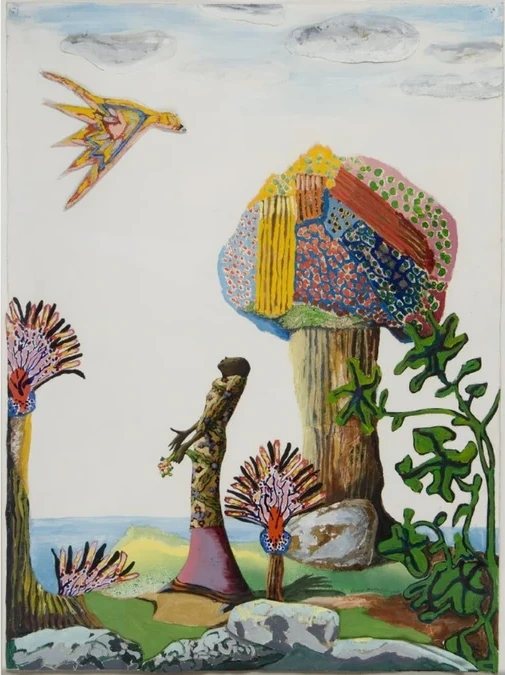
Benny Andrews, Morning Song Study #1: Musical Interlude Series, 1999. Gift of David C. Driskell, David C. Driskell Center, University of Maryland, College Park. Image from the David C. Driskell Center. © Estate of Benny Andrews / Artists Rights Society (ARS), NY.
Hank Willis Thomas contributes a 2009 lithograph, “Untitled” featuring a slave-selling ad from a 1672 Charleston newspaper, replacing the original slave imagery with silhouettes of Michael Jackson and Michael Jordon. Almost a one-note joke, Thomas extends the humor beyond sententiousness by giving the document an Andy-Warhol precision, the lithograph transforming what was once an evil, banal document of kidnapping, ownership and murder into a mean-spirited and righteous romp.
Lorna Simpson’s 1996 “Untitled,” a color digital photography and felt, is a Max-Ernst meditation on Victoriana and slavery, finding romantic cynicism in the juxtaposition of two lady suicides and two slaves being murdered. You can feel anger solidifying into outrage in this piece, cooled by a sense of exactitude. Simpson seems to be seeking a way out of sentimentality by focusing on its inherent need to simplify and decorate emotion and events so they become greeting-card moments we can digest without thinking. By pulling these two moments together, we see how death can become as meaningless as anything else, but Simpson’s juxtaposition also allows us to make a choice to locate double meaning in her purpose. Simpson’s intentionality, like all of the works in the “Memory and History” section of “African American Art since 1950: Perspectives from the David C. Driskell Center,” burns away naïve notions of history and contrition.











Comments powered by Talkyard.