
Films in Review: Some New Uses of Technology in the History of Film as Art: Color and 3D – with recent examples: Pina (Wim Wenders); Hugo (Martin Scorsese); The Artist (Michel Hazavicous)
The use of color for serious artistic expression has a long history in film, with hand-tinting, (from the beginnings and into the late 1920′s), though the advent and rise of Technicolor in the 1930s. This use of color as an element of interest in itself flowered in John M. Stahl’s Leave Her to Heaven and Michael Powell’s Black Narcissus (among others) in the 1940s, and continued in Powell’s Peeping Tom, and Age of Consent; Jean Renoir’s theatrical experiments in the early 1950s, culminating in Picnic on the Grass; and Alfred Hitchcock’s expressive uses of color in Vertigo, The Birds, Marnie, etc. At one time, color was primarily used for westerns and musicals in Hollywood, but after the rise of television, more and more films were made in color. By now, special provisions need to be made just for black and white processing, and color has been the general norm for some time. At one time, the non-naturalistic vividness of Technicolor lent itself to exaggerated effects, and the aesthetics of subtlety and nuance beyond melodramatics were usually ignored.
At some point, the new resource for expressive and subjective uses of color began to be explored by more serious directors. In the mid to late 1960′s some influential filmmakers began using color in “artistic” ways, e.g., Michaelangelo Antonioni’s Red Desert, Blow Up, and Zabriskie Point; Bernardo Bertolucci’s The Conformist; Alain Resnais’ Muriel; Agnes Varda’s Le Bonheur; Jean-Luc Godard’s Contempt and Weekend; Claude Chabrol’s A Double Tour/Leda, and later, Les Biches, La Femme Infidele, Que le Bete Meure, Le Boucher and La Rupture, etc., in a long series. Eric Rohmer’s Claire’s Knee and Jacques Rivette’s La Religiouse, etc. were other color experiments of the French New Wave.
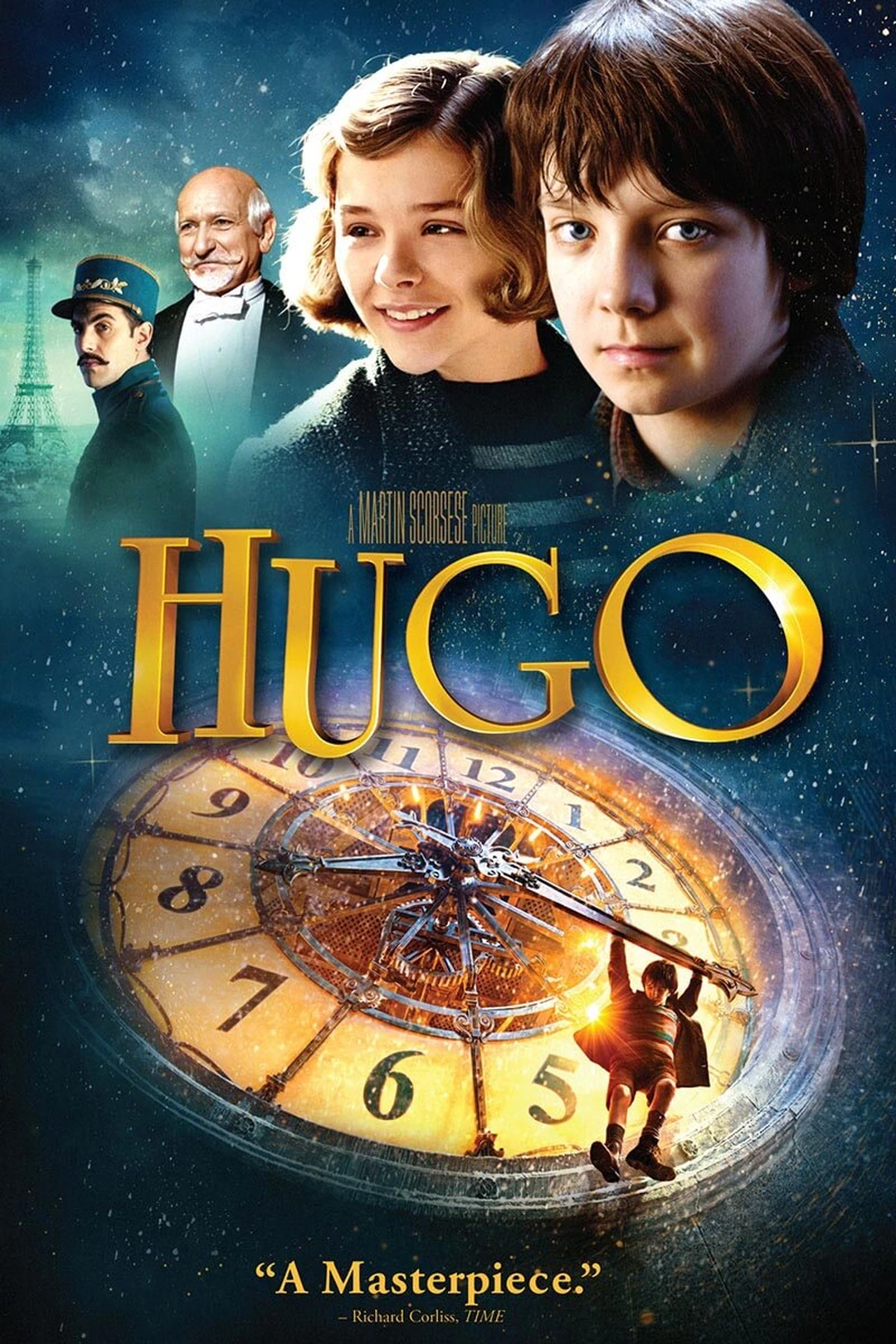
In a similar way, 3D, once used mainly for shock and overt effects in the horror and action genres, more recently began to be considered for more serious uses. James Cameron’s success with Avatar was the breakthrough for this in America, and the films that followed capitalized on the profits to be made from the fad, and its surcharged ticket prices. Now, 3D has been put to more expressive tonal uses, establishing a “norm” of depth photography in the hands of master filmmakers like Martin Scorsese (Hugo) and Wim Wenders (Pina). And Werner Herzog used 3D for his photographing of the Lascaux caves for a recent documentary.
What was once a factor in 1940s and 1950s noir, the depth of focus photography of John Alton in the intense black and white films of Anthony Mann, was first seen in Gregg Toland’s remarkable depth of focus work in Orson Welles’ Citizen Kane and William Wyler’s The Best Years of Our Lives. These films established a three-dimensionality of space in a sharp focus beyond what the eye would normally see: there are not planes of sharpness selected here over softer or out of focus planes—but everything is in focus, a kind of hyper-real space for the viewer to scan in a heightened sensation of super-reality, often surreality. Because it doesn’t correspond to the eye’s natural selectivity of focusing on an object’s plane, one at a time, it’s all in focus, and the simulacrum of Renaissance perspective is very deep. This creates, in this viewer, at least, a heightening sensation, a visual intensity that makes the images feel that much more vivid and “real,” something like certain Northern Renaissance art.
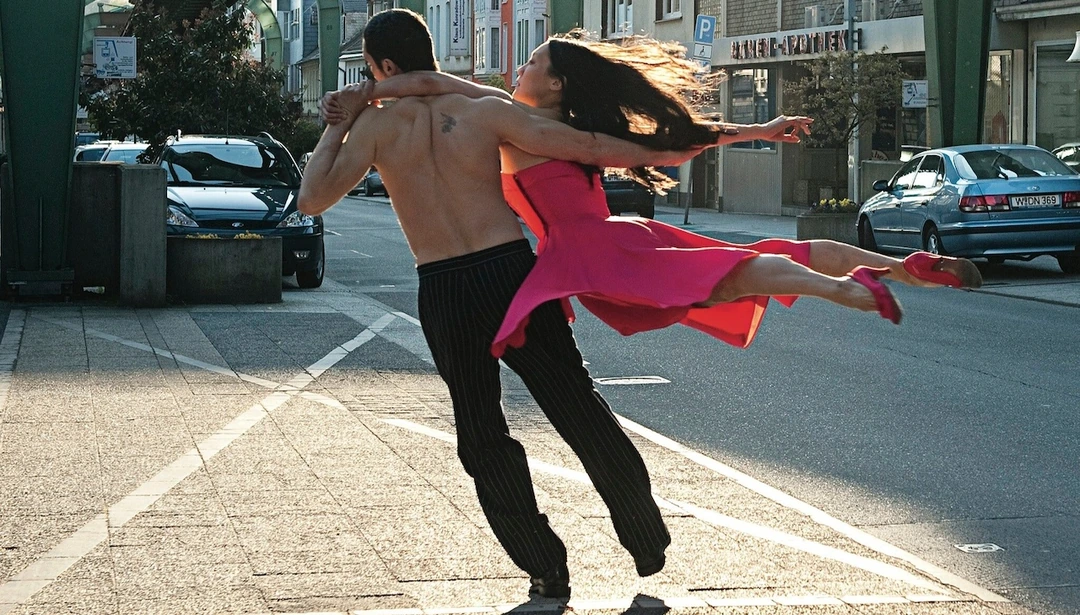
This same sense of an alternate reality can be created by the careful use of 3D, I think. So does Wim Wenders’ camera move in homage to the choreography of Pina Bausch and her company. The 3D here offers the layers and dimensions in which the symbolic artifices of her dances take place, as well as opening out the spaces of their worlds, on stages and in the open air in and around Wuppertal, Germany. High artifice mixes with an often naturalistic ground in an odd and often fecund contrast on screen. The depth of field is the arena for the multi-layered action and the multi-layered meanings of the “language” of the dances the dancers create with their bodies, seen in the roundedness of 3D’ snew three-dimensionality on screen. This artifice lends itself to this intensified visualization– and the appropriateness of the match of form and content is maintained throughout, often surprising in its unforeseeable appropriateness to the materials.
After a time, I became used to the various kinds of body-languages and the uses of props Pina creates. There are clear motifs and patterns of exploration: the interactive relations of men and women, often charged with sensuality and power relations and sometimes mutual support, as in a trust game, e.g., of falling helpless into someone else’s arms. Sometimes, there is whimsical charm in setting and movement, captured more “in the round.” The use of chairs as props in Muller’s Cafe, is especially noteworthy. There is a kind of repetition in the modes and obsessive themes, which might flatten out after awhile, but the sparse interviews in many different languages of the dancers indicate a spiritual quest for a precision that seems a way of life for this extended troupe. The range of ages and body types, the mix of sexes in the dances, show a unity of commitment to a higher vision of dancing as a way to wisdom through discipline of movement, a way of life found through the spiritual commitment to movement and connection, to Dance itself. This ideal vision is clearly implicit in the totality of the rhythmic movement of the film itself, the circularity of the precision group dance to the seasons in repeated gestures, in a line through a space, which opens and closes the film.










Comments powered by Talkyard.