
Joseph Winterhalter’s show “The Revolution Says:” at Clay Street Press, presents a portrait of a contemporary American society lacking political will and stifled by emotional inertia. He presents two large paintings on canvas, a series of small sculptural paintings, a wall sculpture of hand made tiles, and some lithographic prints. When listed this way, the work sounds formal, and one might expect a certain sensual experience upon entering the gallery. This is not the case, as Winterhalter’s rigor comes from his conceptual depth not his formal transcendence. The diversity of form yet cohesive statement of the works is impressive. Winterhalter employs a visual language found in institutional architecture, military camouflage, and digital imagery to get his points across. Along side these he presents images associated with a series of extremist political movements. Slogans, images and graphics from the groups are reproduced in lithographs. Winterhalter was born just after the upheavals of the sixties in the strange social trough known as generation X. The works presented here hold a mirror up to the listlessness associated with his generation’s feelings towards politics, authority, and society.
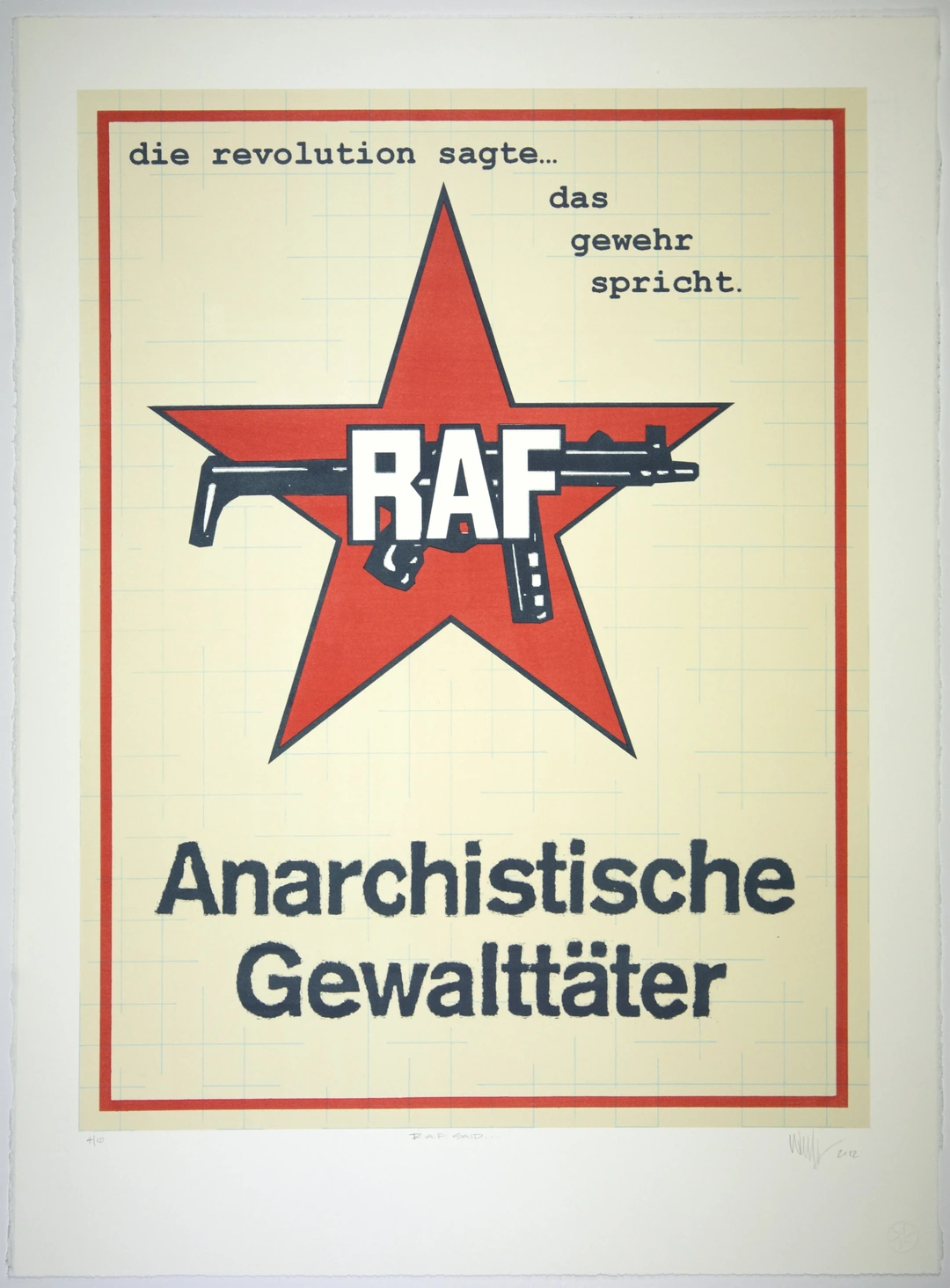
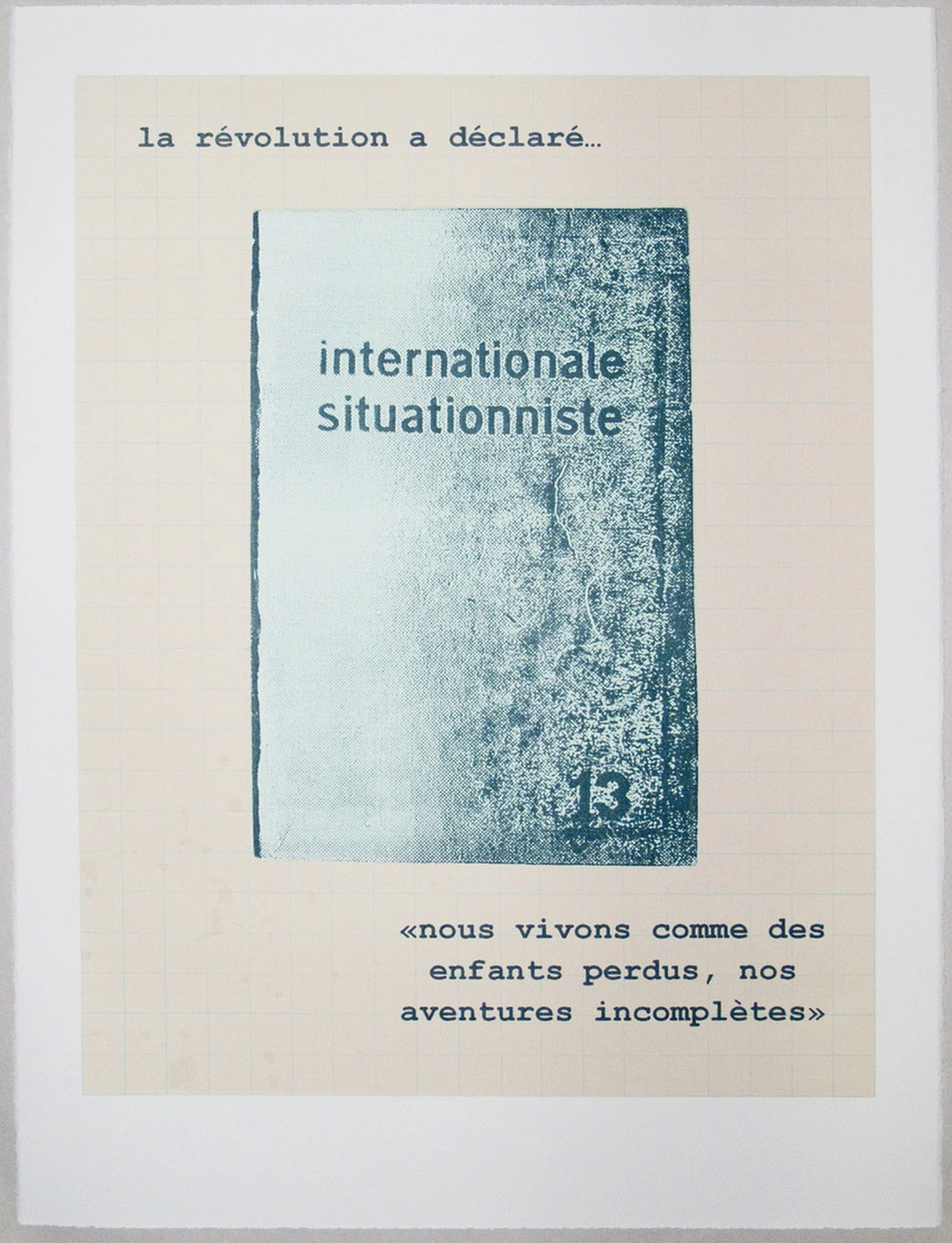
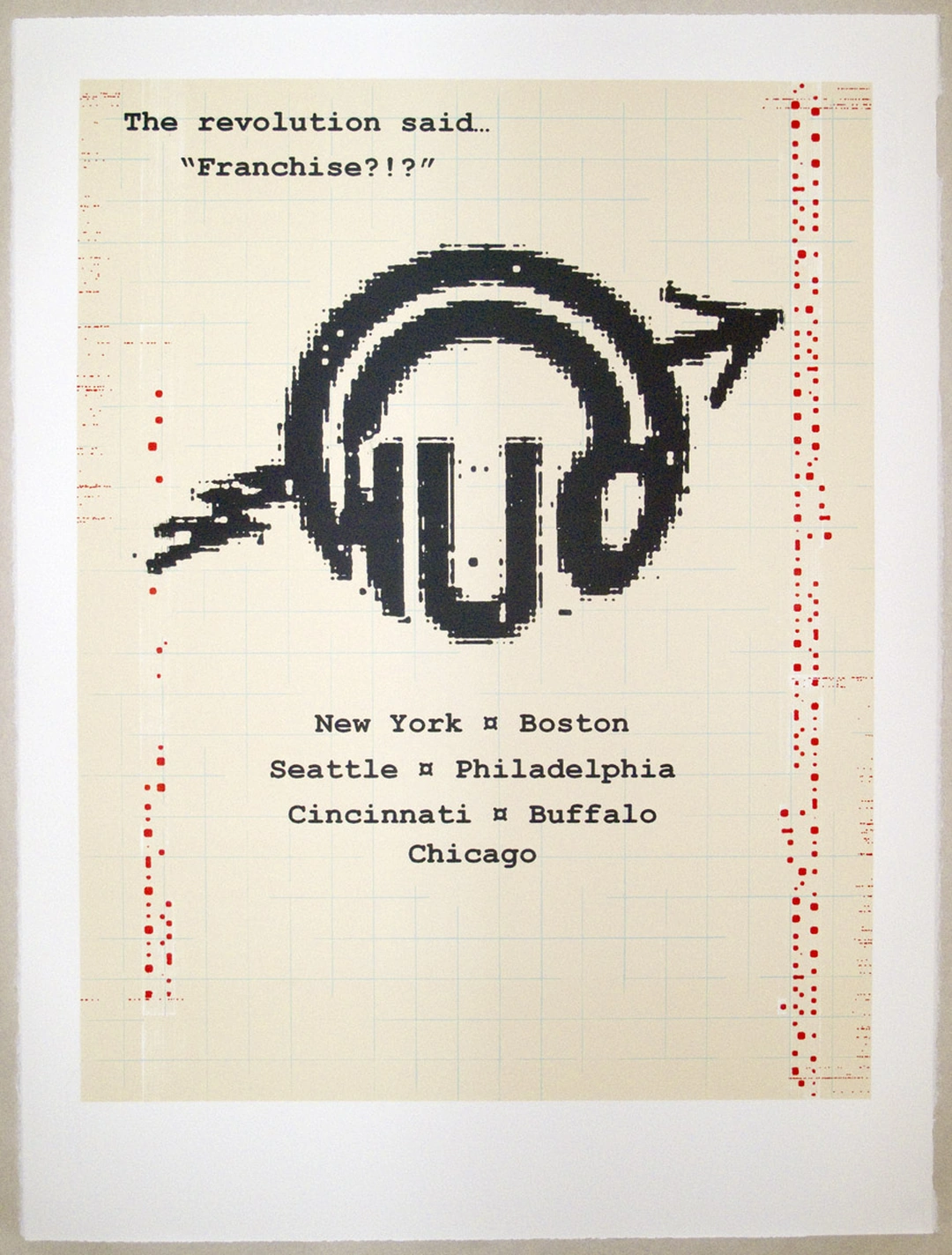
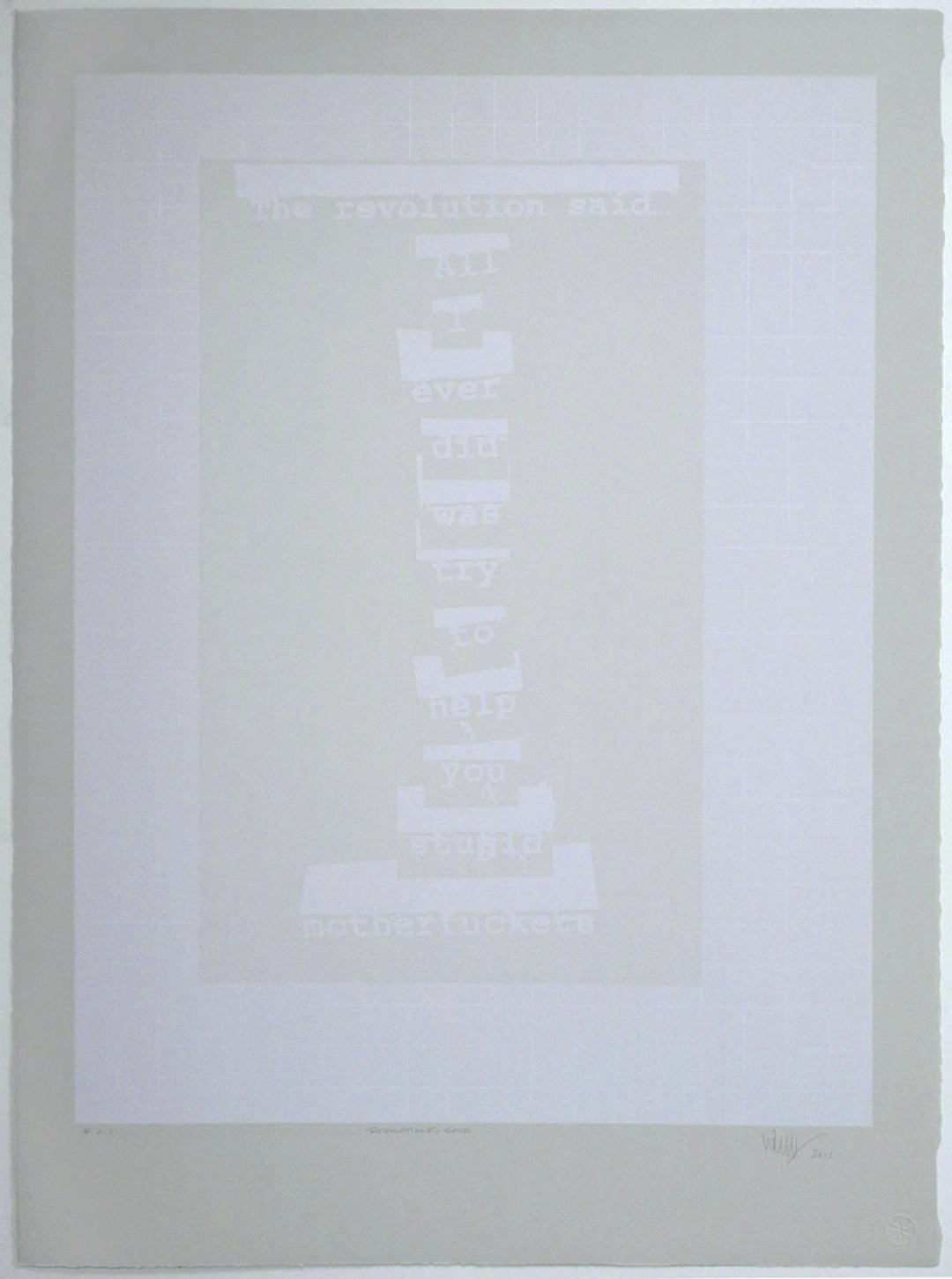
This show is uncompromisingly political. The series of Lithographs in the show: S.I Said, RAF Said, Weatherman Said, Revolutions Said, and The audacity of Hope present a bevy of past political movements that championed anarchy and revolution in various countries. Although Winterhalter is not endorsing their agendas specifically, he is nostalgic for their momentum. The lithographs stand like an anti establishment hall of fame along the far wall of the gallery. The Baader-Meinhoff RAF, Situationists International, and Weather Underground are included, all of which rose to prominence in the sixties just before Winterhalter was born. These prints stand as a reminder of what “taking a stand” looks like. They are bold, clear, and decisive in their visual language, in contrast to the muted colors, overall patterning and pixilated forms in the paintings.
The large paintings in the show hold a heavy uneasiness. This imbalance happens for two reasons. On the one hand it is a result of the obvious political agenda of the show in contrast to the rich surfaces of the paintings up close. This creates a sensation of muted noise like static on a television. We are given a sense of the human presence, but only if we get past the overall super flat appearance and machine generated forms. The paintings are formally awkward. Winterhalter’s painterly language has its roots in minimalism and the process based work that dominated sculpture and painting of the 80s and 90s. Artists such as Agnes Martin and Frank Stella are present, as well as Anselm Kiefer, with his alchemy of materials that Winterhalter shares. The paintings at Clay Street Press utilize latex paint, waxes, resins, and other high and low craft materials resulting in a soft patina. The paintings glow like old leather or worn flooring. This atmosphere promotes quiet and introspection. Up close the works seem to ask for meditation. One cannot help but imagine the buffing, sanding, wiping, and coaxing that were required to create the effect. The awkward feeling is also a result of these diverse surfaces meeting the hard geometry, strong text elements, and mechanical shapes in the pieces. Winterhalter’s large-scale paintings are peculiarly close to the ubiquitous look of gymnasium floors, cafeteria walls and hospital bathrooms.
The compositions are unrelenting in their harsh geometry. They are cut into rectangles, tiles and mechanical patterns, muffling the effect of the hard won surfaces underneath. Again a political parallel seems apt: Contemporary society’s inability to organize around a set of beliefs or feelings is a result of the iron control of our consumer culture and fear of uncertainty.
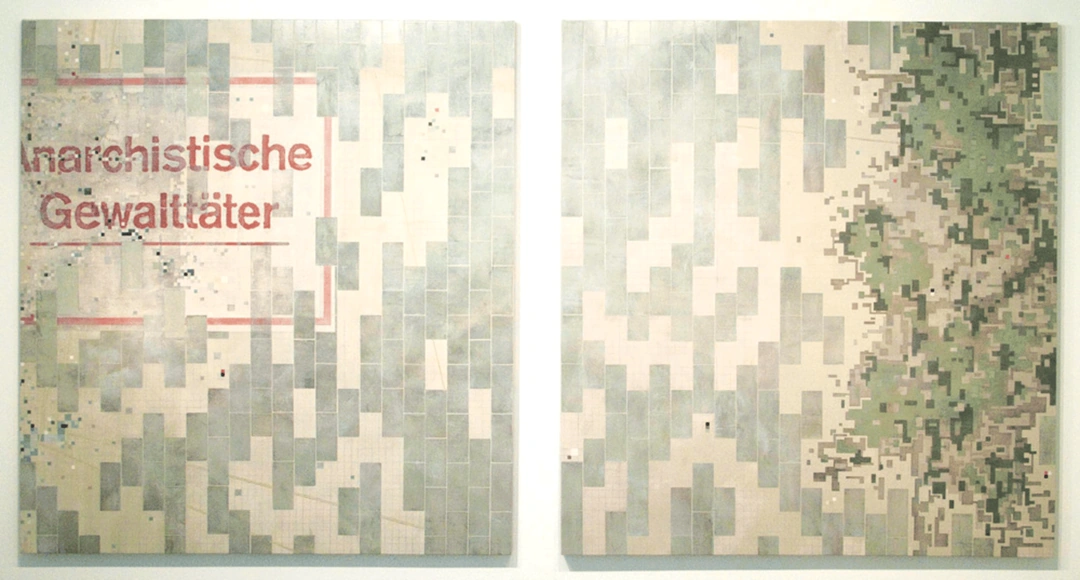
Dissemination…Under the Big Black Sun. is the largest work in the show. It is a diptych painting on canvas measuring 78” x 150” The shape language of digital communication and Kmart wall vinyl combine with a surface that feels strangely opulent upon close inspection, like waxed cotton or distressed flooring. The German words “anarchistische gewalttäter”or: “perpetrators of anarchist violence” are stamped in red in the upper left hand corner of the painting. The conceptual contrast here is clear: The large worn and austere panels that comprise the ground for this statement are our contemporary political landscape: mottled, repetitive, secretive, ultimately muted and impotent. The clear hard language of the text visually clashes and negates the soft variations of the surface.








Comments powered by Talkyard.