When the Cincinnati Art Museum first announced its exhibition schedule for the coming season, I was thrilled to see that Masterpieces of Japanese Art was opening in February. At the time, I assumed it was going to be a traveling exhibit, perhaps from the Museum of Fine Arts in Boston, or from the Asian collections at the Nelson-Atkins or Cleveland Museum of Art.
Later, I was astonished to learn that it would feature works exclusive to the permanent archives of the Cincinnati Art Museum; works of art that had never or rarely been on display before, collected by Cincinnatians during their travels at the turn of the last century.
The treasures in this show have been studiously selected from the Museum’s 3,000 piece collection of potential offerings to provide the viewer with an overview of Japanese Art beginning from the Heian period (794 -1159 A.D.), which saw a flowering of artistic activity in Japan, through the 19th century.
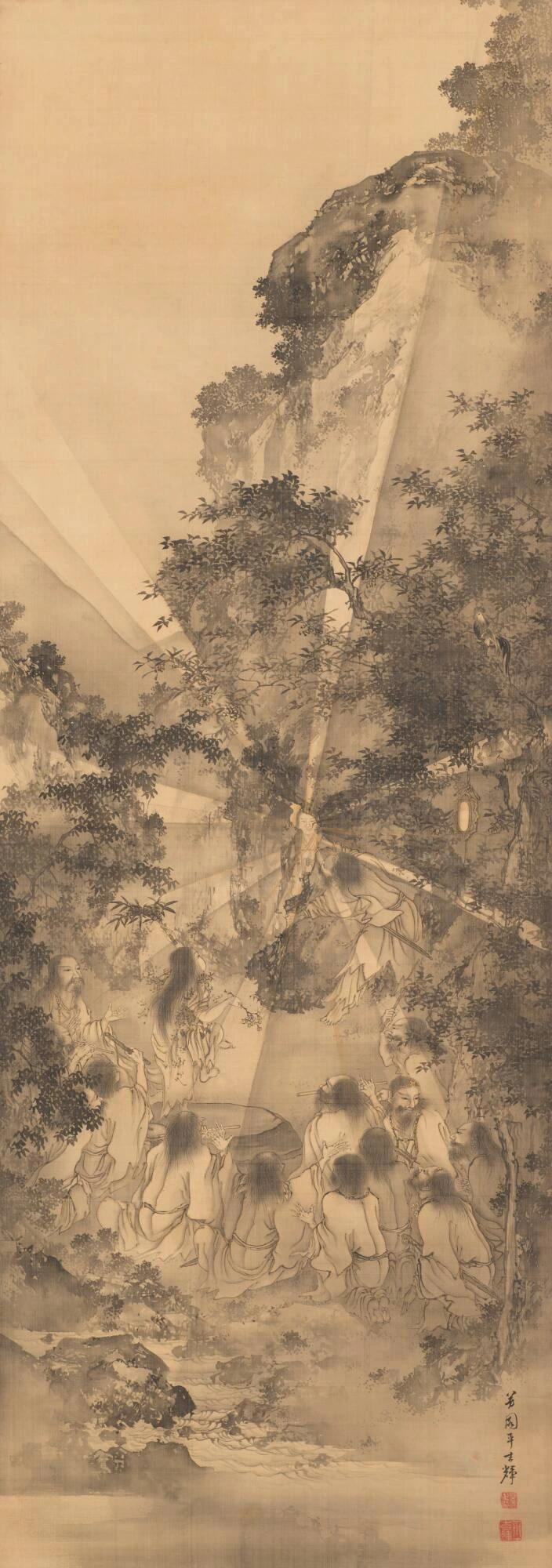
Selections illustrate the vast array of mediums and disciplines — ceramics, scrolls, armor, kimonos, ivory carvings, masks, and screens, to name a few – which help us to better understand the context and the role that art can play in preserving an extraordinary cultural heritage. As you view the exhibition, you’ll notice that some of the objects were done for utilitarian purposes and therefore no artist is named. Finely crafted, these pieces were probably not deemed art at the time they were made. An excellent example of this is “Suit of Armor”, Edo period (1615-1868). Although the armor was made for protection, its beauty is undeniable. It is composed of a multitude of materials and interwoven into a complex design. In the lower chest area of the armor you’ll see an exquisite and simple landscape design of a gold sun and silver waves, the only asymmetrical element in the entire suit of armor.
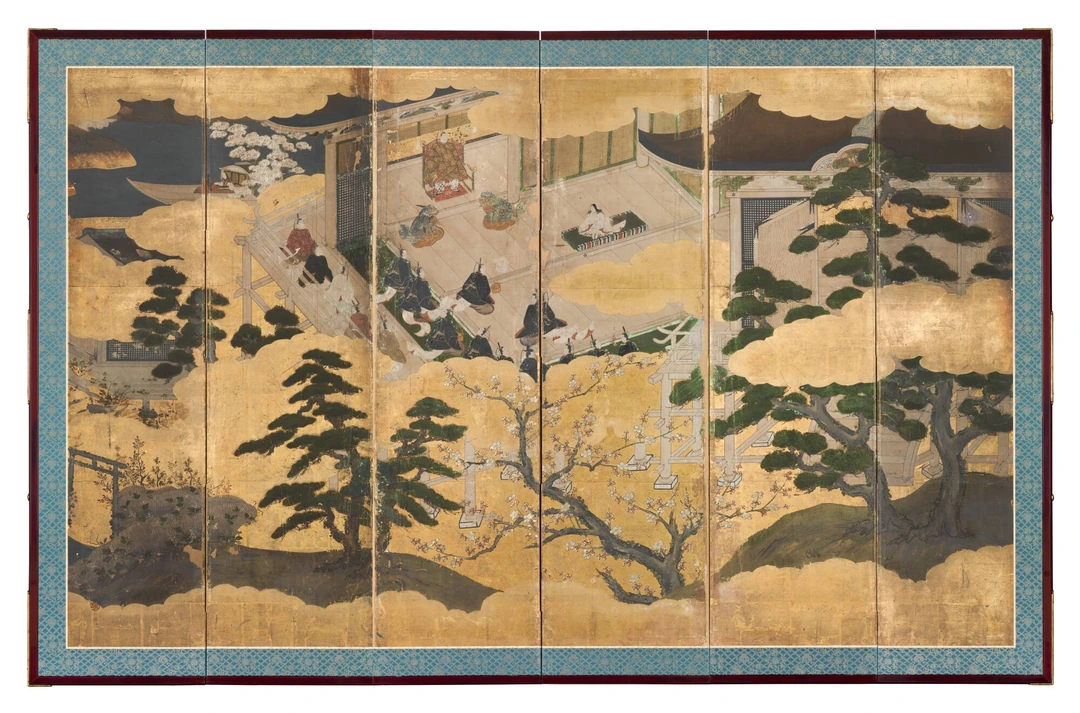
I was struck by how vivid the colors, glazes, and lacquers have remained; in some cases, for over a thousand years. The diversity of subject matter is also worth mentioning, drawn from literature, mythology, nature, fashion, and drama, and gives you a clearer understanding of the culture and the people. A pair of screens Scenes From The Tale of Genji not only helps to illustrate one of Japan’s greatest pieces of literature, but helps us visualize what court life must have been like during the Edo period. Like the book, it attempts to tell a story by unfolding multiple scenes on one screen.