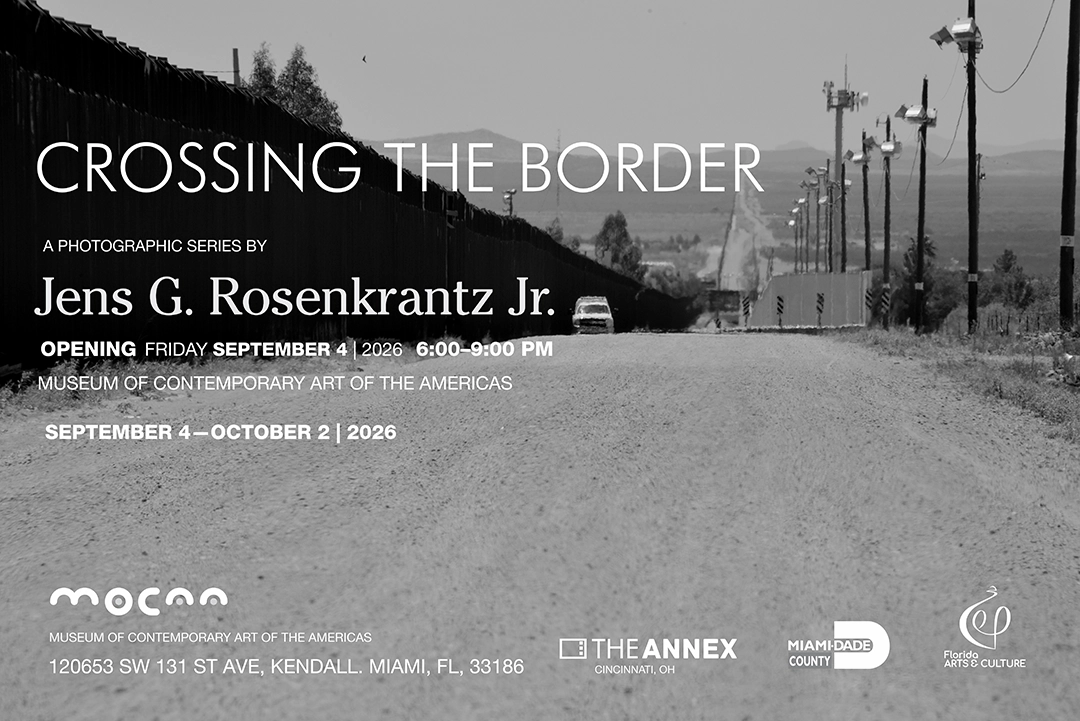
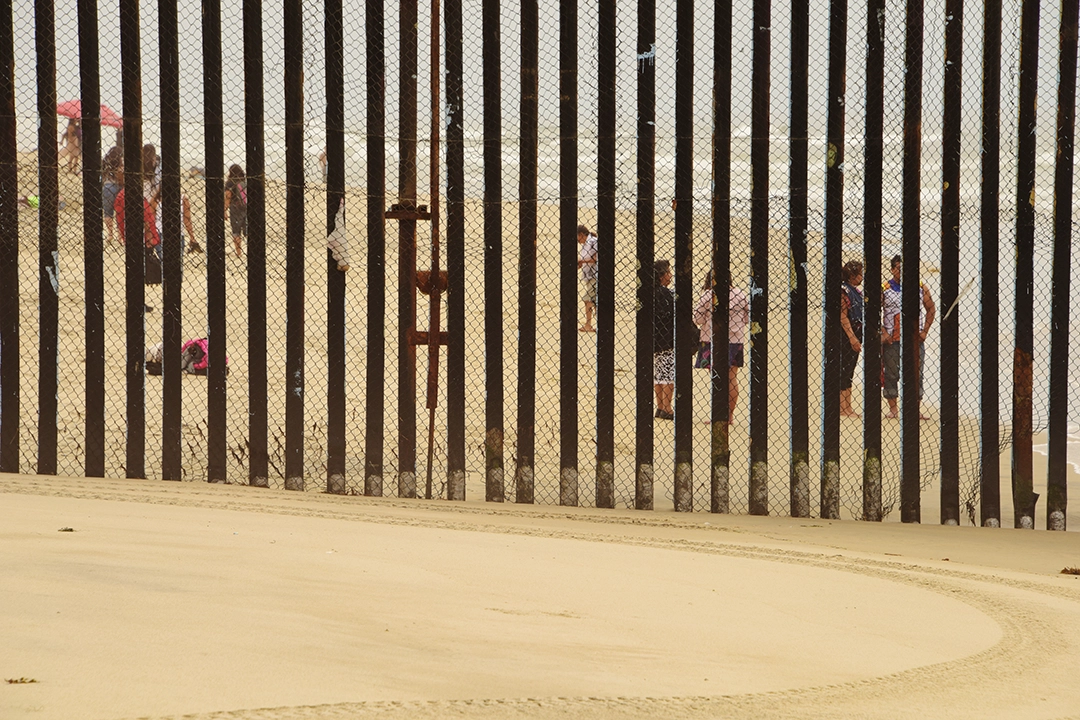
Photographer Jens G. Rosenkrantz Jr. opens Crossing the Border next Friday, September 4, in the main gallery of the Museum of Contemporary Art of the Americas in Miami. This is only the second time this body of photographs, taken along an extensive stretch of the southern border of the United States, has been shown publicly. Its first presentation took place in Cuba, at Fábrica de Arte Cubano, in 2019. The simple fact of standing on one side or the other, within the same landscape and at the same moment, produces almost opposing ways of seeing. At times, the images offer glimpses of a silent violence, crouched and watchful, like snakes waiting for their chance.
In 2017, the proposal to expand a wall along the border between the United States and Mexico began moving from incendiary campaign rhetoric into federal policy. Jens G. Rosenkrantz Jr., a photographer who lives and works in Cincinnati, Ohio, booked a flight to Houston, rented an SUV, drove south to Brownsville, and set out on a ten-day journey of nearly 2,000 miles along the southern border, ending in San Diego. In January, Executive Order 13767 formally directed the federal government toward the construction of a physical wall along the southern border.
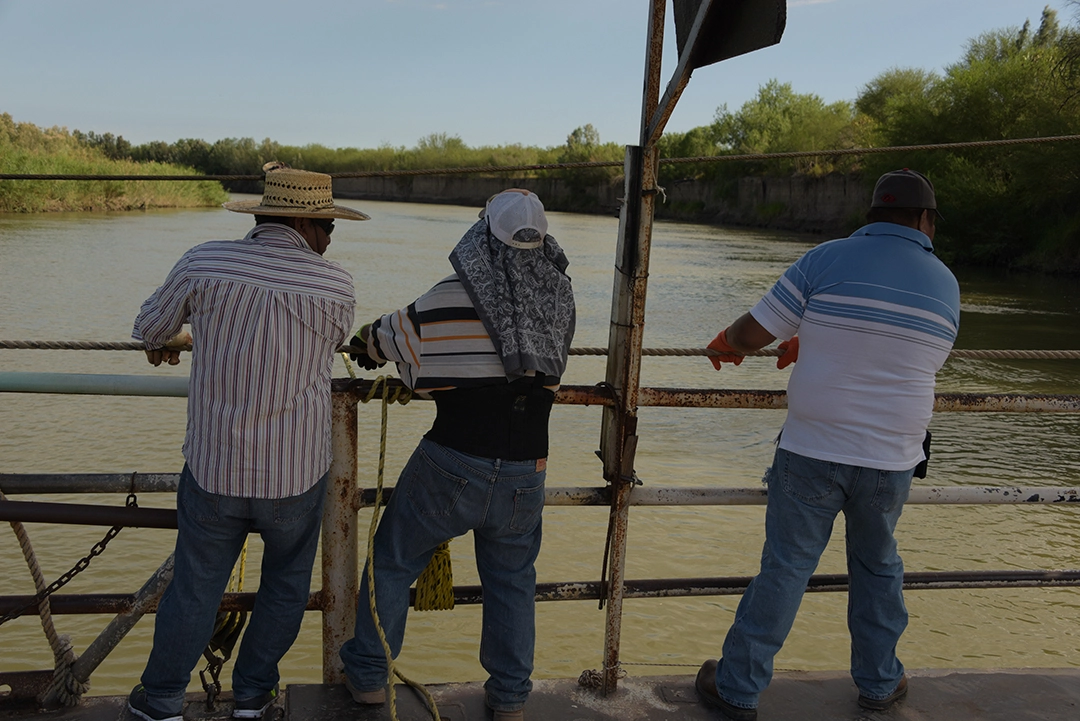
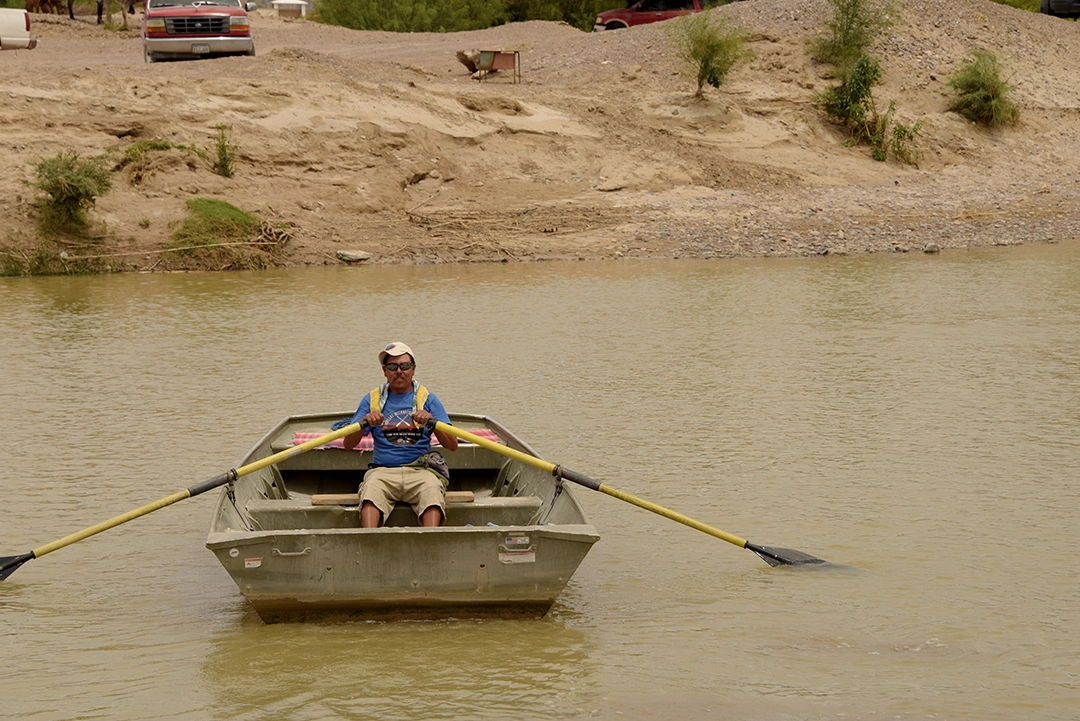
Perhaps for one last time, Rosenkrantz wanted to look at that landscape while it still remained, to some degree, intact before the radical intervention bearing down on it. To speak, of course, with the people who lived there. To take the pulse of the natural and human ecosystem. The resulting photographic series, Crossing the Border, records fragments of a territory that political discourse attempts to dehumanize and reduce to a line. His camera encounters something considerably more complex — roads and bridges, trucks and buses, cars and pedestrians, communities separated by an international boundary yet bound together by work, education, commerce, family, and the routines of everyday life.
The photographs follow the constant movement that gives the border its true rhythm. Thousands of people cross it every day through its various ports of entry. Commercial traffic flows in both directions within an economic system that binds the cities on either side so tightly together that it becomes difficult to understand the life of one without the presence of the other. Rosenkrantz’s images allow us to sense the border’s low, almost inaudible breathing. In atlases, it is geography, unquestionably. There, it is life. Political definitions circle like vultures above the landscape, the architecture, the distance, the waiting, the transit, and the ordinary gestures of those whose lives unfold around the crossing.
The journey also took Rosenkrantz through the vast landscape of West Texas and Big Bend, a region that gave him an especially profound impression. Nine years later, that segment of the series has begun to stir again under the pressure of the present. During August 2026, federal contractors began clearing land in Big Bend National Park for new border-security infrastructure. Patrol roads, vehicle barriers. The work provoked opposition from residents, environmental organizations, landowners, Indigenous organizations, and political figures from different positions across the state’s political landscape. Construction was temporarily suspended until the middle of this September while litigation is resolved and negotiations conclude. Nothing is guaranteed.
Big Bend National Park itself describes the Rio Grande border as a historically fluid space, crossed for generations by people from both countries, while acknowledging the political and social pressures exerted upon this geography. The park shares 118 miles of border with Mexico. In this context, Rosenkrantz’s photographs are far more than the record of a road trip. They have already preserved the appearance and social texture of places now entering a new period of physical and political transformation. Like the photographs we keep from when we were young, thin, free, and carefree.
Throughout Crossing the Border, the camera advances through immediate observation and a curatorial intention as considered as it is natural. To put it somehow, and without anyone mistaking this for geographical evidence, one could say that the series follows the river, just as the river itself follows its course. A road, a crossing, the scale of a desert, a vehicle waiting in line, a city whose economic counterpart lies across the river. Taken together, these images construct a visual account of a territory where national identity, private property, commerce, landscape, and human mobility cross from one side to the other every day.
As an exhibition, it returns to one of photography’s oldest capacities — preserving the visible condition of a place at a particular moment, anticipating the changes that place may very soon undergo. Jens traveled the southern border because he wanted to see it for himself. Nine years later, we go with him, without the sun, without the thirst, without the danger that doing so today would entail.
About the Artist
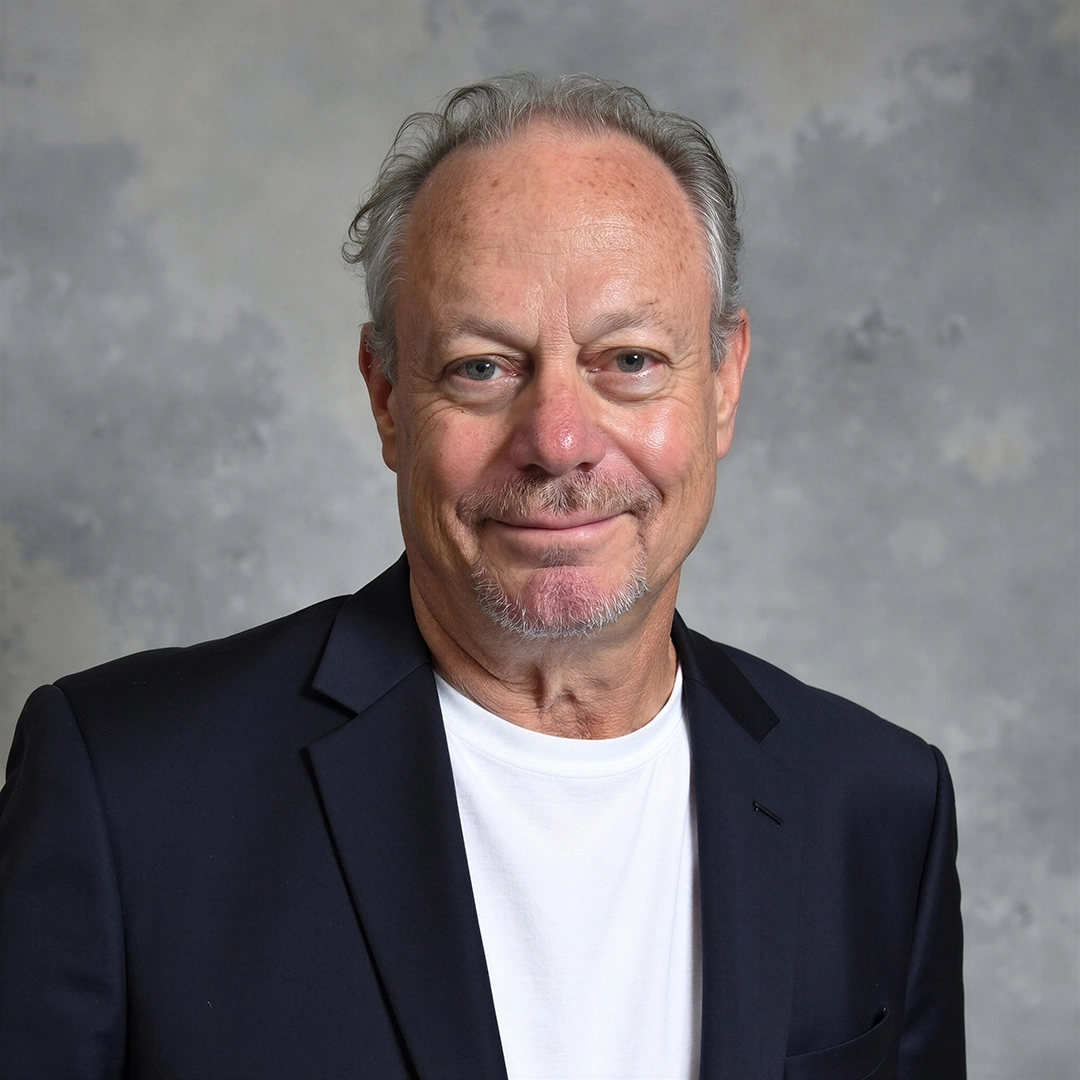
Jens G. Rosenkrantz Jr. is a photographer, cultural organizer, co-founder, and President of the Board of The Annex Gallery in Cincinnati. After several decades working in finance and hospitality, he gradually concentrated his activity on photography, exhibition-making, and cultural advocacy. Together with artist M. Katherine Hurley, he founded Bridges Not Walls in 2015, an ongoing cultural exchange project connecting artists in Cuba and the United States. Over time, the initiative became closely associated with The Annex Gallery, whose program has developed around collaborative projects, social engagement, and an international outlook.
Travel has always occupied a central place in Rosenkrantz’s photographic practice. His FotoFocus exhibition Small Towns and Long Views, presented between 2018 and 2019, emerged from approximately 20,000 miles traveled along American back roads and from an archive approaching 20,000 photographs. Crossing the Border belongs to that broader practice of moving through territory slowly enough to observe the ways landscape, communities, and human activity shape one another.
Rosenkrantz also maintains a longstanding relationship with the Museum of Contemporary Art of the Americas, where he serves as Museum Consultant and an ex officio member of the institution’s Board. His collaborations with MoCAA have included curatorial projects such as Raúl Cañibano’s Essence, as well as exhibitions that have helped establish connections between the museum and Cincinnati’s cultural community.
Opening Reception — September 4, 2026 | 6:00–9:00 PM
Museum of Contemporary Art of the Americas
12063 SW 131st Ave, Miami, FL 33186











Comments powered by Talkyard.