
Editor’s note:
Some of my most interesting conversations about ÆQAI columns and/or issues raised therein occur between me and Dennis Harrington, the Director of The Weston Art Gallery in The Aronoff Center. In the fall, we were discussing a review that ÆQAI had published about Alison Crocetta’s exhibition and attendant video at The Weston. Dennis asked me whether I agreed that a working knowledge of American Film history had become essential to an understanding of contemporary art practice. I told him that I had not given this issue a lot of thought, but he reminded me how often images from film are appropriated into not only contemporary video, but also into a generalized postmodern image bank commonly referenced by younger artists in particular.
As such, ÆQAI is pleased to introduce our readers to David Schloss, who will be reviewing films for us every month (he is also an excellent art critic, which I discovered by accident). David sees between 10-20 films per month, half in theaters and half at home. His first two offerings, Shame and A Dangerous Method are presented in this issue, along with his review of an exhibition at Manifest Gallery.
We hope that you appreciate the motivations behind including regular film reviews; we are, concurrently, beginning a series of book reviews. We believe that many connect contemporary novels also significantly impact upon contemporary visual culture, and we are expanding ÆQAI to include these two new mediums on a regular basis. As always, we appreciate your comments and thoughts.
Daniel Brown
Editor, ÆQAI
Author’s Note:
David Schloss teaches poetry literature and film at Miami University, to which he commutes from Clifton. He is a professional poet, soon to be semi-retired, with time to devote to viewing and reviewing the various arts he is most interested in.
Film is a visual and dramatic medium at its core. The way that the “narrative” is conveyed is a consequence of the director’s (and screenwriter’s) vision, the performances, and most of all, the way that the cinematography conveys that intended “information” visually. There are moods and tones in these artificial waking dreams, alternative worlds we can lose ourselves in, yet participate in the atmosphere they create while contemplating the gestalt, the larger structures of story and plot and quality of presentation.
There are various ways auteurs convey information: one is primarily functional (or prose-like) but the efficiency and concision of it is the aesthetic purpose; or, poetic, where the style can be an end in itself, an overlay upon the story, or the conveyer of the story in its moving images that create the emotions in the situations created on the screen. There can be elegance in accomplishing either end: an effective and efficient concision of story, and convergence of elements to that end is as impressive in its way as a beautiful visual feast that can create its own self-enclosed way of seeing and being in a “world.”
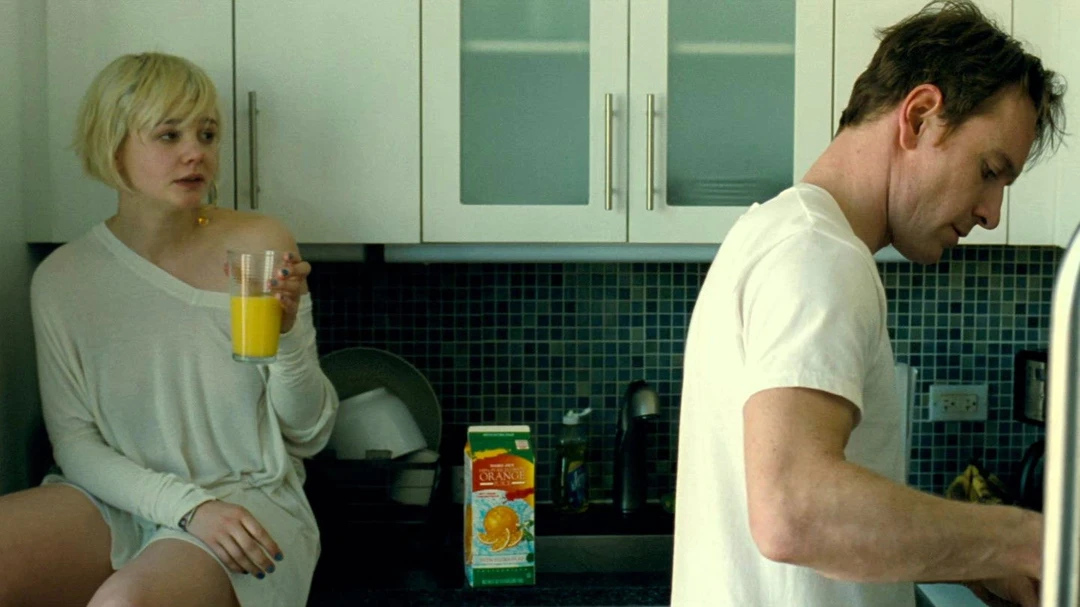
Some recent films exemplify the possibilities of success in both directions, I think, and the possibilities of limitation and failure, too, inherent in each approach. Of the eight films I saw on screens in Cincinnati in January of most interest to me were Shame and A Dangerous Method, both coincidentally starring Michael Fassbender, a very versatile Irish performer indeed.
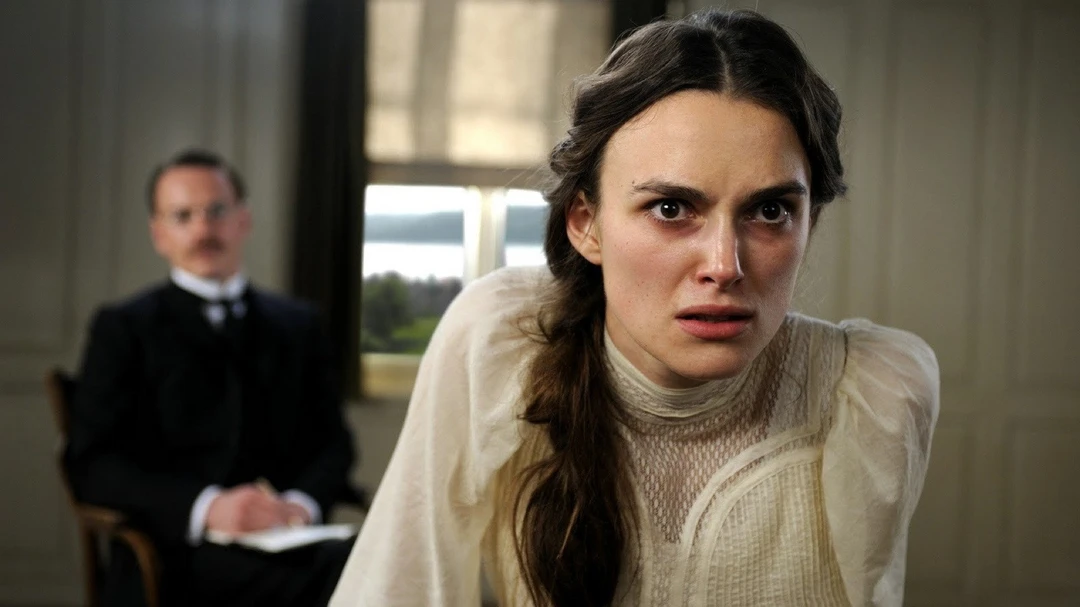
David Cronenberg, a Canadian who began in the horror genre (and made some great films in it: e.g., The Fly, Existenz, Dead Ringers) has moved to a more ‘real’ world of dangers beyond the supernatural: History of Violence and Eastern Promises, and now the passions of heightened psychodrama and quieter, yet intense, subtle psychological battles between titans– Jung (Michael Fassbender) and Freud (Viggo Mortensen), over ideas and behaviors, with a woman in between, Sabina Speilren, (Keira Knightley). Cronenberg is a very precise but less show-offy visual stylist, whose cinema captures the nuances of the emotional action with careful and evocative camera placement and compositions, moving when necessary to be in the thick of the emotions on screen. The flow and rhythms of the editing in his films create the energetic unfolding of his dramas.
This is not prosaic, but not ‘poetic’ either—it’s ‘real’—or a semblance of a realized world recreated by intelligent visual judgment. In his hands the world within his story, the subtle script, unfolds seamlessly and with calm regard. All is shown, given, but the mysteries of motive and character transcend what can be simply seen. The battle of wits and wills of Freud, Mortensen terrific as the soft-eyed yet iron master, and Jung, wonderfully embodied by Fassbender who becomes the buttoned up yet adventurous Swiss, is played out in two shots and interiors and tracking shots of them walking together in lush surroundings, but the seething tensions eventually generated are all indirectly suggested while the stakes get higher and higher for the control of the future of Psych(o)analysis. They even bicker over the term.
In the opposite direction, the dynamic and extreme emotionalism of Speilren in the beginning (in a brave performance by Knightley) contorting herself and her jaw into paroxysms of tension, which eventually transform to paroxysms of passion, echo the high melodramatics of the psycho horror genre, but in this case humanized. That Knightley doesn’t much relent in her tense portrayal throughout may or may not be a good choice: it shows how permanently tightly wound she is, but she seems unable to get out of that gear–while Jung is consistently bland, buttoned up even, even while whipping her into a masochistic frenzy. Literally. His Swiss control contrasts with his passionate interior inferred from the choices he makes and positions he takes—often off-screen. The Jungian mystic vs. Freudian bourgeois pragmatist, yet both men seem privileged, even cosseted in their comfortable environments. If Jung’s wife is an irritant to his secret life, Freud’s life seems monolithically his own amidst sycophants and followers, whom he disregards.
The central power struggle takes place mostly in earnest conversations in calm spaces, though Freud does have a dramatic attack eventually at the point of the inexorable schism. It’s a love story on many axes: Jung and Speilrien, Jung and Freud, even the married Jungs, his selfless wife moving by the end, All ruefully lost –yet, though it all ends in tears, their indomitable natures go on recreating their positions till the end titles report on their fates. This is a majestic overview of one early battle in the formation of psych theory and practice. Jung is sensitive, empathic, reserved, repressed, but he has the courage to follow his passions, up to a point. Freud has already risked all for his approach and is now trying to expand and protect his fiefdom. He welcomes Jung as a son, but the inevitable disagreement, Jung’s striking out into the metaphysical, the exploratory, is illustrated perhaps by the cushioned rich Jung on his gift sailboat: with Sabina for sex; Freud later, for tense detente, as the symbol of the deeper waters running under all their engagements…
Yes, it may end in tears, but they will go on. The Olympian yet engaged gaze of Cronenberg takes it all in with a rational accepting regard for everything: passion, conflict, inner struggling with indecision and complexity, a battle of wills in the most hysteric (Sabina’s) and calm-seeming (Freud’s) terms. The implacable clear gaze and regard of the filmmaker and scriptwriter – Christopher Hampton, lucid as usual – lends the quality and character to this easy-seeming, totally honest artistry. No pyrotechnics, just whatever competence and grace is needed to tell the story well, or more than well: with penetration through staying in the physical exteriors of the minds that are the real battlefields here. This is a modest style of great accomplishment: the invisible craftsmanship and excellence of visual choices, set up after set up, to create a seamless state of unfolding. This is mastery—even if the limitations of the material and the lack of transcendence into a more intense plane rarely occur during this drama. Upon a second viewing, I consider this among Cronenberg’s best work, the work of a skilled master craftsman.












Comments powered by Talkyard.