
Pablo Picasso would not be the only mercurial, misogynistic, egotistic, super- salesman who chose art (or art chose him) as a means of locomotion. The type abounds in this most rarified of all careers in this equally rarified era, most notably epitomized by Duchamp and Man Ray, masters of shock art, but he is the one who shouted the loudest and longest. He could produce some really not good stuff, some downright stupid stuff, and a goodly amount of brilliant stuff, like most artists. One has to wonder what would have happened to him had he not enlisted Gertrude Stein’s firm support and charmed dealers out of the trees.
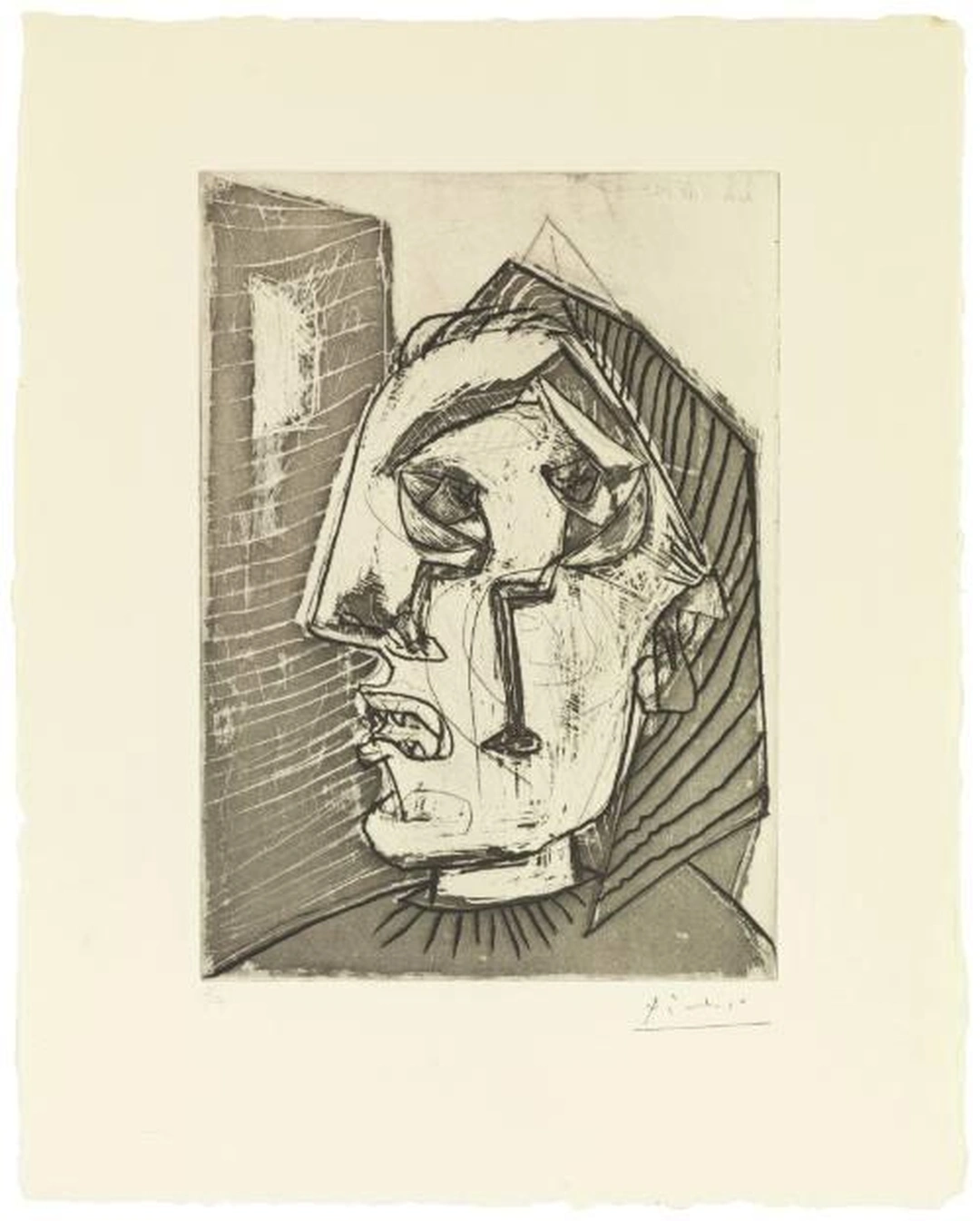
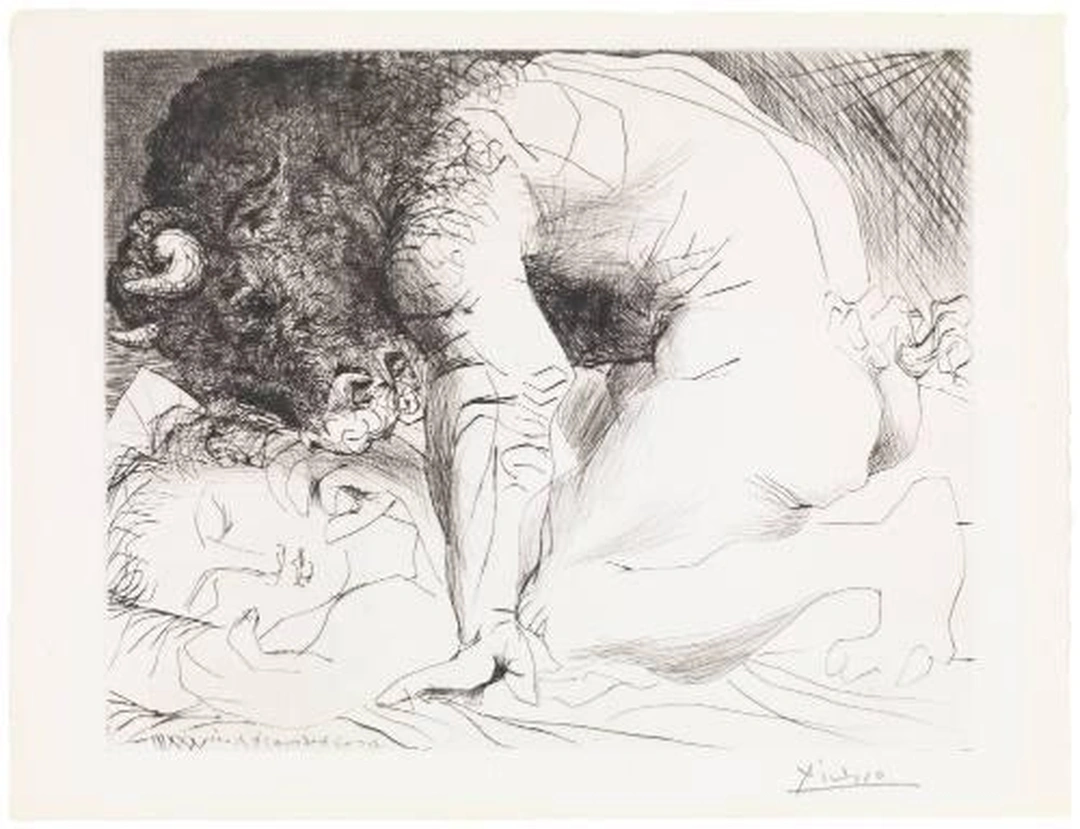
What’s happening at the Cincinnati Art museum is a 65 piece overview of Picasso’s work in prints and featuring one of the widest swathes, ranging from the 1920‘s to the ‘50‘s , in a single genre seen in this city. It offers an opportunity to form a learned opinion, keeping in mind that Picasso abhorred the tawdry, but necessary business of business. He was a producer and champion marketer, successfully locating those who could run his prints, sell his prints, and publish them in book and folio form for public consumption. A perfect example of this is the museum’s newest acquisition, a truly beautiful artist and model image rendered in dry-point, a method of print which yields deep, furry darks, but which is famous for its inability to produce a large number of prints. The number of prints pulled from this plate was well above any dry-point plate’s duration, so the printer had a steel coating put on it to extend its production, an act which would not have concerned the artist’s integrity at all. Lithographs are also subject to the market’s demands, printers often re-working them so much that by the time the edition is stopped, there is not a single original mark on the stone. Prints are a tricky medium, but their easy adaptability into multiples makes them a favorite choice of artists and dealers.
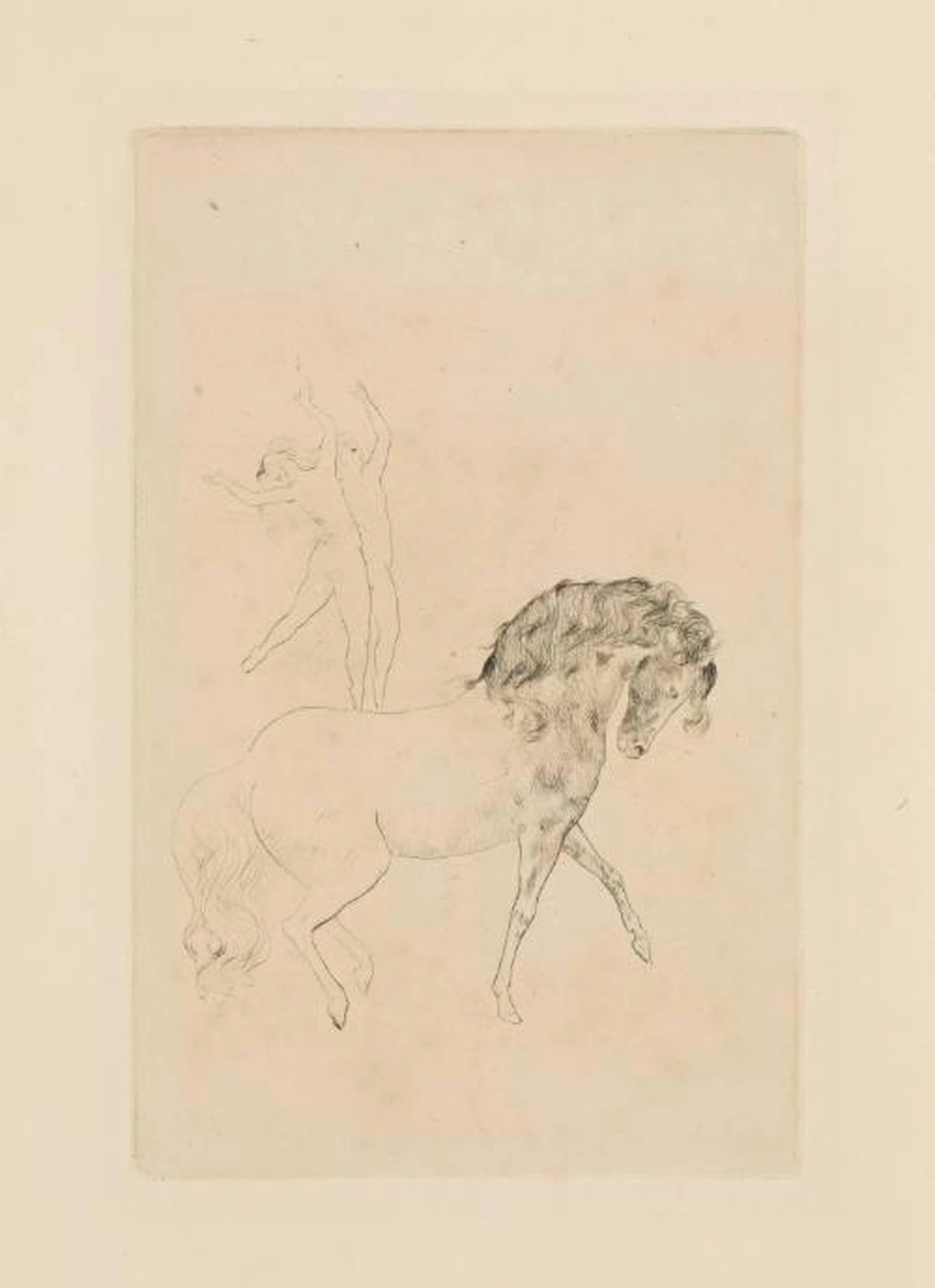
Ambroise Vollard, responsible for financing the “Vollard Suite”, several prints of which are included here, and easily the most famous collection of prints by Picasso, was one of those dealers. He not only aided the early Impressionists and their followers, but he sold their work, commissioned work, and generally spread the word about art that only he and a privileged few understood. These 100 etchings are famed for such delicate, unhesitant line, that the subject matter, that of the artist and his models, ranks second in importance to quality of the print. In prints that feature two images, one will often be delicately drawn in a single ghostly line, facing a figure endowed with extreme modeling and elaborate shading that throws the other form even farther back into the surface. Two prints which illustrate the technique are “Sculptor and Kneeling Model” and “Two Catalan Drinkers”. The most heavily drawn figure in the latter is Rembrandt, and the lightly drawn figure is Picasso. What saves these from being heavily weighted on one side is our Western penchant to read from left to right. As our eyes traverse the paper, the viewer ends up giving as much attention to the dim figure on the right as to the more robust one on the left.
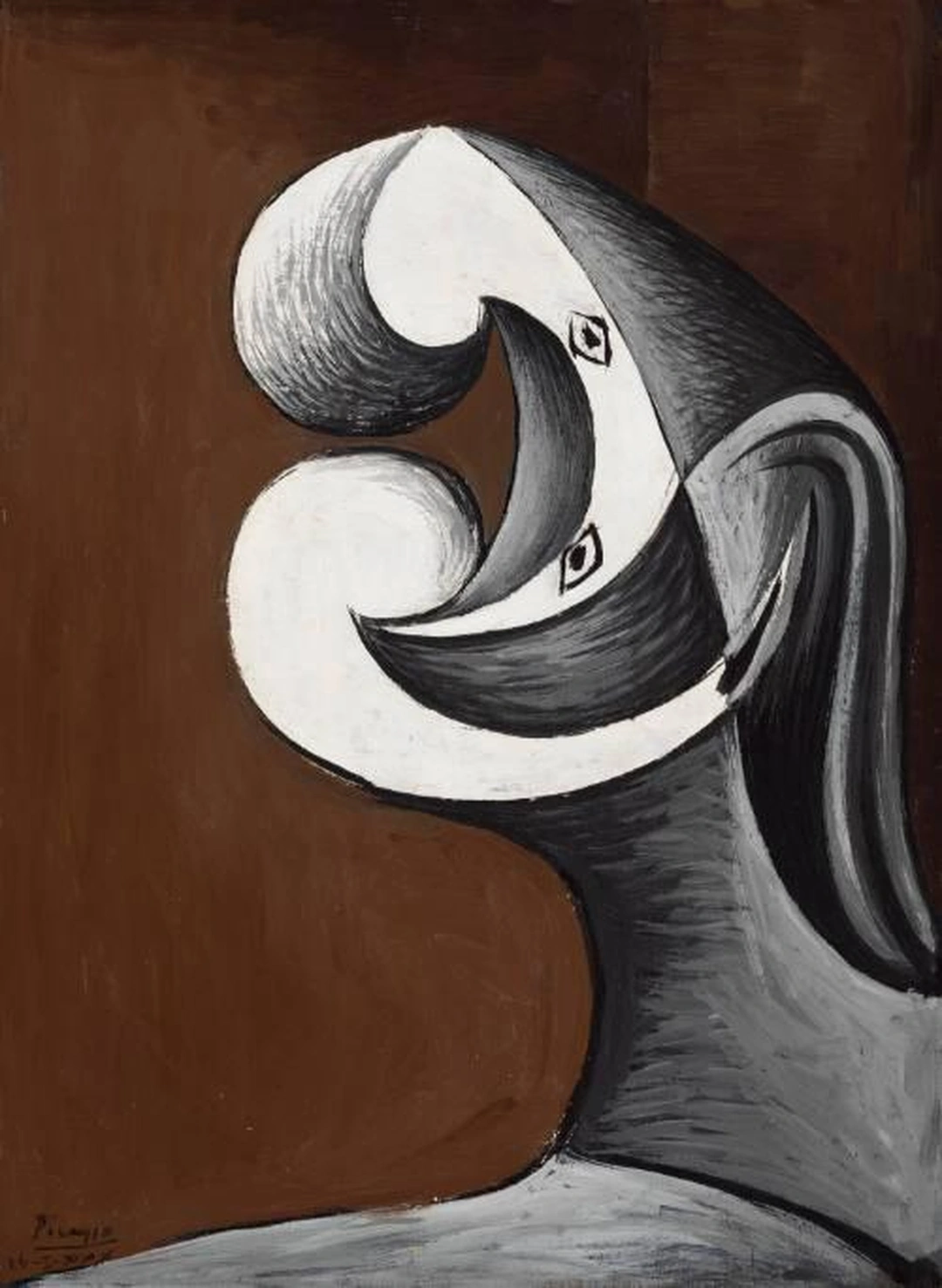
The “Vollard” classical period of Picasso’s work followed his experimental cubist dalliance, a temporary flirtation which heavily influenced later more violent finished pieces like “Demoiselles d’Avignon” and “Guernica”. Every quick sidestep into another style returned again and again, but his basic requirement, his inspiration to move forward was always solidly attributed to the ladies in his life. “Picasso Masterprints” tells the life of the artist in the portraits of his lovers. Olga, his first wife, followed by Maria-Theresa Walters, followed by Dora Maar (she of the perpetual tears) followed by Francoise Gilot, and finally, Jaqueline Roque seemed not to have affected , but reflected his constantly changing art. The art changed, but Picasso determined the changes.












Comments powered by Talkyard.