
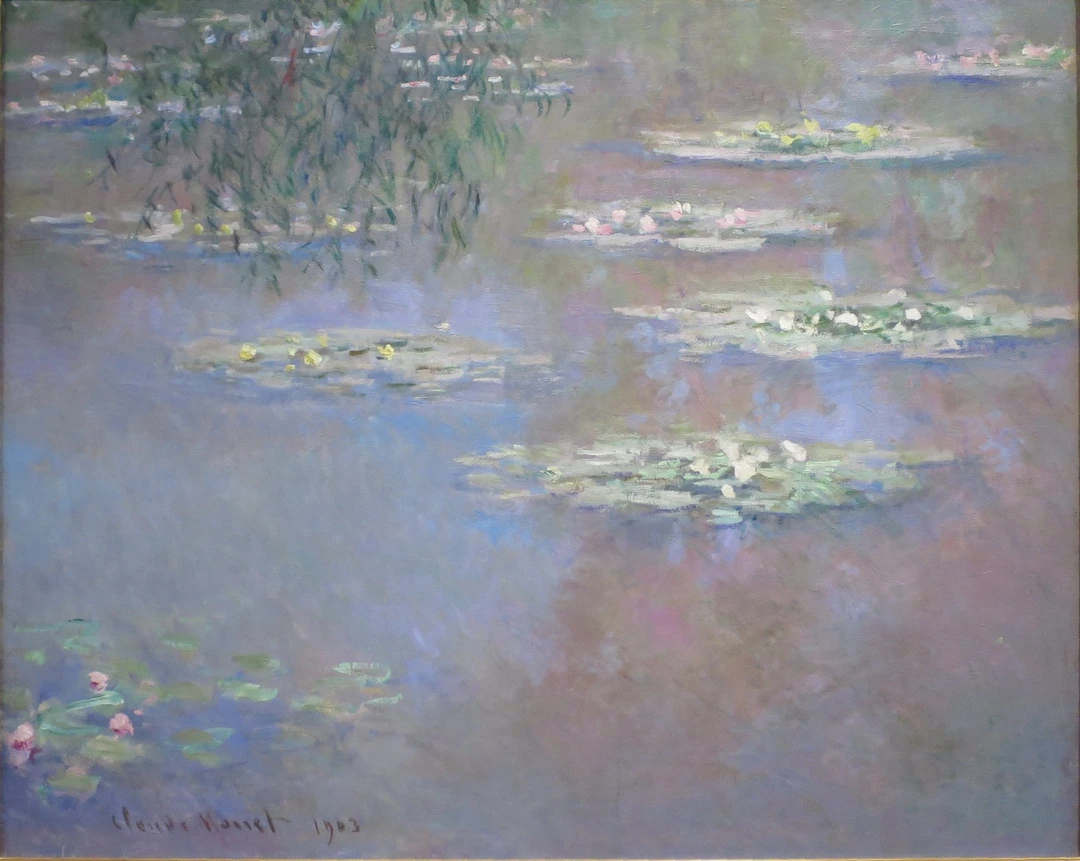
Pleasing the crowd was not Monet’s aim in life, but after the Impressionists’ convention-flaunting beginnings had simmered into acceptance he had a following that allowed him to live a life style of his own choosing and to paint as he pleased. He had more or less always done the latter; the former had been chancy.
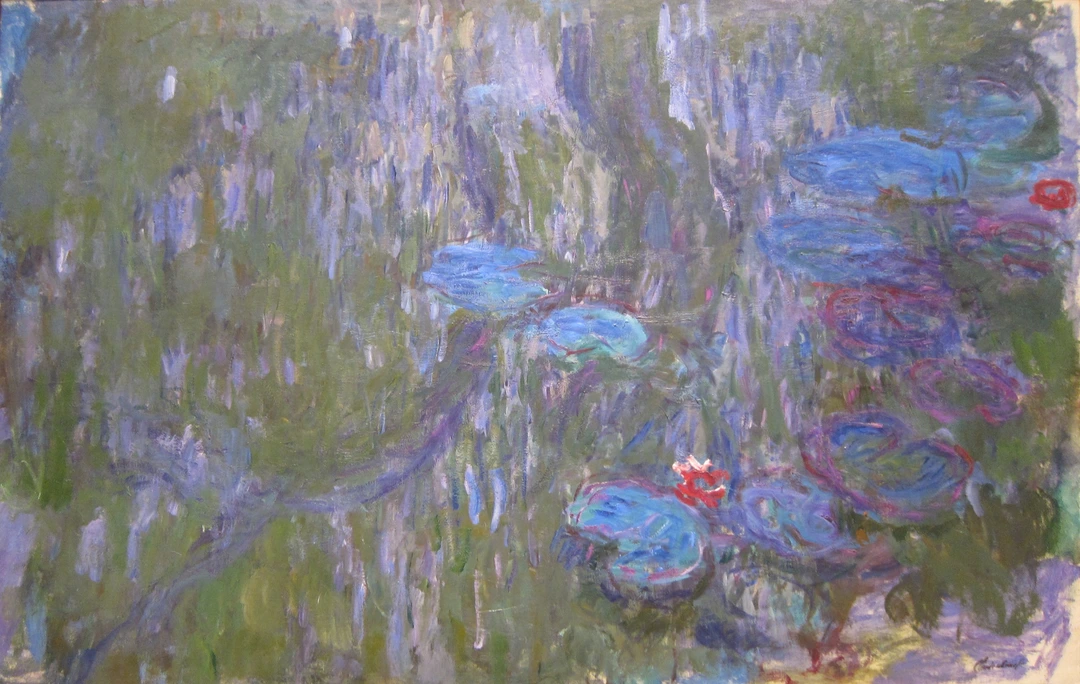
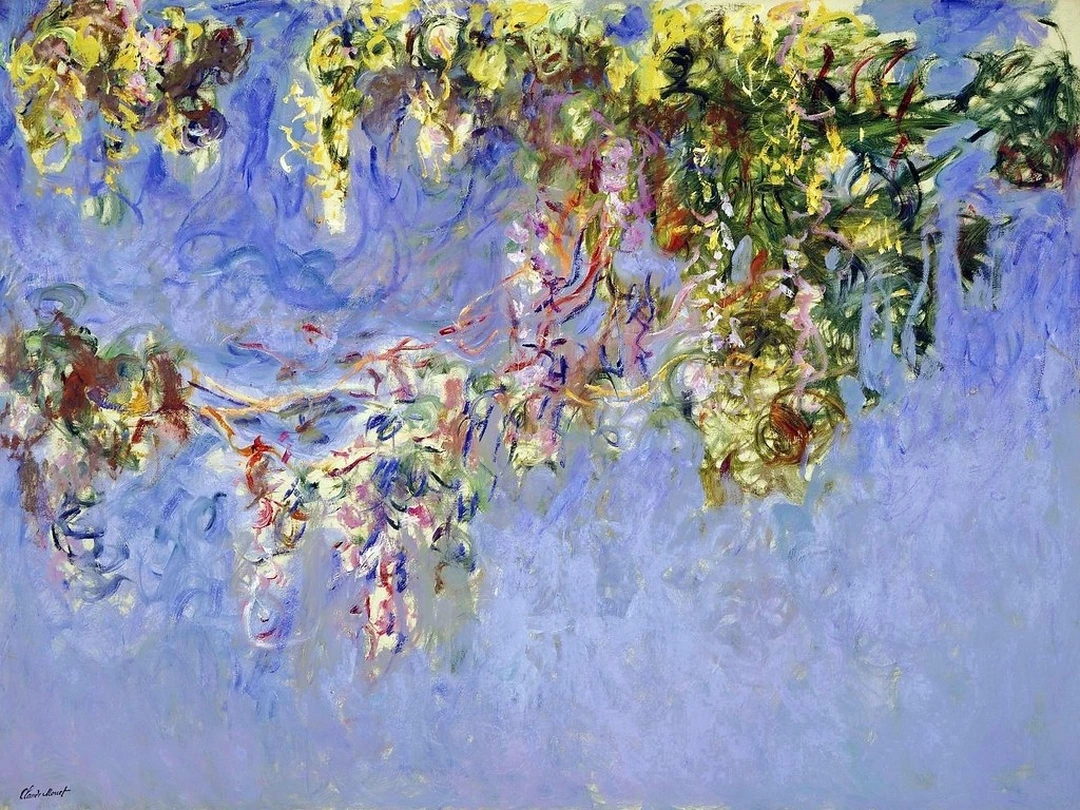
By the time he was making the works in the Cincinnati Art Museum’s Monet in Giverny: Landscapes of Reflection he could be the gardener/painter he wanted to be. He had a staff of gardeners and worked with them; he painted by himself. The earliest piece in the show comes from his first year in Giverny and the latest, begun in 1918, was returned to periodically until 1926, the year of his death.
CAM Curator Benedict Leca is adept at the small exhibition with an interesting premise, shows that make the standard blockbuster seem unwieldy. Here he has assembled a choice collection of works from a Monet period less often explored and including at least one painting never before lent: “Nympheas, Japanese Bridge,” from the Philadelphia Museum of Art. He asks us to consider “reflection” in both its meanings: actuality mirrored and the thinking process so described. As it happens, both the French and the English word for reflection carry the double meaning, so Monet himself used it in the same shifting sense that the exhibition proposes.
The Museum’s Gallery 234, now its major temporary exhibition space, may be entered at either end, an awkward situation when narrative line is critical to the show. Here the narrative falls naturally into place whichever way one enters because the first response, rounding the barrier enclosing the show at one door or the other, is that you have, so speak, come into the garden. Lighting is subdued and centered on the paintings, walls are a warm gray that sets off the works, and a sense of a twilight out-of-doors prevails. A phrase from the artist is inscribed at each entrance: “’Essence of the motif is the mirror of water whose appearance alters at every moment’ Claude Monet (1909).”
It’s quickly apparent that the exhibition’s beginning is in a large niche fitted between the ramps descending from the entrance off the Great Hall balcony. In the niche a huge blow-up of a black and white photograph shows us the artist in full beard, seated beneath perhaps the very arbor suggested in some of his works. The label setting out the precepts of the show is here, along with three of the exhibition’s earliest paintings. Among the considerations posited by the label is that “The change in Monet’s art, from the frenetic naturalism of Impressionism to the enveloping atmospheres of the large-scale works of his last years, reflects a personal journey through which he recast the terms of painting, conflating time and distance, changing motion into stillness, and using reflective effects to unmoor space from the laws of gravity and perspective.”
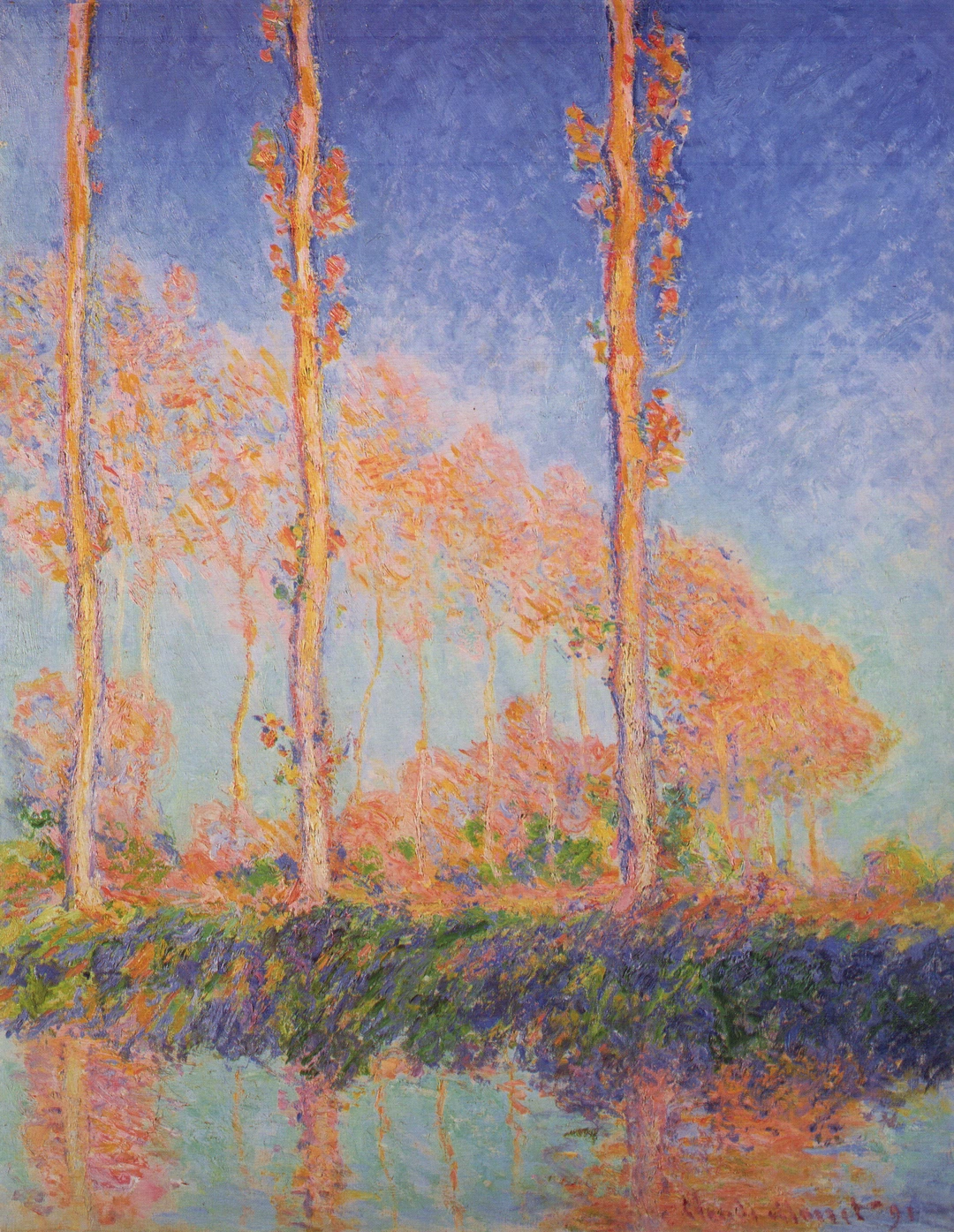
The show admirably provides evidence for these thoughts, with a dozen top-flight works beginning with one from 1883, the year Monet moved to Giverny, three from the 1890s, three from the first decade of the 20th century and the rest from the ‘teens into the ’20s. We are struck immediately, by two of the paintings in the niche, both of the Seine, of different ways to bring the painter’s thoughts to canvas. “The Seine at Port-Villez” (1883) is alive with brush strokes, the day is windy, the sun dappling all surfaces and the river giving back its reflected world. In contrast, “Morning on the Seine near Giverny” (1896) is as calm as the earlier work is active, its brush strokes smooth and its color range of greens and blues touched out by rose has no hint of the harsher oranges of the earlier work. Accompanying these two is a work from the familiar Poplar series, this from 1891, its ordered upper section melting into fluidity in the reflection below.












Comments powered by Talkyard.