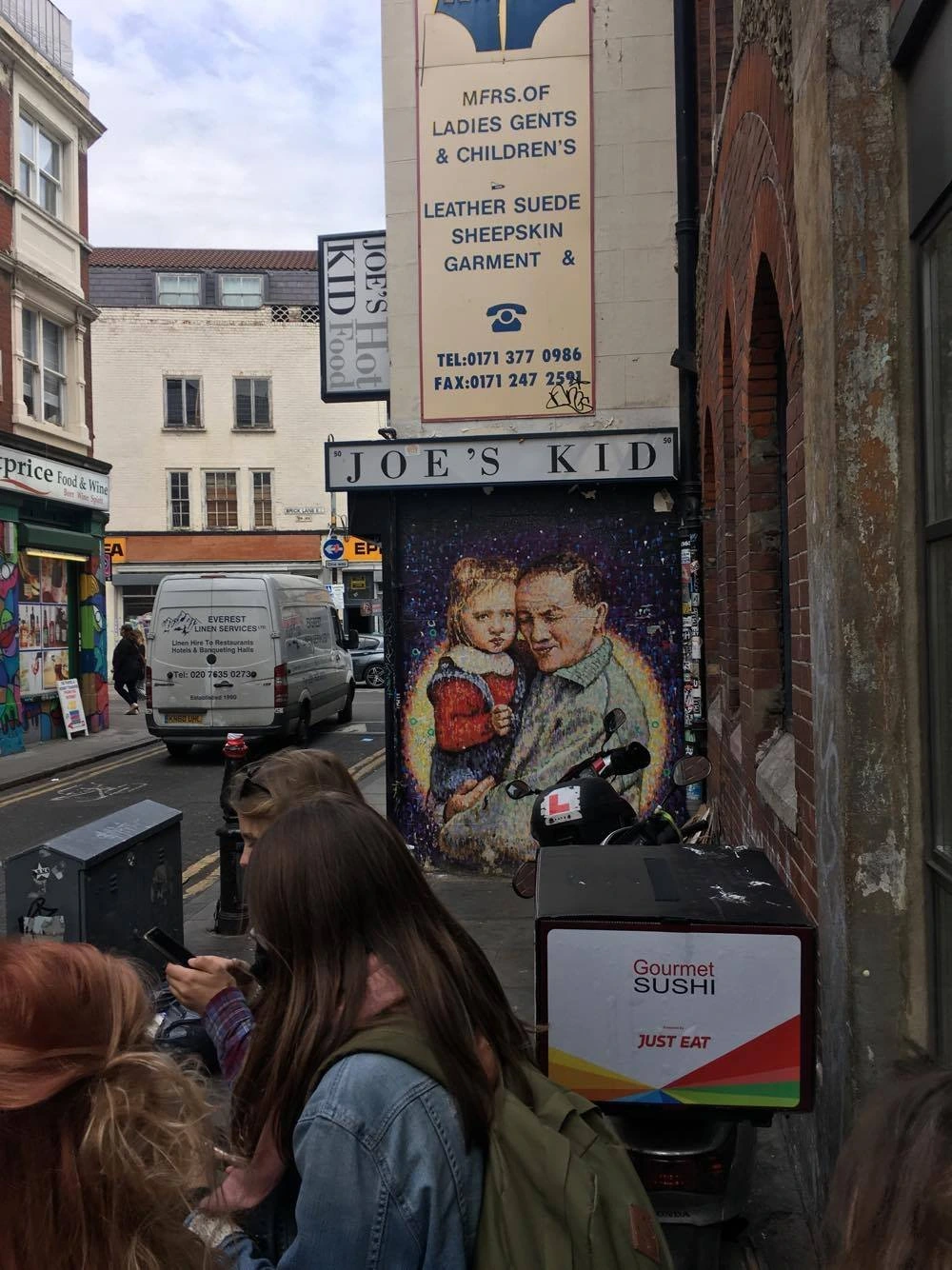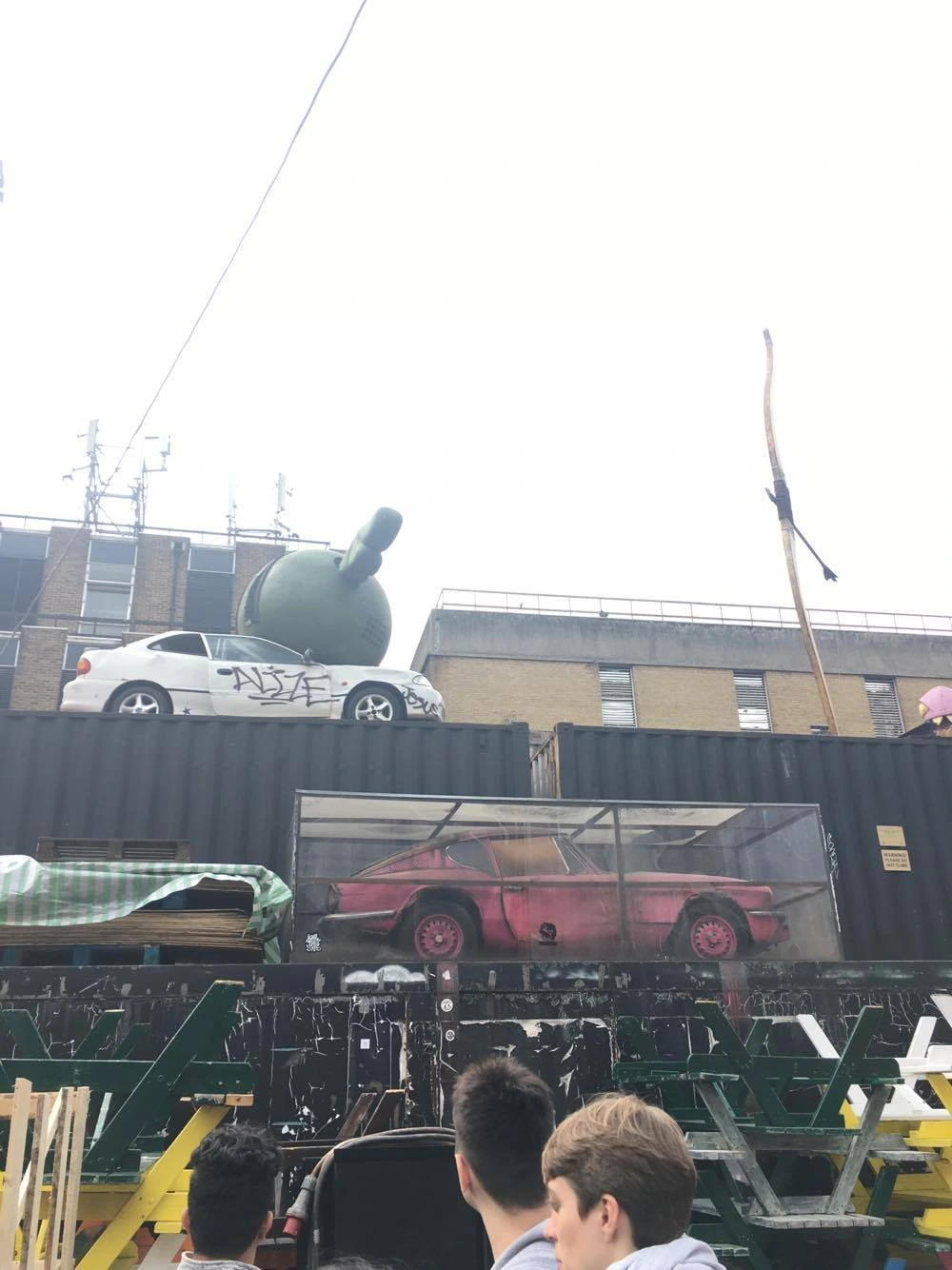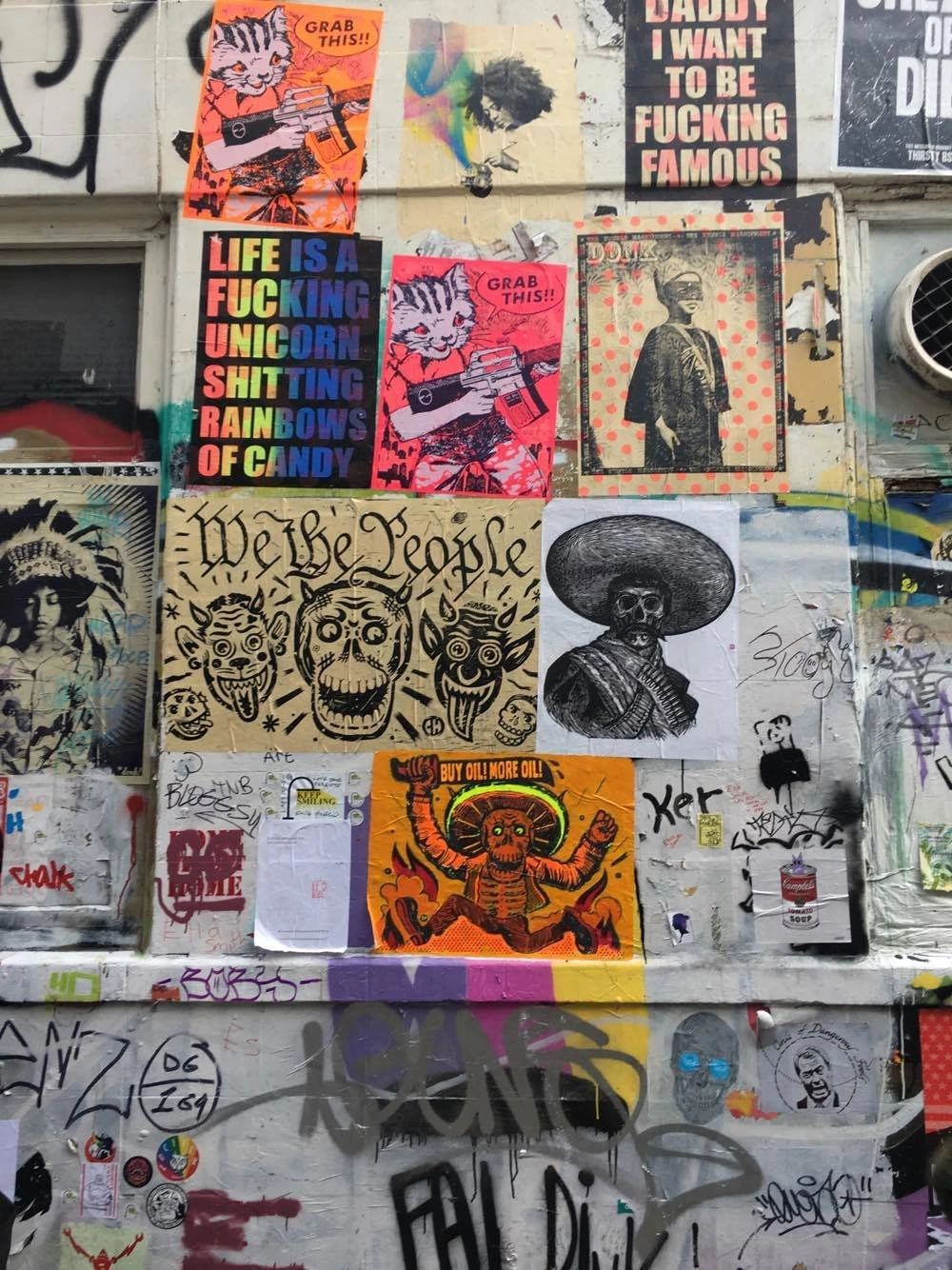
Well to my surprise I found a gem in the original slums of London, Whitechapel, which is a neighborhood known for the atrocious acts of Jack the Ripper in the 1800s. Since then it has become a popular area for the city, with the financial district nearby, with ever growing business endeavors, and a great opportunity to find phenomenal cheap Indian Food. Standing in front of the Whitechapel Gallery we all were waiting for Jessica, the tour guide of a free street art and graffiti tour, but I wasn’t sure what to expect as I was not seeing much art on the recently developed and gentrified area.
After a brief moment of waiting, a petite woman with a spunky attitude and tattooed sleeves made her appearance in front of a group of weary tourists. She made it very clear that she was not going to use a handheld microphone as it would create a lot of attention and frankly piss off the locals. So this meant a close encounter with dear Jessica, coincidentally her Instagram handle @dearjessica, and a close knit tour with a group of strangers crammed on the pavement. Remember, this was a walking tour and thus the safety of the tourists would be of a concern, so she had one rule to follow, “Do not die on my tour”, being very adamant of having mindfulness of where we were. This was not a gallery or museum where visitors could look in awe of artwork in a safely constructed environment following docents and being reminded not to touch the artwork. This was held on the streets of London, where traffic laws are different, bicyclers are aggressive and locals will tell you what’s what if you were in the way.
She was very quick and to the point making it very clear to trust her knowledge of the area, not only of the art but of the history of the area affecting the said art. Following her quick paced nature our crew headed down a tight alley way right next to the famous and beautifully structured Whitechapel gallery. Before heading further she had to make a note of the history of the area, starting off as being one of the world’s worst slums then on to the Blitz and then slowly but surely to the new development of abandoned buildings. But these “derelict” buildings of the area are the keystones to what kick started the rise of street art in London. This art which is technically “illegal” is never enforced here because it serves as an eclectic attraction and thus good for entrepreneurs of the local businesses. Even the police constables are said to stop and take a selfie with an artist while they’re working if they’re popular enough. Nonetheless our first stop was in an alley on the side of an empty building next to a couple of trash cans.
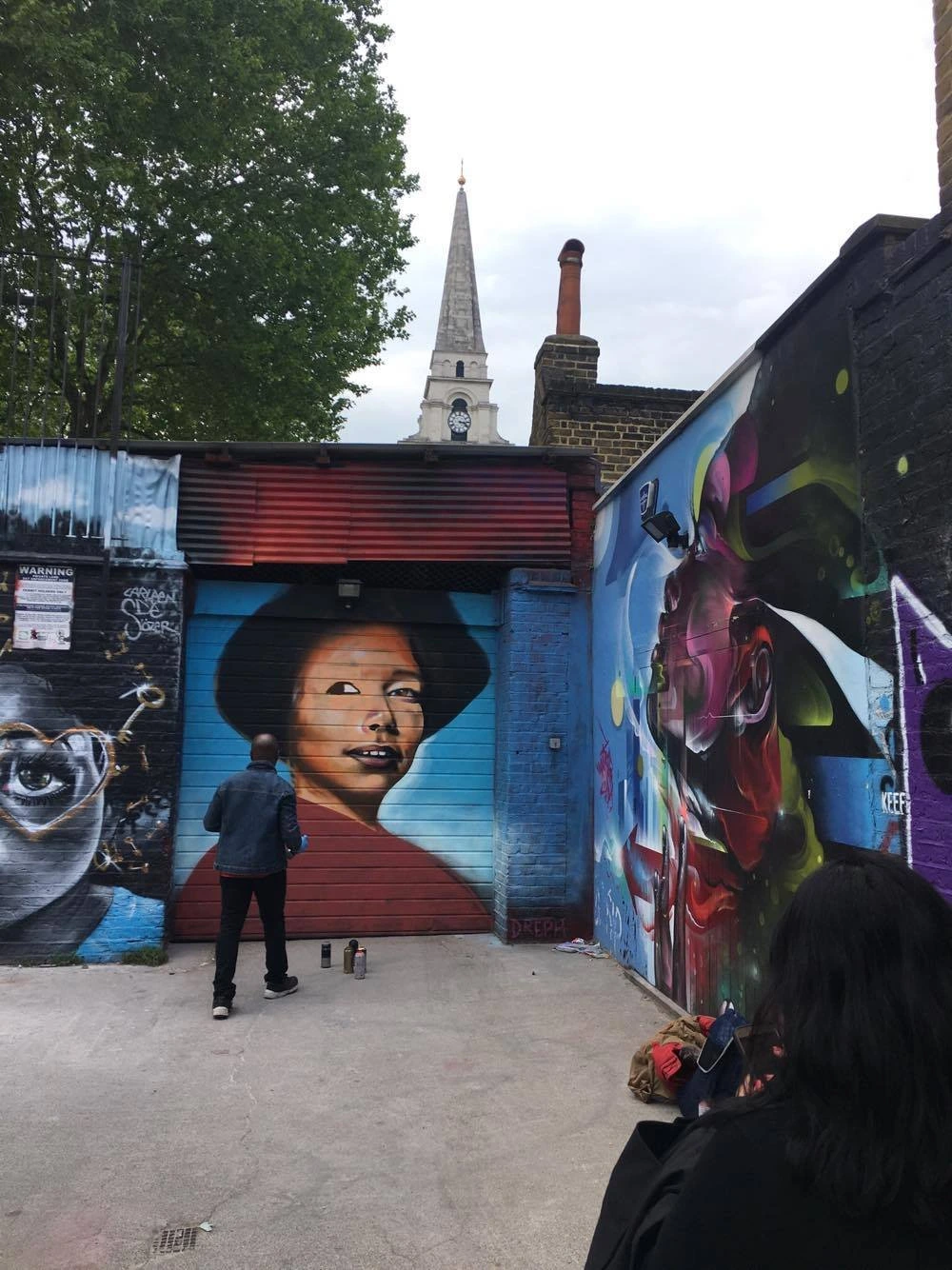
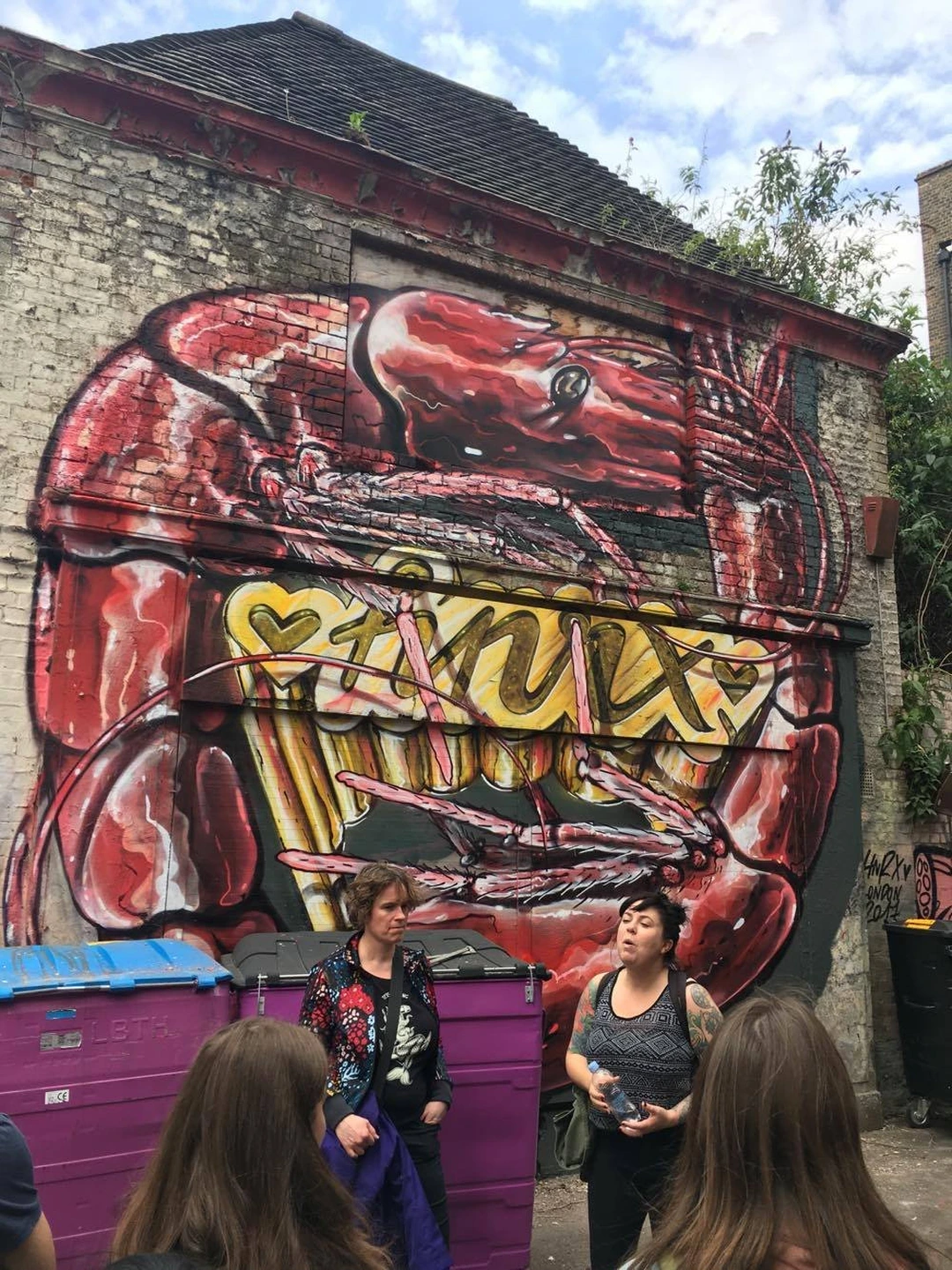
Even though the area wasn’t set up for a beautiful display, the artist’s work was held in high regard like that of a fine art contemporary artist. The first memorable artist to see HNRX, with his beautifully designed name decorated by an encompassing detailed image of a lobster seen here right above the waste of a nearby Indian restaurant. The image is silly but you can definitely take note of his artistic skill in rendering the image of a lobster and the patience it took to make spray look like a clean medium. Seekers of his work are in luck because HNRX always signs his tag with a cartoonist symbol of a sausage and due to his popularity it’s not hard to find his trail, in fact he leaves a trail of HNRX stickers all over the place. Next to his lobster were other notable artists, one uses the influence of Van Gogh with very gestural and vivid brushstrokes only using contrasting black and white paint with some varying marks. It was a very detailed portrait of a woman on the side of a building completed in a matter of minutes having learned this skill to keep her identity anonymous. Though some of the artists around here remain hidden in plain sight it is not uncommon to know the person of certain pieces. In fact some of them want to be recognized so that they can obtain the possibility of branding their work due to the recent influx of construction and capitalization. One example of this is of the artist “JC”, who was commissioned to make a piece for a local coffee shop that unfortunately went bankrupt, leaving its mark as an example of the risky nature of gentrification falling short.