December 3rd marked the opening of two new exhibitions at Wave Pool: the group show Everything Is Nothing with a Twist on the ground floor and a solo installation Domus Candela by Erin Taylor upstairs. The ground exhibition, all by artists inspired by minimalism, contained works that were bound by their physical form, whereas Domus Candela found the immaterial in the medium of glass.
“Everything is nothing with a twist” is a quote from Kurt Vonnegut’s Slaughterhouse Fivethat imagines a physical manipulation of the numeral zero into the figure-eight symbol for infinity, suggesting a strange continuity and affinity between these binary poles of everything and nothing. Wave Pool states that the use of the phrase summarizes the “fertile ground of self-interpretation through different constructions and approaches to minimal objects.” Despite its inspiration in minimalism, the exhibition overwhelmingly featured smaller two-dimensional works of art. Although these pieces built upon a vocabulary of minimal geometric forms and repetition, they largely did not engage what Michael Fried referred to as minimalism’s “theatricality.” In Fried’s critique, which later became Robert Morris’s rallying cry, minimal art could phenomenologically address its audience directly, turning the artwork into an object and presence and activating the gallery space. In this exhibition, however, only two sculptural works dare to touch the floor, with the remaining works exploring minimal geometries and patterns on a decidedly smaller, largely two-dimensional scale.
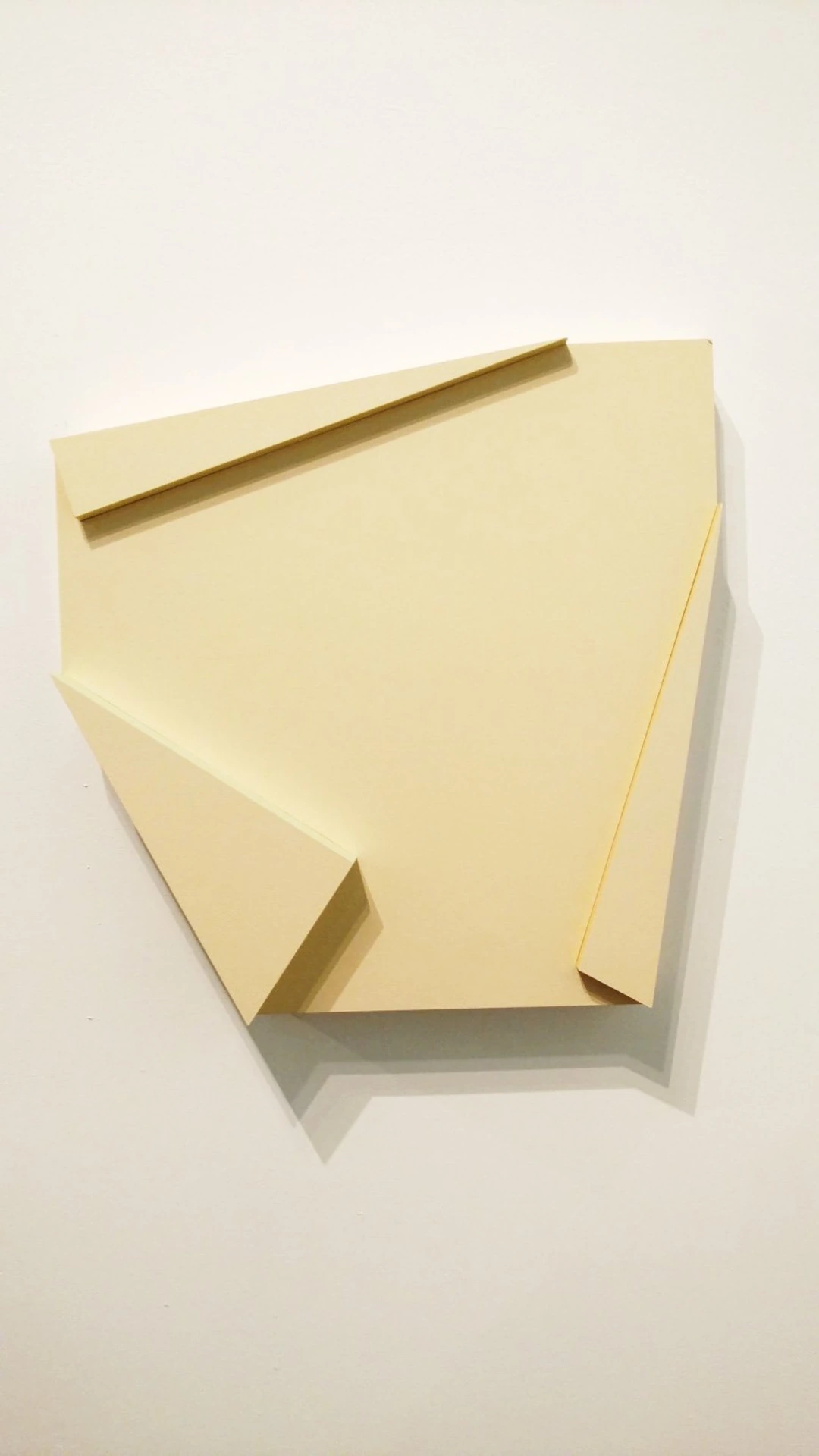
Of particular note were the works of Christian Davies and Connie Goldman. Davies’s piece Slanted Island Stars (Red) featured a grid of subtle variations of cube-like forms, each revealing the hand of the artist and the transparency of gouache on wood. The work was simultaneously a brash pattern of contrasts and a delicate exploration of differences in mark. Operating in a similarly subtle vein, Connie Goldman’s oil on panel Doublet objects sat between painting and sculpture by folding in on the square, creating an almost architectural arrangement of sculptural planar elements whose pastel edges played off the shadows and cream surface to engage the eye and entice the viewer to move closer and explore their delicate visual and physical complexities. Both Davies and Goldman worked within the constraints of the grid or the picture plane to explore endless formal varieties.
Wrapping around the rear corner of the exhibition were more small two-dimensional works. The painterly, calligraphic, collaged, and layered forms on small canvases and panels by Sharon Brant, Jennifer Crowe, Maxwell Feldmann, and Jeffrey Cortland Jones felt relatively underwhelming compared to the conceptual clarity of Davies and Goldman. Brant’s canvases featured bright, almost neon colors and variations on hand-painted rectangular forms. Crowe’s compressed letters and all-over writing both invited the viewer to read the work’s content and confounded any attempt to follow its words. Feldmann collaged found paper and an overlaying black acrylic trapezoid, contrasting the minimal clarity of the abstract form with the textural variation beneath it. Cortland Jones’s panels, perhaps the smallest of the group, used the logic of the rectangle to explore subtle tonalities of white.
The two sculptural works in the installation were Rick Wolhoy’s oil barrel with iridescent automotive paint and Matt Lynch’s beige-colored cat furniture, complete with stuffed feline and Anne Truitt-inspired detailing on one of the legs. Wolhoy’s work recalled the use of automotive paint by minimalists like John McCracken, but bluntly exposed its readymade form, denying minimalism’s clear geometry. Conversely Lynch’s sculptural texture retained the cheap material of its referent object, whereas the form recalled minimalist sculptural installation. Davies, Goldman, Wolhoy, and Lynch found provocative tension between the minimal constraints and expressive forms, though on the whole, the exhibition fell short of both its ambitious title and its desire to significantly engage a lineage from minimalism.
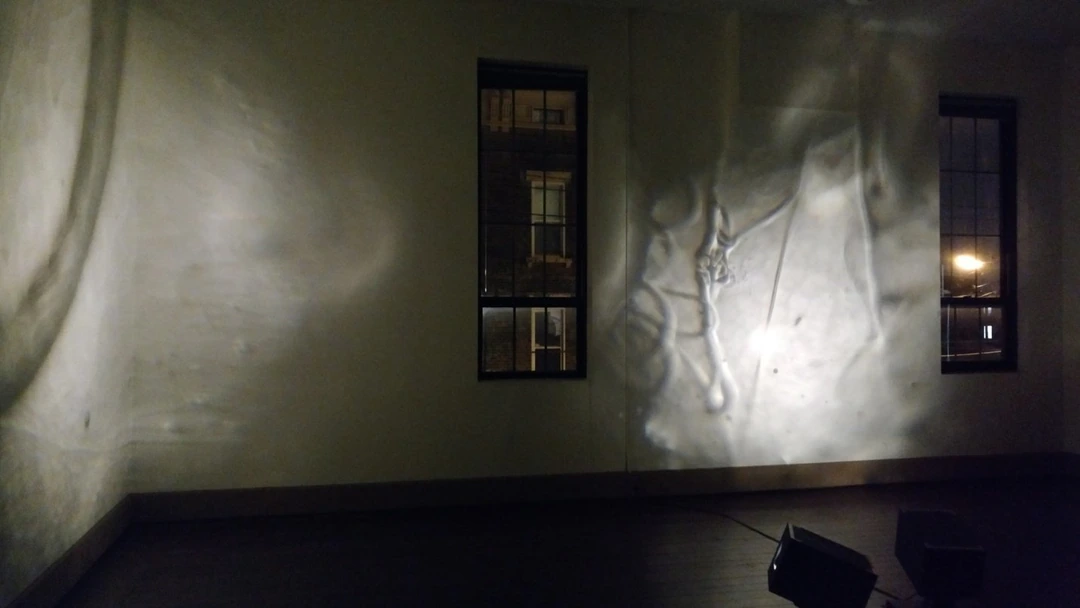
Upstairs, the white walls and discreet forms that defined the gallery below melted away in the projection installation Domus Candela. Erin Taylor’s first installation in Cincinnati, Domus Candela featured projections that were both ethereal and rooted in material process. For the installation, Taylor inserted his own hand cast glass into light boxes fit with retrofitted rear-projection television lenses. Angled up from the floor, the resulting projections filled two adjacent walls of the gallery space. The lenses brought the material details of the glass into view, subsequently revealing their process and dematerializing their forms.