The November issue of Aeqai has just posted. Please click here to view the new issue.

Inspired by Saint-Exupéry books [‘The Little Prince’], I chose to become an airline pilot. From 1926 until his death in a plane crash in 1943, Saint-Exupéry experienced the world from above, over longer times and distances than others before him. His novels and memoirs are replete with descriptions of mountains, oceans, rivers, and storms.
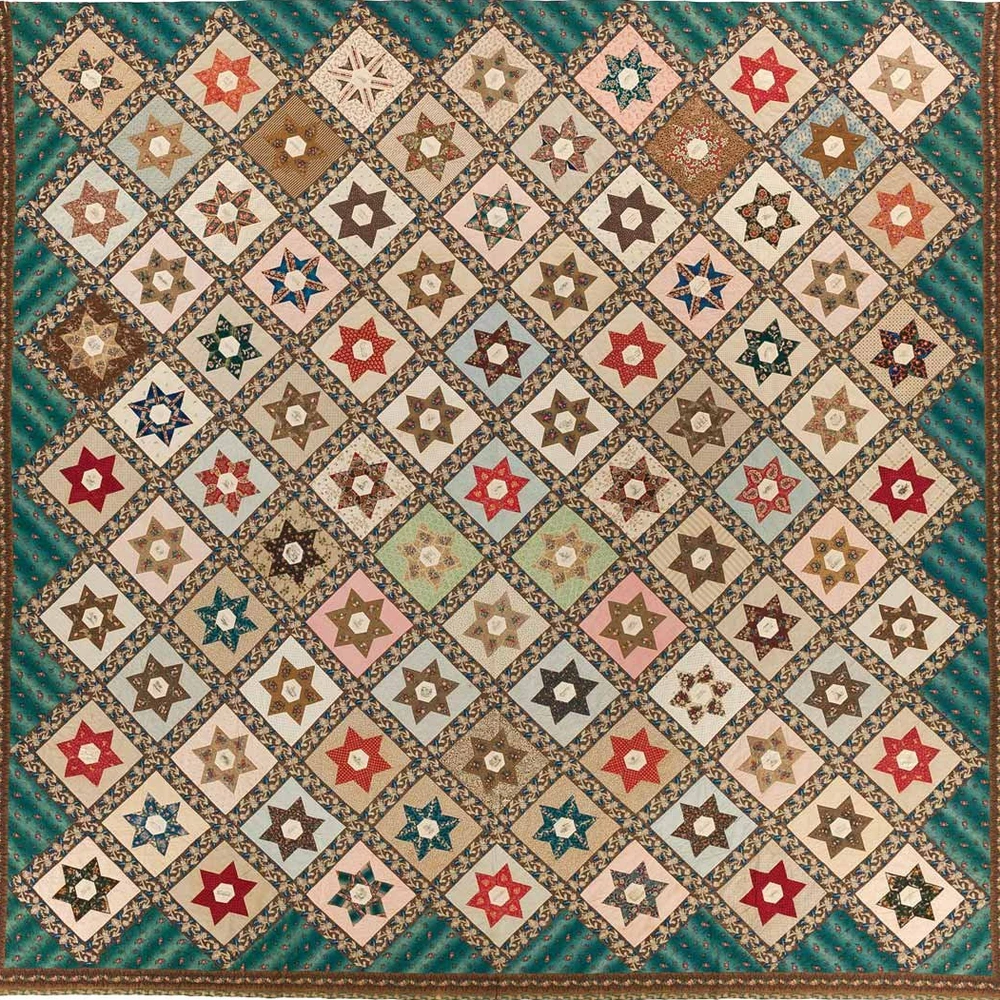
Girls aren’t good at math, but don’t tell that to the makers of the 19 mosaic patchwork quilts, made between 1776 and1890 in England and America, in “Elegant Geometry: British and American Mosaic Patchwork Quilts.” Mosaic patchwork, sometimes called “paper piecing,” originated in Britain at the beginning of the 18th century and was carried to America by British colonists.

Traveling in our vehicles from Point A to Point B, we often take for granted some exceptional buildings in passing them by mindlessly. One of these buildings deserving greater attention and much veneration is The San Marco Apartment Building at DeSales Corner on the southeast block at 1601 Madison Road and Woodburn Avenue in East Walnut Hills.
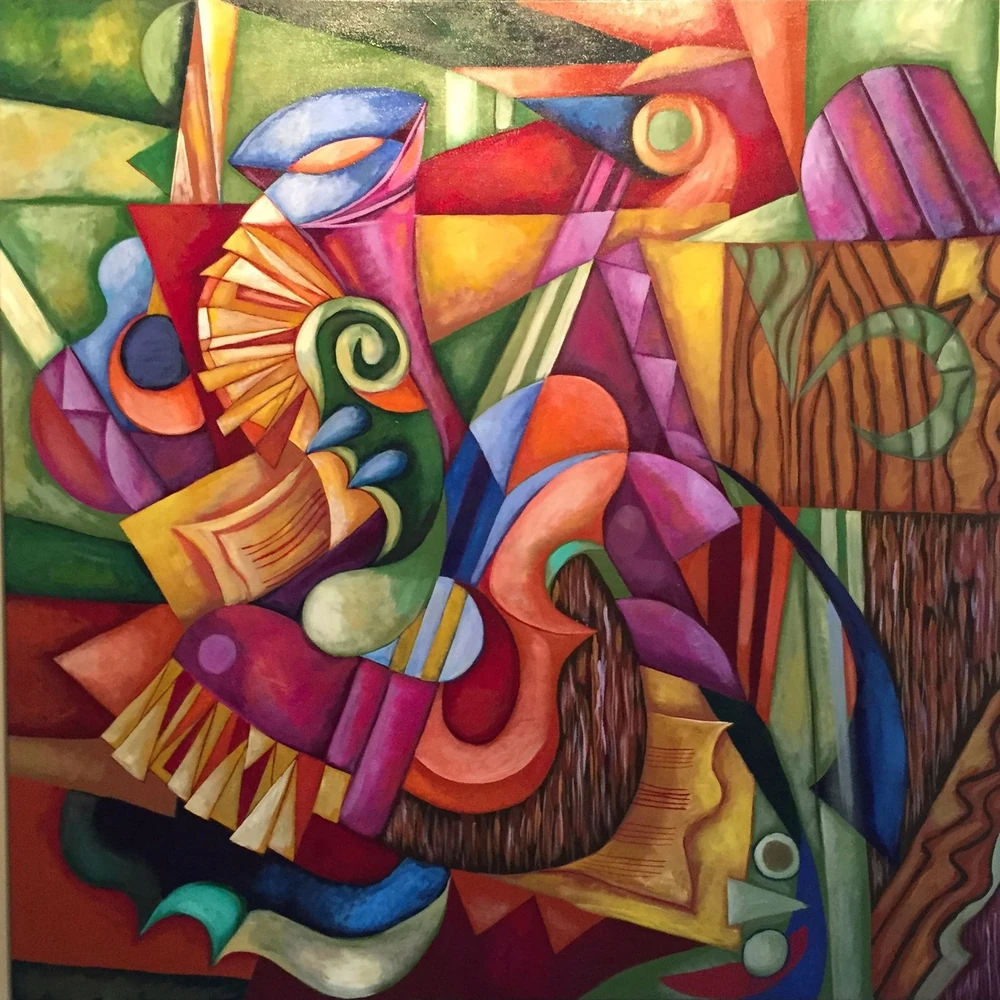
In his most characteristic paintings, Cedric Cox fractures the world in order to bring it to a new whole. The recent work of this gifted local artist is on display in a solo exhibition at the Cincinnati Art Underground through January 13, 2018. The exhibit includes twelve large canvases and several smaller works. Cox completed all of the paintings in 2017. Every work in the perfectly sized show is of uniformly high quality.

Imagine what happens if you combine five artists from Netanya, Israel, five artists from Cincinnati, Ohio, a fanciful algorithm and a common theme exploring The Many Faces of Israel? With many little leaps of faith, this collaboration made possible by internet partnerships, results in an extraordinary exhibition of 70 works of art celebrating 70 years of Israeli independence.

Banz Studios, another new art gallery, has joined a group of other galleries recently opened in Cincinnati. Owner and art consultant Allison Banzhaf opened her gallery at 317 W. Fourth St. in October 2017 after obtaining a three-year lease in May. The gallery took hours of painting and upgrading to bring it up to a store standard. Banzhaf helped with the installation work.
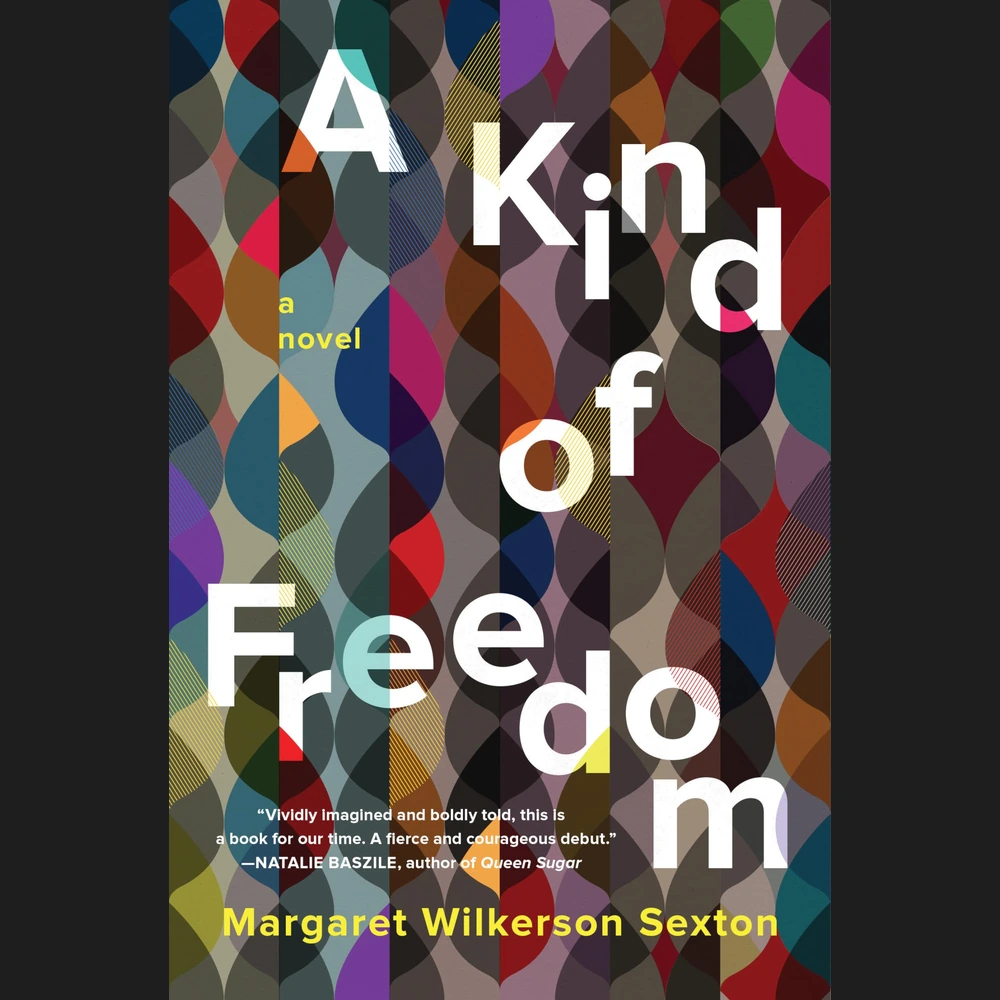
Margaret Wilkerson Sexton’s debut novel, ” A Kind of Freedom”, is powerful, sensitive, all too human. The author follows three generations of an African-American family living in New Orleans; the first generation is part of what was once described as a “high yellow” elite in that city, describing the light skin tones preferred by this small group of elite black families in New Orleans.
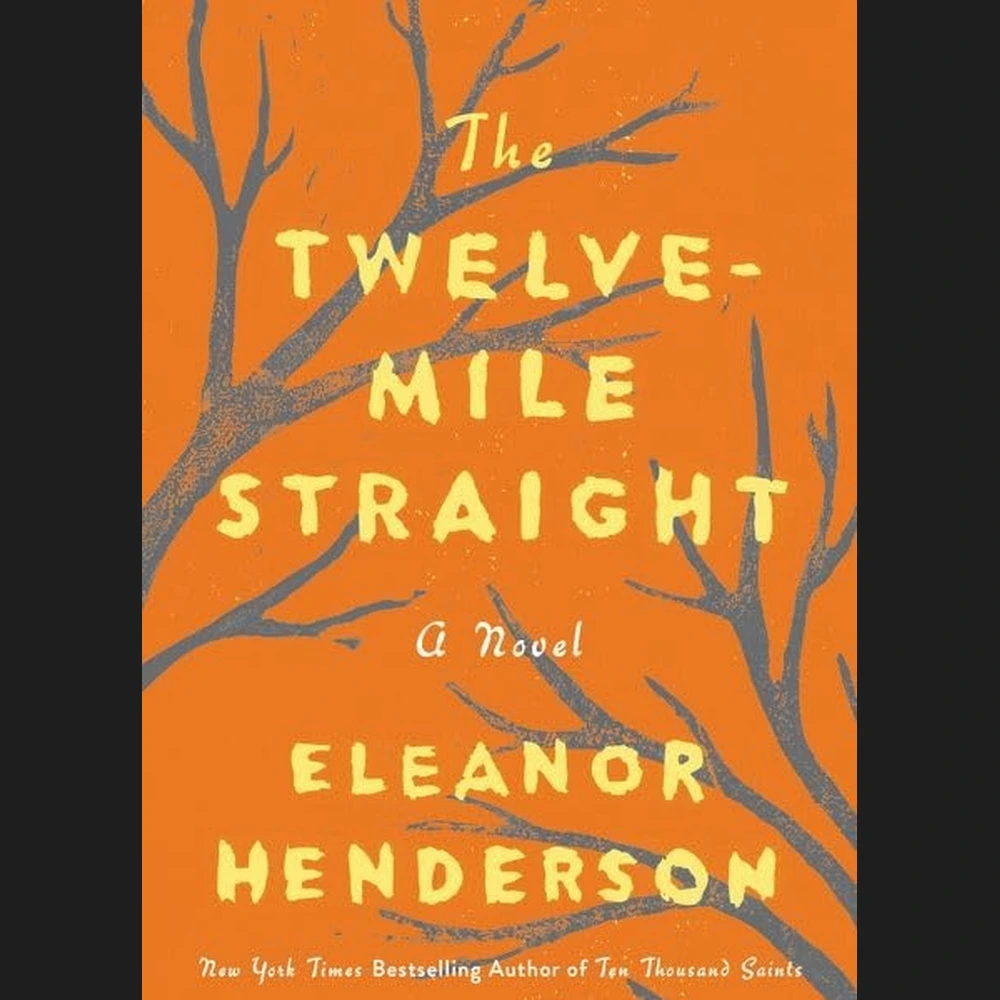
Eleanor Henderson’s debut novel, “Ten Thousand Saints”, was one of the best novels of about three years ago. Henderson has an amazing talent, first and foremost, as a storytelling, at which she truly excels.

Garner Narrative currently has a group of paintings by the gallery’s owner, Joyce Garner. Garner’s paintings about family, currently installed at Garner Narrative in Louisville Kentucky until December 29th, couldn’t come at a more seasonally appropriate time. Walking into Garner Narrative the viewer is met with the gigantic six yard wide loose stretched canvas, yellow brick road .

Mathematicians generally agree that beauty does exist in the structural beauty of theorems and proofs, even if most of the time it is largely visible only to mathematicians themselves. I have complex feelings about math, none of which are as complex as math itself. I don’t want to be “innumerate” in a tech world, but retain my teenage wannabe-artist obstinacy.

Any number of things or encounters can cause a seismic shift in an artist’s career. For artist Wassily Kandinsky, an encounter with a Monet “Haystack” painting changed everything for him: “the way the worldly forms dissolved into a blaze of color.” Monet painted his mesmerizing haystacks in the late 1880’s and Kandinsky saw one in 1896, abandoned his career as a lawyer and moved to Munich to study art.

Like Impressionism, with its wild brushstrokes and look of abandon in representing the world shocked the smug Parisian Salon art community, so too, Art Noveau originally was intended to be moderne, to usher in the new century, the twentieth century. But now, oh those erotic cascades of hair in Alphonse Mucha’s women smoking in Job cigarette posters seem dreamy, decorative and safe today.
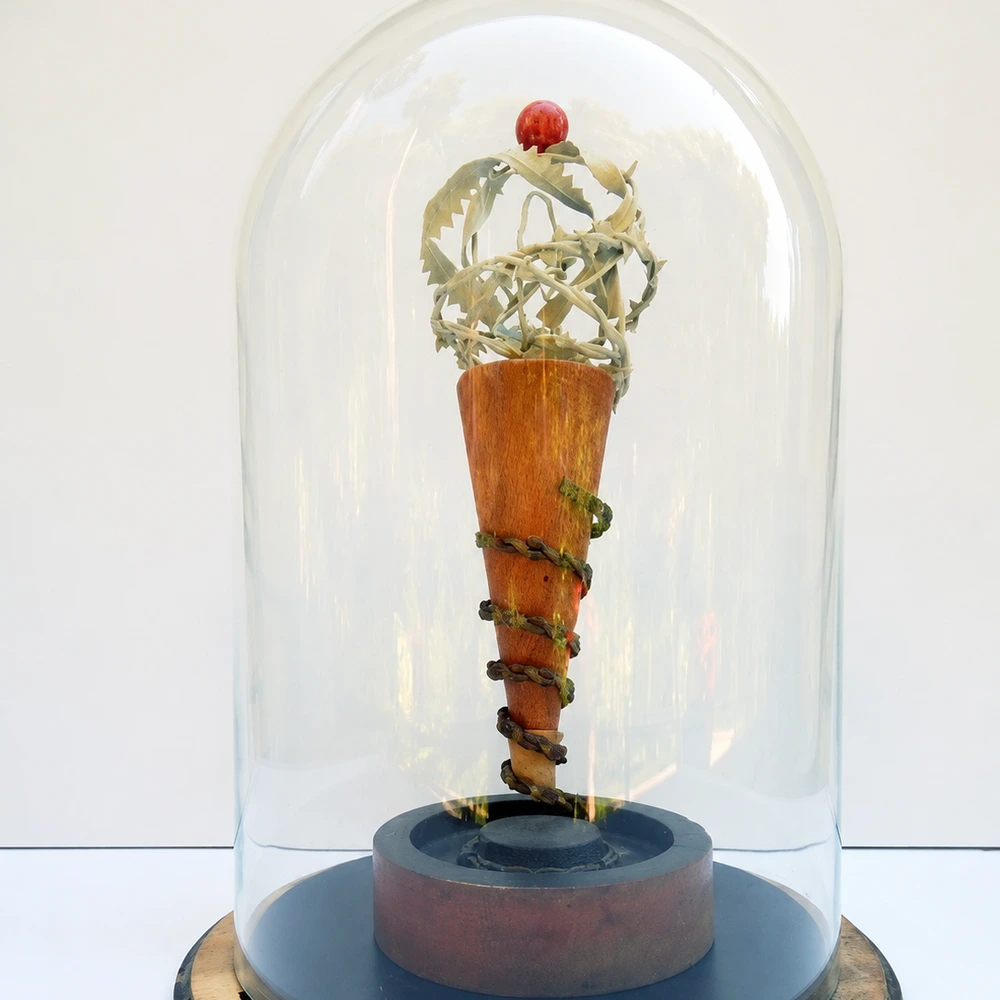
Those who missed the engaging exhibition “Yes!” at Cincinnati Art Galleries, 225 East 6th Street in downtown Cincinnati (October 27 through November 25) are not wholly out of luck as it consisted of recent pieces by fifteen Gallery artists, whose work can often be seen in the spacious exhibition area there, although not so fully explored.

Charles Woodman is a multifaceted new media artist, whose work spans the semblance of public art forums, temporal installations, documentary modes, and multi-channel projections.

The title of the National Gallery of Art’s exhibition “Posing for the Camera” is a bit of a misnomer since quite a number of the 70-some photographs feature people caught unawares, not posing. But I don’t want to quibble over nomenclature, especially since several of my favorite photos are anything but posed. When an image could be projected onto a light-sensitive ground and fixed, marked the moment photography was born.

Grab a drink. Come in, enjoy the music. The lights are low but the energy is high. The DJ is playing ‘Hot in Herre’ by Nelly. You haven’t heard it in years. People are dancing and the air is getting heavy. Colored strobes make patterns across the walls and illuminate pockets of moving bodies. Just a little bit of, uh uh, and a little bit of, uh uh.

People often think of miniatures as little more than dollhouses. They can be a fresh and contemporary way to look at the world and have moved away from the purview of the artisan or craftsman into the fine arts. Robert Off, a local miniaturist, turned to miniature boxes when he retired from the real estate business 12 years ago and became fascinated by the creative process. He learned about miniaturism when he was a child.

Even as the US federal government renounces Obama-era efforts to improve relations with Cuba, the Art Academy of Cincinnati is displaying the results of several years of artistic collaboration between the two countries.
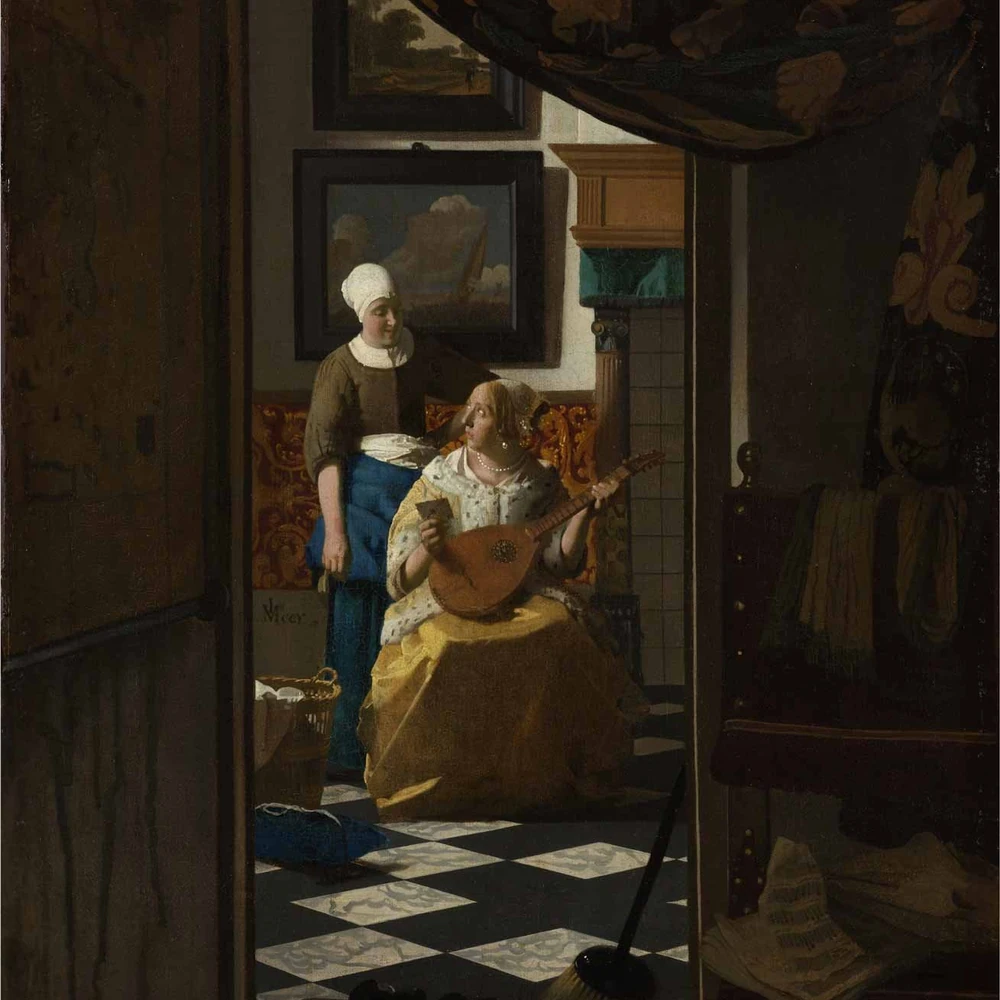
I think one of the appeals of 17th-century Dutch genre painting is that the narratives they present are familiar to us. Lutes may be in short supply today, but guitars and other stringed instruments abound. Women still fuss at their toilette. Today we read emails on our phones, instead of having the tactile experience of holding a sheet of paper. But human nature hasn’t changed that much.

As you walk into Caza Sikes in Oakley to see the ambitious mini-retrospective of Cole Carothers’s paintings, you are greeted by a large scale self-portrait called “Livestrong” (2005). In it, he is standing in what for many of his paintings is his home away from home, the corner of his studio. It is brashly hung—it is the work of his you’re likely to see first on your way in—and yet it’s also unprepossessing, almost shy.
